

Table of Contents
- Understanding Black Tie Dress Code Rules for Women
- Floor-Length vs. Cocktail Length: What the Occasion Demands
- Formal Dress Silhouettes for Different Body Types
- Colour Palette and Fabric Choices for Evening Wear
- How to Style Formal Dresses with Accessories
- Footwear and Final Touches
- Sustainable and Rental Options for Formal Wear
- Frequently Asked Questions
Last Updated: September 26, 2026
Understanding Black Tie Dress Code Rules for Women
Black tie is the most formal dress code you'll encounter, and it demands precision. When an invitation specifies black tie, you're expected to wear floor-length evening wear, nothing shorter, nothing casual. The dress code exists for a reason: it signals respect for the occasion, whether that's a gala, formal wedding, or corporate black-tie dinner.
Understanding what black tie actually requires separates the confident from the confused. The core rule is simple: floor-length, formal, elegant. But within that framework sits a world of choice about silhouette, colour, fabric, and embellishment. Many women overthink this, believing black tie means restrictive or uncomfortable. It doesn't. It means intentional.
The key is understanding the rules well enough to know when you can bend them and when you absolutely cannot. The key is understanding the rules well enough to know when you can bend them and when you absolutely cannot. Black tie is non-negotiable on length, floor-length is mandatory. It's also non-negotiable on formality level. But colour? Fabric? Neckline? These are your creative canvas within a formal framework.
Floor-Length vs. Cocktail Length: What the Occasion Demands
The distinction between floor-length and cocktail length determines whether you're appropriately dressed for black tie. Floor-length gowns sweep to your ankles or the floor, creating that formal, statuesque silhouette black tie demands. Cocktail dresses typically hit mid-knee or just below, offering a more relaxed elegance suited to semi-formal events.
For black tie events, floor-length is non-negotiable. This isn't a suggestion, it's the defining characteristic of the dress code. When you choose formal dresses for black tie events, length is your first decision point. A cocktail dress, no matter how elegant, reads as underdressed at a black-tie gala.
The practical advantage of floor-length evening wear is that it creates an unbroken visual line from your shoulders to the floor. This lengthens your frame, adds formality, and photographs beautifully. The fabric drape of a full-length gown moves differently than a shorter dress, it has weight, presence, and intentionality.
If an invitation says "black tie optional," you have flexibility. Black tie optional means you can wear either floor-length or a sophisticated cocktail dress. But true black tie? Floor-length only. This distinction matters because showing up in cocktail length to a formal black-tie event signals you didn't understand the dress code, and that's a credibility risk you don't want to take.
Formal Dress Silhouettes for Different Body Types
Column and Sheath Silhouettes
Column and sheath silhouettes are the workhorses of formal evening wear. A column dress is a simplified, fitted style that skims your body from shoulder to hem without clinging. A sheath is similarly close-fitting but typically features a more defined waist. Both create an elongated, statuesque frame.

Column silhouettes work exceptionally well for pear-shaped bodies and those with defined waists. The straight lines draw the eye vertically, creating length and elegance. The structured fabrication, like the inelastic polyester weave used in pieces such as the Vesper Sequin Open-Back Maxi Gown in Midnight Black, ensures the dress maintains its shape throughout the evening, never sagging or stretching.

Sheath dresses hug your natural curves more deliberately than columns. They're ideal if you want to emphasise your silhouette rather than minimise it. The fitted bodice and waist create definition, while the straight skirt maintains formality. Both silhouettes demand accurate sizing because there's nowhere for excess fabric to hide. If you fall between sizes in these styles, choosing the larger option ensures comfort and movement without sacrificing elegance.
The advantage of column and sheath styles for black tie is their versatility with accessories. A simple, simplified silhouette becomes your canvas, you can add drama through jewellery, a structured clutch, or an evening wrap without overwhelming the look.
A-Line and Empire Waist Shapes
A-line silhouettes flare gently from the waist or hips, creating a balanced, flattering shape that works across most body types. The structured skirt provides movement while maintaining formality. An empire waist rises above the natural waist, creating an elongated torso and is particularly flattering for apple-shaped bodies or those wanting to de-emphasise the midsection.
Empire waist gowns offer a sophisticated alternative to column dresses. The high waist creates visual interest and draws focus upward, while the flowing skirt below provides comfort and movement. The Odette Sequined V-Neck High-Waist Formal Evening Gown exemplifies this approach, the high waist creates an instantly elongated silhouette, and the fluid skirt below moves elegantly without restricting your stride.

A-line shapes work beautifully for pear-shaped bodies because they balance wider hips with a fitted bodice. They're also excellent for those wanting a more forgiving fit, the fabric skims rather than clings. The key with A-line evening wear is ensuring the fabrication has enough structure to maintain its shape. Lightweight chiffon in an A-line can look droopy by the end of the evening; a structured polyester or velvet blend holds its silhouette.
The practical advantage of both A-line and empire waist shapes is that they photograph well and move gracefully. You won't feel restricted, and you'll maintain an elegant line throughout the event.
Vesper Sequin Open-Back Maxi Gown in →
Colour Palette and Fabric Choices for Evening Wear
Black remains the gold standard for black-tie formal wear. It's timeless, universally flattering, and photographs beautifully under evening lighting. But black tie doesn't demand black, it demands sophistication. Rich, deep colours work beautifully: midnight blue, emerald, wine red, dark grey, and even jewel tones like sapphire or amethyst.
The psychology of colour in formal wear matters. Midnight blue reads as sophisticated and slightly less severe than pure black. Wine red conveys elegance and warmth. Emerald signals confidence and luxury. Champagne and soft pink work for those wanting a lighter palette, but they must be paired with impeccable styling and structured fabrics to maintain formality.
Fabric choice is equally critical. Premium polyester, velvet, and silk blends are your allies. These fabrics have weight and drape beautifully. The Celeste Velvet Sequin Strapless Column Dress in Dusk Pink uses premium velvet spliced with sequins, the velvet provides structure and luxury, while the sequins catch light elegantly.
Avoid lightweight fabrics like thin chiffon or flimsy polyester for black tie. These read as budget-conscious and lack the presence formal wear demands. Quality fabrication, heavy-weight polyester, velvet, silk charmeuse, or structured blends, holds its shape, drapes beautifully, and feels substantial against your skin.
Embellishments like sequins, beading, or subtle embroidery add visual interest without compromising formality. Sequins catch light under evening lighting and photograph beautifully. Beading adds texture and luxury. But restraint matters, a fully sequinned gown reads as formal; a gown that's half-sequinned and half-plain can feel unbalanced. Choose pieces where embellishment is intentional and integrated into the overall design.
How to Style Formal Dresses with Accessories
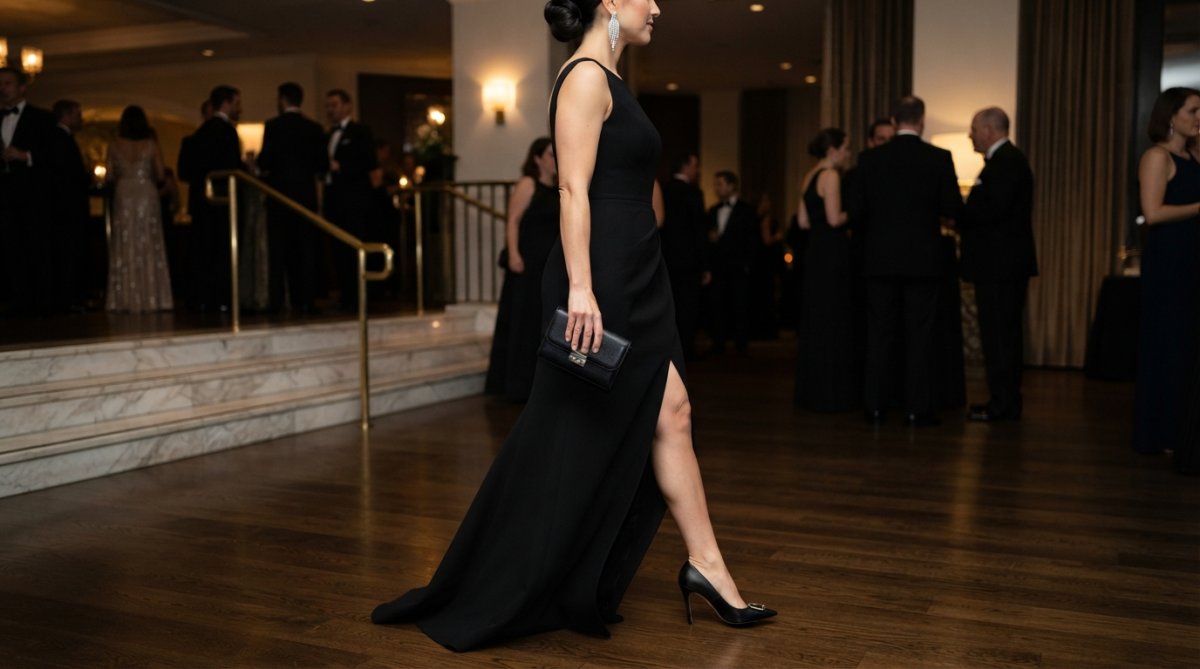
Accessories make or break formal wear. A stunning gown paired with the wrong jewellery, shoes, or bag reads as incomplete. For black tie, your accessories should enhance without competing.
Jewellery should be minimal but impactful. A statement necklace works if your gown has a simple neckline. Drop earrings add elegance without overwhelming. A delicate bracelet or cocktail ring adds polish. The rule: choose one focal point. If your gown has embellishments (sequins, beading), keep jewellery simple. If your gown is plain, jewellery can be bolder.
Your clutch should be structured and formal, never casual.
Footwear and Final Touches
Black-tie footwear is non-negotiable: formal, elegant heels or flat evening shoes in neutral or metallic tones. Stilettos in black, silver, or nude are the standard. If you're wearing a coloured gown, matching heels in that colour creates a simplified silhouette. If you're wearing black, black heels are traditional, but metallics work beautifully.
Sustainable and Rental Options for Formal Wear
Black-tie gowns are investment pieces, and not every woman wants to purchase multiple formal dresses. Rental and sustainable options are increasingly accessible and practical.
| Silhouette | Best For | Key Advantage | Fabric Recommendation |
|---|---|---|---|
| Column | Defined waists, pear shapes | Elongated, simplified line | Structured polyester, velvet |
| Sheath | Curvy figures | Emphasises natural shape | Premium polyester blend |
| A-Line | Most body types | Balanced, flattering | Structured knit, silk blend |
| Empire Waist | Apple shapes, midsection focus | Elongated torso, forgiving fit | Fluid silk, lightweight velvet |
Frequently Asked Questions
What colours are acceptable for black tie events?
Classic black, midnight blue, deep jewel tones (emerald, sapphire, burgundy), and elegant neutrals like champagne or silver are ideal for black tie. These colours convey sophistication and formality. Avoid bright, neon, or pastel shades unless the invitation specifies otherwise. Dark, rich tones photograph beautifully under evening lighting and suit the formal dress code's refined aesthetic.
Is a floor-length gown mandatory for black tie?
Floor-length is the gold standard for black tie events and demonstrates respect for the dress code. However, cocktail-length dresses (knee to mid-calf) are acceptable if the invitation specifies 'black tie optional' or 'cocktail attire.' When in doubt, opt for floor-length to ensure you meet formal expectations. The length contributes significantly to the overall sophistication of your look.
How do I know if a formal dress will actually look like the photos online?
Atelier-grade brands like MISTY'S use premium, structured fabrics and precise tailoring that hold their shape and appearance consistently. Check detailed product descriptions for fabric composition, weight, and finish. Read sizing guides carefully, MISTY'S pieces are tailored with minimal stretch, so accurate measurements matter. The easy returns policy means you can verify the dress in person and return it if it doesn't meet expectations.
What should I avoid wearing to a black tie event?
Avoid casual fabrics like cotton jersey, overly sheer materials without lining, short hemlines, bold prints, athletic wear, or anything with visible wrinkles. Skip casual accessories like backpacks, trainers, or daytime jewellery. Don't wear heavy makeup or loud colours that clash with formal elegance. Avoid dresses with poor construction or loose seams, black tie demands polished, well-fitted garments that maintain their shape throughout the evening.