

Table of Contents
- Understanding Black Tie Dress Code for Women
- When a Cocktail Dress Works for Black Tie Events
- Fabric, Colour, and Embellishment Choices
- Selecting the Right Silhouette and Length
- Black Tie Accessories for Women
- What Not to Wear to a Black Tie Event
-
Complete Outfit Examples
- Example 1: The Sequined Statement (Strict Black Tie, Evening Gala)
- Example 2: The Metallic Elegance (Black Tie Optional, Evening Wedding)
- Example 3: The Polished Midi (Black Tie Optional, Corporate Formal Dinner)
- Example 4: The Seasonal Variation (Black Tie Optional, Cooler Months)
- The Shared Formula
- Frequently Asked Questions
Last Updated: October 20, 2026
Understanding Black Tie Dress Code for Women
A cocktail dress black tie event requires understanding the formality level you're navigating. For women, it traditionally calls for a full-length evening gown or formal attire that projects elegance and sophistication, but there's room to interpret the rules.

The dress code is less rigid than it appears. The core principle: your outfit should feel intentional, polished, and respectful of the occasion's formality level.
The difference between a cocktail dress black tie occasion and other formal codes comes down to fabric weight, length, and embellishment.
| Dress Code | Hemline | Fabric | Embellishment |
|---|---|---|---|
| Black Tie | Floor-length or maxi | Luxe, structured | Sequins, metallic, embroidery |
| Black Tie Optional | Midi or floor-length | Elevated materials | Moderate to bold |
| Cocktail | Knee to midi | Quality but lighter | Minimal to moderate |
When a Cocktail Dress Works for Black Tie Events
A cocktail dress at a black-tie event is possible, but only under specific circumstances. Most sit at knee or midi length, which technically violates strict black-tie protocol, though modern interpretation is more flexible when the invitation signals openness.
A cocktail dress works for black tie when it reads as "elevated evening wear," not casual, luxe fabric, structured silhouette, and an intentional, polished presentation.
Black Tie Optional vs Strict Black Tie
Black tie optional is an explicit invitation to bend the rules, signalling that hosts welcome both full-length gowns and elevated cocktail dresses. A well-chosen cocktail dress, especially with sequins, metallic detailing, or rich embellishments, is appropriate.
Strict black tie, on the other hand, expects floor-length formality with no wiggle room. A midi dress at a strict black-tie event reads as underdressed, regardless of how expensive or beautiful the piece is.
Decoding the Invitation: A Practical Framework
Work through the invitation wording in order of strictness. The table below translates common phrases into a verdict on whether a cocktail dress is safe.
| Invitation wording | What it signals | Cocktail dress verdict |
|---|---|---|
| "Black tie" (no qualifier) | Strict floor-length formality | Not appropriate, choose a gown |
| "Black tie optional" | Gowns and elevated cocktail dresses both welcome | Appropriate if luxe and midi or longer |
| "Creative black tie" | Formality with room for personality | Appropriate with strong styling and finish |
| "Black tie with a twist" | Loose interpretation encouraged | Appropriate, lean into statement pieces |
| "Formal" or "evening formal" | Formal but not strictly floor-length | Usually appropriate at midi or longer |
| "Cocktail" | Cocktail attire expected | Appropriate by definition |
If the invitation is ambiguous, the venue and timing usually resolve it.
Reading the Venue and Timing
Venue type and start time are the second filter. Use them to confirm or override the invitation wording:
- Historic hotels, ballrooms, and formal galleries demand stricter adherence. A cocktail dress here needs every formal signal, luxe fabric, embellishment, midi or longer length, and polished accessories.
- Black-tie weddings at relaxed or outdoor venues are often more forgiving, but the couple's wording still governs. If they wrote "black tie," treat it as strict regardless of setting.
- Charity galas and award evenings tend to be the most rigid. These are photographed events, and guests typically default to floor-length.
- Corporate formal dinners vary widely by industry. Financial and legal sectors lean conservative; creative industries allow more interpretation.
- Start time matters. Events beginning after 6 PM lean stricter; afternoon or early-evening events are slightly more flexible, though a black-tie code still applies.
- Season affects fabric and outerwear, not formality. Winter may call for heavier fabric and a structured wrap; summer may allow lighter silk or satin, but formality does not drop.
The Three-Signal Test
Before committing to a cocktail dress, run this quick check:
- Wording signal, Does the invitation explicitly permit interpretation (optional, creative, twist)? If not, default to a gown.
- Venue signal, Is the setting formal enough that a midi dress won't look out of place among floor-length gowns?
- Company signal, Do you know what other guests will wear? If unsure, ask the host or a fellow guest.
If all three signals point the same way, a cocktail dress is safe. If any is ambiguous, err toward a longer hemline or a gown, or email the hosts to ask "Is a cocktail dress appropriate?" rather than arriving underdressed.
Fabric, Colour, and Embellishment Choices
Fabric makes or breaks a cocktail dress's suitability for black tie.
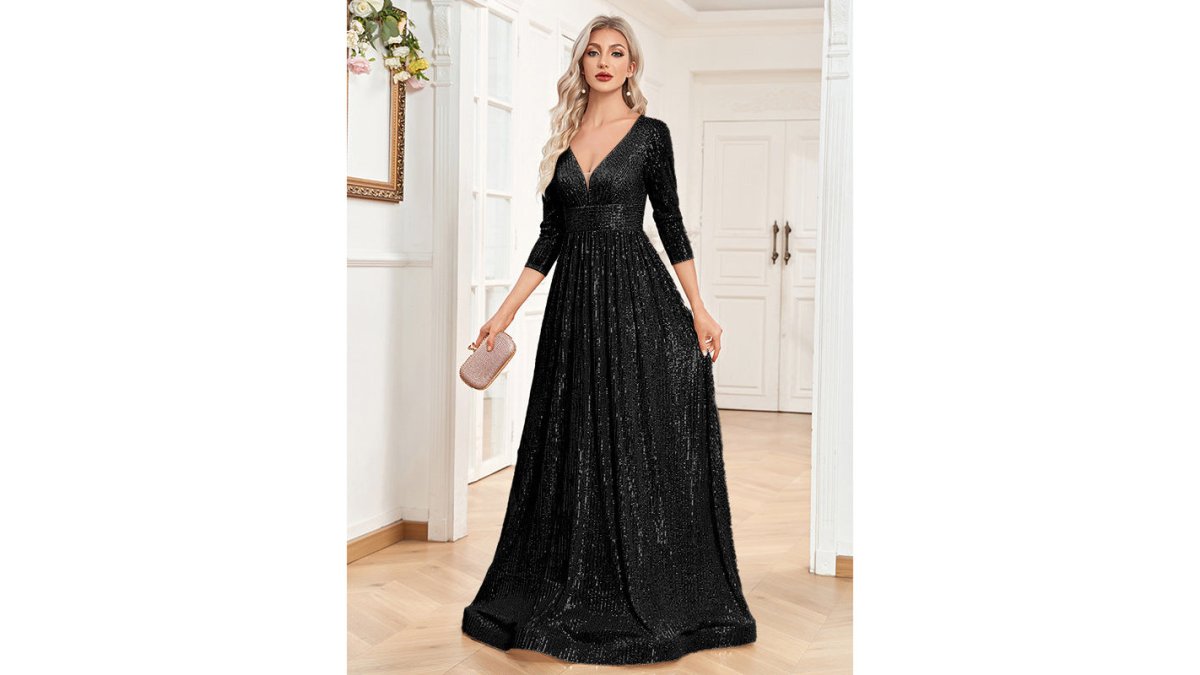
Sequins are your best friend here, they catch light, create visual drama, and signal formality. Consider the Vesper Sequin Open-Back Maxi Gown in Midnight Black at $169.00.

Colour matters too. Black, navy, deep jewel tones (emerald, sapphire, burgundy), and metallics (gold, silver, rose gold) are safest for black tie.
Embellishments signal formality.
Selecting the Right Silhouette and Length
Length is the most visible marker of black-tie formality: a true black-tie gown reaches the floor or very close to it, while a cocktail dress typically ends at the knee or mid-calf.
Silhouette choices that work best for black tie include:
- Column or sheath silhouettes create a simplified, elegant line
- A-line skirts offer movement and flattery while maintaining formality
- Mermaid silhouettes with high-slit details add drama and sophistication
- Structured, fitted bodices paired with flowing skirts balance elegance with comfort
- Asymmetrical necklines or one-shoulder designs add editorial interest without sacrificing formality
Avoid loose, flowing silhouettes that read as daywear. Structured tailoring, fitted through the bodice, defined waistline, signals formality. A mermaid silhouette with intentional design details creates undeniable black-tie presence. Consider the Valentina One-Shoulder Sequined High-Slit Mermaid Gown at $150.00. A dress that skims without clinging reads polished; too-loose feels casual and too-tight distracts.

Black Tie Accessories for Women
Accessories complete your black-tie look and signal how seriously you're taking the dress code.
Footwear: Wear structured evening heels, stilettos, pumps, or strappy sandals in black, metallic, or jewel tones.
Vesper Sequin Open-Back Maxi Gown in Midnight Black →
Evening bag: Carry a small, structured clutch or evening bag.
Jewellery: Choose intentional, formal pieces, drop earrings, statement necklaces, or chandelier styles. Keep it polished but not overdone: 2-3 pieces maximum.
Outerwear: If needed, a structured shawl, evening wrap, or tailored blazer works. Avoid casual cardigans or denim jackets.
What Not to Wear to a Black Tie Event
Knowing what to avoid matters as much as knowing what works. These choices read as underdressed:
- Knee-length or shorter dresses unless the invitation explicitly says "black tie optional"
- Casual fabrics like cotton, linen, or lightweight polyester without embellishment
- Flat shoes or trainers of any kind
- Oversized or loose silhouettes that lack structure
- Bright, neon, or pastel colours without significant embellishment
- Casual bags or crossbodies instead of evening clutches
- Minimal or no jewellery paired with a casual-feeling dress
- Denim, leather jackets, or cardigans as outerwear
- Hair styled casually (updos or polished waves are more appropriate than loose, tousled styles)
The unifying theme: anything that reads as "everyday wear" doesn't belong at black tie, even if individual pieces are expensive or well-made.
Complete Outfit Examples
A cocktail dress only becomes black-tie appropriate once the whole outfit is coordinated. Below are four complete formulas for different settings and formality levels, use them as templates, since the logic transfers to whatever pieces you already own.
Example 1: The Sequined Statement (Strict Black Tie, Evening Gala)
Start with a sequined midi or maxi dress in a deep tone, the Odette Sequined V-Neck High-Waist Formal Evening Gown in wine red ($190.00) is a strong example.
Why it works: The embellishment carries the formality, the midi-to-maxi length satisfies strict black tie, and understated accessories keep the dress the focal point.
Example 2: The Metallic Elegance (Black Tie Optional, Evening Wedding)
Choose a metallic one-shoulder or asymmetrical dress, the Manhattan One-Shoulder Metallic Split Maxi Gown in rose gold ($290.00) shows the effect. Pair with metallic heels, a structured evening bag, and statement chandelier earrings. The gown's design carries the formality, so keep accessories minimal so they complement rather than compete.
Why it works: Metallic finishes read as evening wear, the one-shoulder cut adds editorial interest, and the split keeps movement comfortable for dancing.
Example 3: The Polished Midi (Black Tie Optional, Corporate Formal Dinner)
For a setting that is formal but not gala-level, a structured midi dress in a deep jewel tone, emerald, sapphire, or burgundy, is the safest cocktail-dress choice. Pair with a pointed-toe pump in black or a matching jewel tone, a compact structured clutch, and a single statement piece of jewellery (a bold cuff or sculptural earrings).
Why it works: The midi length and structured silhouette read as intentional rather than casual, the jewel tone signals evening, and the single statement piece keeps the look polished without over-accessorising.
Example 4: The Seasonal Variation (Black Tie Optional, Cooler Months)
Take any of the above formulas and add a structured layer: a satin or velvet wrap, a tailored evening coat, or a faux-fur stole in a neutral tone. Swap strappy sandals for closed-toe pumps or embellished ankle-strap heels. Keep the bag compact and the jewellery metallic.
Why it works: Seasonal layering is where many cocktail-dress outfits fall apart. A casual cardigan or denim jacket undoes the formality; a structured wrap or evening coat preserves it.
The Shared Formula
Across all four examples, the same five elements appear:
- A luxe or embellished dress in a deep or metallic tone, midi length or longer.
- Structured evening shoes, heels, pumps, or dressy strappy sandals, never flats or trainers.
- A compact structured bag, clutch or small evening bag, never a crossbody or tote.
- Intentional jewellery, two to three pieces maximum, metallic finishes, polished rather than casual.
- A structured layer if needed, wrap, evening coat, or tailored jacket, never a casual knit or denim.
If any one of these five elements is missing or replaced with a casual version, the outfit drops a formality level. Use the formula as a checklist before you leave the house.
Frequently Asked Questions
Can you wear a cocktail dress to a black-tie event?
Yes, a cocktail dress can work for black tie, but it must meet specific criteria. The dress needs luxe fabrics like silk or sequins, sophisticated embellishments, and either floor-length or midi length with an elegant silhouette. Black tie optional invitations are ideal for cocktail dresses, whereas strict black-tie events typically call for full-length gowns. Always check the invitation wording and venue type to confirm what's appropriate.
What makes a cocktail dress formal enough for black tie?
A cocktail dress becomes black-tie appropriate when it features premium materials, refined details, and proper length. Look for luxe fabrics like silk, satin, or sequins with embellishments such as beading or shimmery finishes. Ensure the dress reaches at least midi length (below the knee) or floor-length for maximum formality. The silhouette should be tailored and structured, and avoid anything too casual or playful in style or colour.
What colours and accessories should you pair with a black-tie cocktail dress?
Rich, sophisticated colours work best: midnight black, deep jewel tones like emerald or sapphire, burgundy, or classic metallics like gold or silver. Pair your dress with formal shoes (stiletto heels in black, metallic, or matching tone), a structured evening clutch, and statement jewellery, drop earrings or a delicate bracelet. Keep accessories polished and minimal to let the dress shine. Avoid bright or pastel colours unless the dress itself is understated.
How do I know if my cocktail dress is appropriate for a specific black-tie event?
Check the invitation for exact wording: 'black tie' requires floor-length gowns, whilst 'black tie optional' allows elegant cocktail dresses. Consider the venue, formal galas and charity events demand full-length gowns, whereas upscale cocktail parties or slightly relaxed weddings may accept midi or knee-length dresses in luxe fabrics. When uncertain, contact the host or opt for a floor-length gown to ensure you feel confident and appropriately dressed for the occasion.