

Table of Contents
- Understanding Silk: Why Formal Dresses Need Special Care
- How to Hand Wash Silk Without Damaging the Fabric
- How to Remove Stains from Silk Formal Wear
- When to Dry Clean Silk (And When to Skip It)
- Drying and Wrinkle Prevention Techniques
- Storing Silk Formal Dresses for Long-Term Protection
- Repairing Common Silk Damage and Eco-Friendly Alternatives
- Frequently Asked Questions
Last Updated: September 16, 2026
Understanding Silk: Why Formal Dresses Need Special Care
Silk is a protein-based fibre, so it behaves nothing like cotton or polyester when it meets water, heat or friction. That explains every rule in this guide to how to care for silk formal dresses, which covers hand washing, stain removal, drying, storage and repair, plus the complications formal construction brings: beading, lining, structure and weight.
How to Hand Wash Silk Without Damaging the Fabric
Hand washing is the safest route for a silk formal dress with no heavy beading, slower than you'd expect, but far less risky than a machine. Use cold water, a pH-neutral soap and a clean basin, then let gravity and gentle pressing do the work.
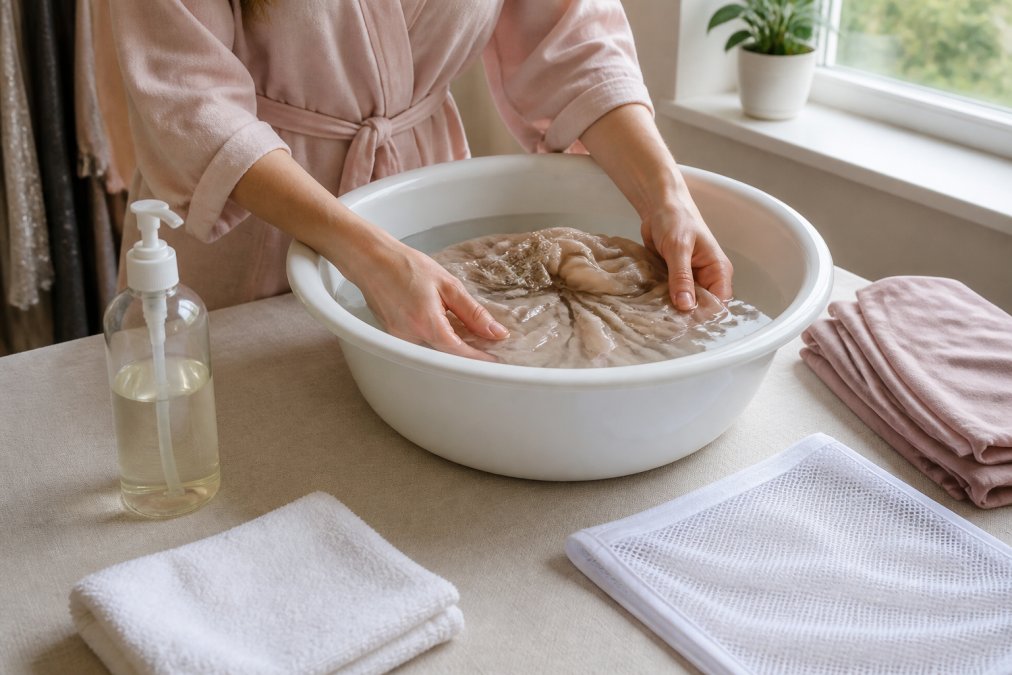
- Fill a basin with cool water, ideally below 30°C, and add a capful of pH-neutral detergent.
- Submerge the dress and let it soak for no more than five minutes.
- Press the water gently through the fabric with flat palms. Never rub, scrub or bunch the silk.
- Lift the dress out and drain the basin, then rinse in clean cool water until no suds remain.
- Press water out against the side of the basin, then roll the dress in a white towel to absorb the rest.
Choosing the Right Detergent and Water Temperature
Mild detergent matters more than technique. Standard laundry powder is alkaline, and silk protein reacts badly to it, dulled luster, stiffness, chalky residue. Use a pH-neutral soap or a detergent labelled for delicate fabrics, and keep the water cold throughout.
Testing for Colorfastness Before You Submerge
Test before you soak, every time. Colourfastness varies between dyes: a deep emerald or burgundy silk can bleed in cold water even when a pale champagne one won't.
How to Remove Stains from Silk Formal Wear
Treat a stain the moment you notice it, fresh marks lift far more easily than set ones. Blot, don't rub, and work from the outside inward. On a formal dress the complication is construction: a stain may sit on the silk shell, the lining, or beside hand-sewn beading, and each needs a different hand.
- Water-based marks (white wine, champagne, soft drink, most fruit juice): flush from the reverse with cool water, then dab with pH-neutral soap on a white cloth.
- Oil and grease (butter, salad dressing, makeup, hand cream): sprinkle cornflour or talc on the mark, leave fifteen minutes to draw out the oil, brush it away, then spot clean.
- Protein stains (egg, dairy, blood): keep them cold. Warm water coagulates protein and locks it into the fibre.
- Tannin stains (tea, coffee, red wine): these set quickly, so treat within minutes rather than hours.
- Deodorant and perfume residue: usually a build-up rather than a spill; a cool hand wash with pH-neutral soap lifts it, but only if the dress has no heavy beading.
- Ink and cosmetics: the hardest to shift at home. If the mark is on a visible panel of a structured gown, hand it to a professional rather than risk a ring.
Spot Cleaning Delicate Stains Safely
Spot cleaning means treating one small area rather than washing the whole garment, the right call when a full wash isn't practical, which on a beaded or boned gown is almost always.
Treating Stains Around Beading, Lining and Structure
- Beading and sequins: never soak a beaded bodice. Adhesives and threads soften in water, and beads can loosen or dull. Clean around the embellishment with a cotton bud barely dampened in cool water and pH-neutral soap, then blot dry immediately with a clean cloth.
- Lined gowns: a stain on the shell can wick through to the lining, and a stain on the lining can look like a shadow through the silk. Treat the shell from the outside and the lining from the inside, keeping the two layers apart with your hand so the cleaning agent doesn't bridge them.
- Boning and fused interfacing: these are glued or stitched structures that water can distort. If a stain sits directly over a boned panel, don't flood it, dab the surface only, and if the mark persists, take it to a specialist.
- Weighted hems: a chain or weighted tape inside a hem holds moisture and can rust or discolour. Keep the hem out of the basin when spot cleaning, and dry it flat rather than hanging.
What to Do When You Can't Identify the Stain
If you don't know what caused the mark, don't guess, the wrong agent can set it permanently. Blot any excess, let the area air dry flat, and take the dress to a professional cleaner who can test the fibre and stain before choosing a solvent. Tell them when it appeared, whether it was wet or oily, and what you've already applied.
When to Dry Clean Silk (And When to Skip It)
Dry clean a silk formal dress when it has heavy beading, structured boning, a fused lining or a stain you can't identify. Professional cleaning is the only safe option for those constructions, and worth the cost on a gown you'll wear more than once.
Drying and Wrinkle Prevention Techniques
Never tumble dry silk. Heat and agitation are what silk tolerates least, and a dryer will shrink a formal dress faster than almost anything else. Lay it flat on a clean white towel, reshape it to its original lines, and air dry away from direct sunlight.
Steaming vs Ironing: What Works Best for Silk
Steaming is the better choice for silk formal dresses, especially beaded or structured ones. A handheld steamer relaxes creases without touching the fabric, and the risk of scorching or flattening a textured finish is close to zero.
Aria Bareback Column Maxi Dress in →
Storing Silk Formal Dresses for Long-Term Protection
Store a silk formal dress on a padded hanger inside a breathable cotton garment bag, out of direct light. Silk needs airflow, so plastic dry-cleaning bags and vacuum sealing are the wrong tools, plastic traps moisture and encourages mildew, while vacuum sealing crushes beading and sets hard creases.
Seasonal Storage Protocols
A formal dress often sits untouched for six to twelve months between wears, and that stretch is where most long-term damage happens.
- Clean before you store, not after. Invisible sugars, salts and oils from food, drink and perspiration attract insects and oxidise into yellow stains over months. A mark you can't see today can be a permanent shadow by next season.
- Use acid-free tissue at every fold and stress point, shoulders, waist, hem, and change it annually, because tissue absorbs acids and loses its buffering capacity over time.
- Choose lavender or cedar over mothballs. Mothballs leave a chemical odour that silk absorbs readily, and the smell is difficult to remove without another clean.
- Keep the environment cool, dark and dry. A stable temperature and low humidity matter more than any single product. Damp garages, hot roof spaces and sunlit wardrobes all accelerate fading and fibre weakness.
- Inspect every few months. Unzip the bag, check for insect activity, new creases, colour shift or musty odour, and re-fold along different lines so the same crease doesn't set permanently.
- Rotate hanging positions if the gown stays on a hanger, so stress isn't concentrated on the same shoulder points.
Travel Care for Destination Events
Travel is the other half of long-term care. A silk gown that survives a wardrobe can still arrive creased, snagged or damp after a flight.
- Roll simple silk dresses in acid-free tissue inside a packing cube, which prevents hard fold lines better than flat folding.
- Carry structured or beaded gowns on board in a garment bag rather than checking them. Cargo holds are cold and damp, and a checked gown can arrive with crushed beading or water marks.
- Pack a small care kit: a travel steamer or a compact garment steamer, a white cotton cloth, a pH-neutral soap sheet, and a few sheets of acid-free tissue for re-packing.
- Refresh on arrival by hanging the gown in a steamy bathroom for ten to fifteen minutes. The humidity releases travel creases without an iron, and it's gentler on beading than direct steam.
- Never leave a silk gown in a suitcase once you've arrived. Unpack immediately, hang it to air, and let any condensation from the journey evaporate before you wear it.
- Keep a spare garment bag for the return trip, so a worn gown isn't packed against clean clothes or crushed under other items.
When to Re-Clean After Storage
Even a perfectly stored gown can pick up a musty note or a crease that won't hang out. If it smells stale, has visible fold lines, or has been stored over a year, a cool hand wash (if construction allows) or a professional clean before wearing is safer. Don't spray perfume or freshener onto stored silk to mask odour, the alcohol and oils can stain the fibre.
Repairing Common Silk Damage and Eco-Friendly Alternatives
Snags and pulls are the most common silk injuries, and a snag is fixable at home with a fine needle. Work the pulled thread back through to the reverse side with tiny, gentle movements, then press flat. Never cut a pulled thread, the resulting hole is far harder to disguise than the pull itself.
Frequently Asked Questions
Is silk ruined if it gets wet?
Not necessarily. Silk formal dresses can get wet, but how you handle the moisture matters. Blot spills immediately with a clean cloth rather than rubbing. If the entire dress gets wet, hand wash it gently in cool water with a pH-neutral soap, then lay flat to air dry away from direct sunlight. Avoid wringing or twisting the delicate fabric, as this can damage silk protein fibres and leave permanent creases.
Does 100% silk need to be dry cleaned?
Not always. Many silk formal dresses can be hand washed at home using cool water and a mild detergent designed for natural fibres. Check the care label first. If the dress has beading, structured lining, or complex construction, professional cleaning is safer. For simple silk garments without embellishment, hand washing preserves fabric integrity and luster when done carefully.
Can you use vinegar to clean silk?
White vinegar diluted in cool water can help remove light odours and restore shine to silk. Use one tablespoon per litre of water and submerge the garment briefly. Rinse thoroughly with cool water afterward. Avoid vinegar on stained areas, as it can set certain stains. For tough stains on silk formal wear, spot clean with a pH-neutral soap instead.
How do you remove stains from silk formal wear without damaging the fabric?
Act quickly. Blot the stain with a clean white cloth, working from the outside inward. For oil-based stains, apply a small amount of mild detergent directly and let it sit for five minutes. For water-based stains, use cool water and a pH-neutral soap. Test on a hidden hem first. Never rub aggressively, as this can snag delicate silk fibres and leave a permanent mark.