

Table of Contents
- How to Identify Quality Fabrics in Clothing: A Practical Guide
- Understanding Fibre Content and Natural Versus Synthetic Fibres
- How to Tell If Fabric Is High Quality by Touch and Appearance
- Fabric Quality Checklist: What to Inspect Before You Buy
- How to Check Fabric Durability and Wear Performance
- At-Home Tests for Objective Quality Assessment
- Quality by Garment Use and Climate
- Frequently Asked Questions
Last Updated: October 6, 2026
How to Identify Quality Fabrics in Clothing: A Practical Guide
Knowing how to identify quality fabrics in clothing is the difference between a purchase that lasts years and one that falls apart after a few washes.
This guide covers the practical steps to assess fabric quality before you buy: reading fibre content, evaluating hand feel, inspecting construction, and testing durability.
Understanding Fibre Content and Natural Versus Synthetic Fibres
The fibre content tells you what a garment is actually made from, your first clue to quality. Natural and synthetic fibres each have distinct strengths, and quality pieces often blend both.
Natural Fibres: Cotton, Wool, Silk and Linen
Wool provides warmth and natural elasticity, resisting wrinkles and pilling better than many fibres.
Silk has a natural sheen and drapes beautifully. It's delicate but breathes well and feels cool to the touch.
Linen is crisp, breathable, and grows softer over time. It wrinkles naturally, but that's part of its character.
Synthetic Fibres and High-Quality Blends
Synthetic fibres like polyester, nylon, and elastane aren't inherently low quality. They add stretch, durability, and ease of care. The key is proportion.
A small amount of elastane (2-5%) adds stretch without changing the fabric's character, and polyester blended thoughtfully with natural fibres improves wrinkle resistance and durability.
High-quality blends combine the best of both worlds. At MISTY'S, our pieces feature intentional fibre blends designed for specific outcomes, like our Linen-Cotton Relaxed Tee, which pairs breathable linen with the durability of cotton.

Always check the label. The fibre content is your foundation for assessing everything else.
How to Tell If Fabric Is High Quality by Touch and Appearance
Once you know what fibre you're holding, your hands become your best tool. Learning what to feel for takes minutes.
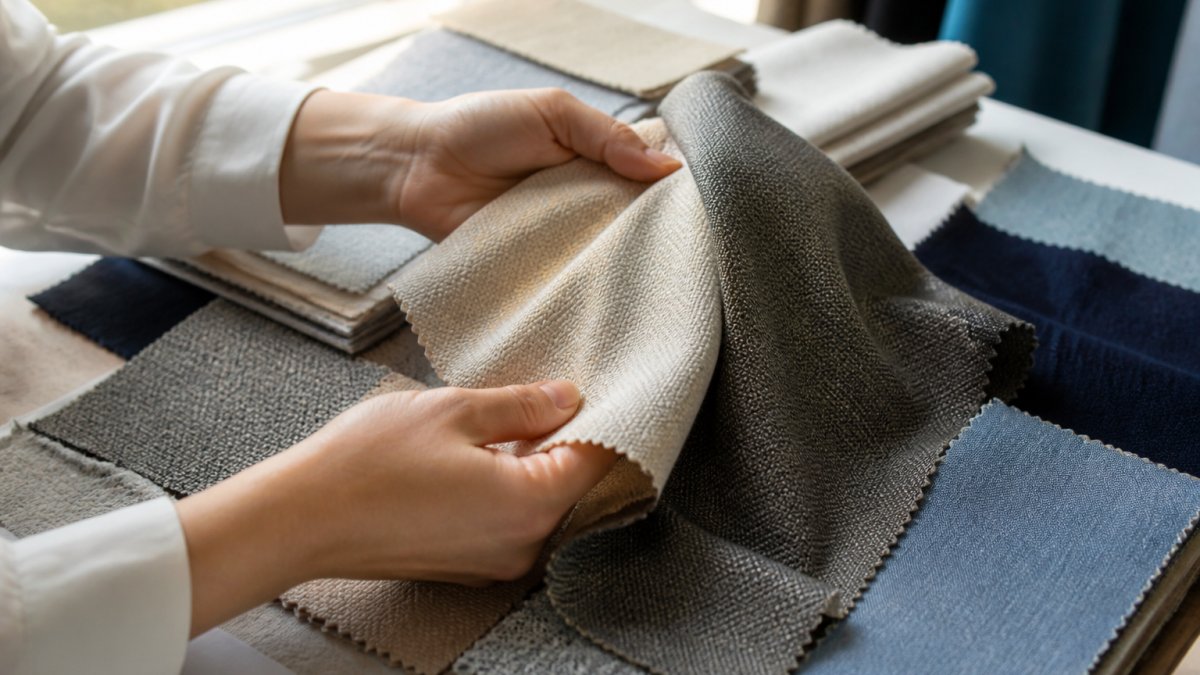
Assess Fabric Weight and Density
Fabric weight matters. Hold the garment and feel its substance. Quality pieces have weight without being heavy. Thin, flimsy fabric suggests poor construction or low-quality fibres.
Density is how tightly the fibres are woven or knitted together.
Weight and density work together: lightweight silk can be high quality because silk is naturally dense, and lightweight cotton can be quality if the weave is tight.
Check Weave and Knit Consistency
Run your fingers across the fabric surface. A quality weave or knit is uniform, no thick spots, thin spots, or lumps.
For woven fabric, threads should cross at regular intervals without gaps; for knits, loops should be consistent in size and tension.
Inconsistency signals poor quality. Thick knots, pulled threads, or uneven tension means the fabric won't hold up.
Evaluate Drape and Hand Feel
Drape is how fabric hangs on your body. Hold the garment up and let it fall: quality fabric drapes smoothly without bunching or clinging, moving with you rather than against you.
Hand feel is the tactile experience.
Both come from fibre quality and construction, signalling that someone cared about the final product.
Fabric Quality Checklist: What to Inspect Before You Buy
Before you commit to a purchase, run through these checks. They take two minutes and reveal a lot.
Visual Checks: Colour Consistency and Finish
Look at the garment in good light: colour should be even, while fading, streaking or blotchy patches suggest poor dyeing.
Check the seams. Dye should penetrate evenly, seams shouldn't look lighter or darker than the main fabric.
Feel the finish. Some fabrics have a special finish applied (for softness, water resistance, or sheen).
Garment Construction: Seams, Stitching and Hardware
Seams are where quality shows. Open a seam slightly and look inside. Stitches should be small, even, and tight.
Check seam allowance, the fabric inside the seam.
Examine hems. They should be folded neatly and stitched securely. A hand-finished hem (with tiny stitches on the inside) is a sign of atelier-grade craftsmanship.
Look at buttons, zips, and other hardware. They should be securely attached.
How to Check Fabric Durability and Wear Performance
Durability is the combined result of fibre type, yarn twist, fabric construction, dye method and finish. Two garments can share the same fibre content and behave completely differently after ten washes, so these checks help you predict which one will hold up.
Pilling, Snagging and Fraying Resistance
Pilling happens when short, loose fibres work to the surface and ball up, most common in knitwear, flannel and low-twist cotton.
Snagging occurs when a single thread is pulled out of the weave.
Fraying is about edge finishing. Turn the garment inside out and inspect the seam allowances and hems: a serged (overlocked) edge, French seam or bound edge will contain the raw fabric, while a raw, unfolded edge will fray after a few washes no matter how good the fibre is.
Shrinkage, Stretch Recovery and Wash Performance
The care label is your best predictor of how a garment will behave. Learn to read it before you buy.
- "Machine wash cold, tumble dry low" usually indicates a pre-shrunk fabric that tolerates moderate heat.
- "Machine wash cold, lay flat to dry" signals a knit or delicate weave that may stretch or distort if hung.
- "Dry clean only" often means the fabric is prone to shrinkage, colour loss or distortion in water, or that the construction (lining, interfacing, embellishment) won't survive a wash cycle.
Stretch recovery matters for fitted pieces. Gently stretch the fabric across the width and release it: it should snap back within a second or two.
Colourfastness is the other half of wash performance.
What You Can and Cannot Tell Before You Buy
Some defects are visible on the hanger: loose threads, uneven dye, weak seams, cheap hardware. Others only appear after laundering or repeated wear: shrinkage, colour bleed, pilling, loss of shape. Before purchase, check the retailer's return policy for washed or worn items, since many stores won't accept returns once a garment has been laundered.
At-Home Tests for Objective Quality Assessment
You can test fabric quality at home without special equipment.
The rub test. Rub the fabric firmly between your hands for 10 seconds.
The seam pull test. Gently pull on a seam from inside the garment.
The water test. Drop a little water on an inconspicuous area: quality fabric absorbs it evenly.
Quality by Garment Use and Climate
Quality is not absolute: a fabric that's excellent for a summer shirt can be a poor choice for winter knitwear. The right question isn't "is this good fabric?" but "is this the right fabric for this garment, this climate and this wearer?"
Warm and Humid Conditions
In heat and humidity, breathability and moisture management matter more than weight or density. Look for open weaves and natural fibres that move moisture away from the skin.
- Linen has high air permeability and dries quickly; it wrinkles, but that's a trade-off for comfort.
- Cotton, especially in plain weave or voile, breathes well but holds moisture and can feel heavy when damp.
- Silk is lightweight and temperature-regulating but less durable against abrasion.
- Synthetics such as polyester and nylon can be engineered for moisture wicking, but low-quality versions trap heat and odour. Look for fabrics described as breathable or moisture-wicking rather than simply "lightweight".
A practical check: hold the fabric to a light. A clear, even grid of light means air will move through it; if it blocks light completely, it will also block airflow.
Cold and Dry Conditions
In cold weather, insulation and wind resistance matter more than breathability. Dense weaves and lofted fibres trap air, which keeps you warm.
- Wool and merino provide warmth even when damp and resist odour; fine merino is soft enough for next-to-skin wear, while coarser wool suits outer layers.
- Cashmere is warmer by weight than sheep's wool but less durable against friction.
- Down and synthetic fills are measured by fill power or loft; higher loft traps more air for the same weight.
- Tightly woven cotton and synthetic blends block wind but don't insulate as well as wool or down.
A dense, tightly woven fabric feels substantial and blocks light, a positive signal for a winter coat, a negative one for a summer shirt.
Everyday Wear and Frequent Washing
For garments worn often and washed frequently, durability and colourfastness matter more than luxury feel. Look for:
- Tightly twisted yarns that resist pilling.
- Blends combining natural comfort with synthetic strength, such as cotton-polyester or wool-nylon.
- Reinforced seams and secure hardware.
- Colours that don't bleed when rubbed with a damp cloth.
A 60/40 cotton-polyester blend often outlasts pure cotton in frequent-wash garments while still feeling comfortable, pure natural fibres are not automatically more durable.
Formal and Occasional Wear
For garments worn rarely, drape, finish and construction matter more than abrasion resistance. Silk, fine wool and high-quality blends hold their shape and reflect light well; check that seams are clean, hems neat and interfacing doesn't bubble. These pieces often need gentler care, so factor in dry cleaning or hand washing.
Active and Performance Wear
Performance fabrics are judged on stretch recovery, moisture management and seam integrity. Look for:
- Four-way stretch that returns to shape quickly.
- Flatlock or bonded seams that reduce chafing.
- Moisture-wicking finishes that are durable rather than surface-only.
- Colourfast dyes that survive sweat and repeated washing.
Synthetics dominate here for good reason: a high-quality polyester-elastane blend can outperform cotton in moisture management and recovery, even though it isn't a natural fibre.
At MISTY'S, our pieces are designed with specific uses in mind. Our Cotton Linen Button-Down Midi Shirt combines breathability with polish for everyday wear. Our Aura Casual Loose Cotton-Linen Long-Sleeve Shirt balances structure with drape for versatile styling.


Understanding your use case helps you know what to look for when you assess fabric quality.
Frequently Asked Questions
How can you identify fabric types by touch and appearance?
Start by checking the fibre content label. Then hold the fabric against light to assess opacity and transparency. Natural fibres like cotton and linen have a matte finish, while silk has a natural sheen. Feel the fabric's weight and density in your hands, quality fabrics have consistent thickness throughout. Examine the weave or knit structure closely; high-quality fabrics show even, tight stitching with no loose threads. Observe how the fabric drapes: quality fabrics hang smoothly without bunching or wrinkling excessively.
What fabrics should you avoid when buying clothes?
Avoid low-quality synthetics like cheap polyester that feel plastic-like and don't breathe. Be cautious with fabrics that pill easily or show loose threads immediately. Steer clear of garments with inconsistent weaves, visible seam puckering, or uneven colour. Blended fabrics with high percentages of low-grade acrylic or nylon often lack durability. Check care labels for fabrics requiring dry-cleaning only, as they may indicate delicate or poor-quality construction. Always inspect seams and hems, fraying or uneven stitching signals poor craftsmanship.
Does a higher price mean a fabric is better quality?
Price is not always an accurate indicator of quality fabrics. Some premium brands charge high prices based on brand reputation rather than superior construction. Conversely, well-made pieces at moderate prices exist, especially from retailers focusing on atelier-grade craftsmanship. The key is assessing the actual fabric quality, garment construction and fibre content rather than relying on cost alone. Look for objective markers: tight, even weaves, quality seams, natural fibres or high-quality blends, and consistent colour. Compare similar garments across price points to understand what you're genuinely paying for.
What should you check when assessing fabric quality in clothing?
Examine the fibre content label first, natural fibres and quality blends typically indicate better durability. Hold the fabric up to light to check opacity and consistency. Feel the weight and density; quality fabrics have substance without heaviness. Inspect the weave or knit for tightness and evenness. Look closely at seams, stitching and hems for precision and durability. Check colour consistency across the garment and look for a natural finish rather than a plastic sheen. Finally, assess how the fabric drapes and moves, quality fabrics have a fluid, natural movement.