

Table of Contents
- Understanding Winter Formal Dress Codes
- Best Fabrics for Winter Formal Dresses
- How to Layer Formal Wear for Weddings
- Choosing the Right Silhouette and Length
- Winter Wedding Guest Outfit Ideas
- Footwear and Accessories for Comfort and Style
- Styling Your Formal Dress: Step-by-Step
- Common Mistakes to Avoid
- Frequently Asked Questions
Last Updated: October 1, 2026
Understanding Winter Formal Dress Codes
Understanding how to style formal dresses for winter means balancing elegance with warmth. Black tie demands floor-length gowns; white tie is even more formal. But winter adds a practical layer: you need warmth without sacrificing sophistication. The biggest mistake is choosing a dress that looks stunning in the shop, then freezing on the way to the car. A proper winter formal outfit considers layering from the start, not as an afterthought.
Best Fabrics for Winter Formal Dresses
Heavy fabrics are your friend when temperatures drop. Velvet, satin, silk blends, and structured polyester all trap warmth while maintaining that polished look formal events demand.
Velvet is the quintessential winter formal fabric: luxurious, opulent, and genuinely warm. The MISTY'S Vivienne Crystal-Embellished Velvet High-Waist Plus Size Dress in dark green or royal blue exemplifies this, with heavy-weight polyester velvet providing structure and insulation while crystal embellishments catch evening light. Satin works well too, especially layered over silk undergarments. Avoid lightweight chiffon, thin crepe, or jersey fabrics; they offer no thermal benefit.

Look for winter formal fabrics with weight and density (for insulation), luxurious texture (velvet, satin, brocade), elegant drape, subtle sheen for evening lighting, and some stretch for comfortable movement.
How to Layer Formal Wear for Weddings
Most people layer visibly, creating lines under fitted gowns. The solution is strategic layering that adds warmth without adding bulk.
The invisible base layer approach
Start with a silk or silk-blend camisole in nude or black. Silk conducts heat efficiently without bulk. For strapless gowns, ensure the fit is snug enough not to shift but not so tight it creates visible seams.
A long-sleeved silk or merino wool base layer in a fitted cut adds warmth without visibility. Merino wool regulates temperature better than standard wool, crucial for venues with temperature swings between outdoor photos and heated indoor spaces.
Choose high-waist, mid-thigh shapewear in smooth microfibre for a seamless line. Prioritise breathability over maximum compression; you'll be wearing layers, and overheating indoors is a genuine risk.
Your mid-layer should enhance the dress, not hide it. A tailored blazer, structured cardigan, or cape works because it reads as intentional design, not emergency warmth.
A tailored wool blazer in black, navy, or a jewel tone adds structure and visual interest; choose one with a fitted waist. A structured cardigan in merino wool works similarly, with the advantage of sliding off without disrupting hair or makeup. Both should have minimal stretch and a defined waist.
A cape or cape-inspired shawl collar adds drama and warmth simultaneously, and can be removed in seconds. The Double-Breasted Cape Suit Dress demonstrates this principle, where the cape is built into the design.

Choose an outer layer you can genuinely remove without disrupting your look: a tailored wool coat in black, navy, or a neutral shade (fitted waist, clean lines); a silk-blend pashmina wrap (warmer than pure silk, less prone to slipping); a faux fur stole (adds luxury and photographs beautifully); or a structured evening shawl pinned at the shoulder.
Winter weddings create temperature swings: outdoor photos in cold air, heated indoor venues, then back outside. Wear your outer layer to the venue and store it at coat check. Keep your mid-layer on initially, then remove it after 20-30 minutes as the venue warms. Your base layer provides subtle warmth without bulk. Before going back outside, put the mid-layer back on to prevent shock from cold air.
Before the event, wear the complete outfit and test the removal sequence: Does the base layer stay in place? Does the mid-layer remove without catching? Can you put it back on without help? Does the outer layer slip off smoothly? Can you sit, stand, and dance comfortably? A midi-length dress works better with opaque hosiery and a cardigan; a maxi dress pairs well with closed-toe heels and a tailored coat or wrap.
Choosing the Right Silhouette and Length
Winter formality demands clean lines and structured cuts. A-line and column silhouettes drape elegantly without clinging and move well when layered. Avoid overly voluminous skirts or ruffled details; they look fussy and make layering difficult.
Midi length (knee to mid-calf) is versatile and easier to move in; maxi length is most formal and elegant; knee-length works for less formal winter weddings. The Vivienne Crystal-Embellished Velvet High-Waist Plus Size Dress offers a long skirt with high-waist structure that creates an elongated frame, ideal for winter formal settings.
Winter Wedding Guest Outfit Ideas
Real outfits work better than abstract styling rules. Here are combinations that actually function in winter.
Option 1: Floor-length jewel-tone gown in velvet or satin with tailored wool coat, closed-toe heels, minimal jewellery. Option 2: Midi-length dress in deep shades with opaque tights and structured cardigan or blazer. Option 3: Bold formal dress in jewel tones or metallic with simple pashmina wrap and statement jewellery. Option 4: Jumpsuit or tailored trouser dress with sleek blazer. The key is choosing ONE statement piece, the dress, and keeping everything else simple.
Footwear and Accessories for Comfort and Style
Winter wedding footwear must balance elegance, warmth, and traction. Closed-toe heels are non-negotiable: they keep feet warm, they're formal, and they photograph well. But not all heels perform equally on snow, ice, or wet grass.
A block heel (approximately 4-6 cm) provides better stability than a stiletto on slippery surfaces. A rubber or textured sole grips better than smooth leather. Before the event, have a cobbler add a rubber grip pad or roughen the sole with sandpaper; the difference is between confident movement and white-knuckle stepping.
Vivienne Crystal-Embellished Velvet High-Waist Plus Size Dress →
Black, nude, or metallic heels work with nearly any formal dress. Leather or suede with a textured sole is more practical than satin. Metallic heels add visual interest and photograph beautifully under evening lighting.
If heels feel risky on wet or icy terrain, flat formal shoes read as intentional. A pointed-toe flat in black or nude is more formal than a rounded ballet flat. A metallic flat or dressy flat with embellishment (beading, crystals) maintains formality while providing stability. Avoid casual flats like ballet slippers or loafers.
For outdoor photos on wet or icy ground, change into flat formal shoes or a formal boot in black leather or suede with textured sole. A knee-high or mid-calf formal boot in a sleek silhouette reads as intentional with midi or maxi dresses, paired with opaque tights. Alternatively, wear heels with a textured sole and accept that you'll need arm support on slippery ground.
Opaque tights in black, navy, or nude are formal and practical, providing warmth and smoothing the leg line. Choose a thicker denier (80-100) for more warmth and durability. Merino wool or wool-blend tights are warmer than nylon. Avoid fishnet, patterned, or textured hosiery; stick with solid, opaque tights in neutral shades. For floor-length gowns, choose based on warmth rather than appearance.
Formal winter dressing demands restraint: one statement piece (necklace OR earrings, not both), a simple bracelet, and a cocktail ring if the dress is understated. Choose jewellery that doesn't catch on layers; statement earrings are safer than long pendant necklaces. Metallic jewellery photographs beautifully under evening lighting. Avoid overly trendy pieces; winter formal dressing should feel timeless. Consider weight; heavy necklaces feel uncomfortable over several hours.
Choose a wrap that complements the dress without overwhelming it: a lightweight pashmina or silk wrap in a complementary or neutral shade; a tailored wool coat in black, navy, or camel; a faux fur stole for luxury and warmth; or a structured evening shawl pinned at the shoulder. Choose one you can remove and carry easily or store at coat check.
The comfort-and-elegance balance
Formal doesn't mean painful. Wear heels you can actually walk in for several hours. Choose hosiery that doesn't pinch or slip. Pick jewellery that doesn't catch or weigh heavily. A wrap you can remove without help. These practical choices don't compromise elegance; they enable it. You'll move with confidence, photograph well, and actually enjoy the event.
Styling Your Formal Dress: Step-by-Step
Here's how to actually put together an outfit using style formal dresses for winter that works.
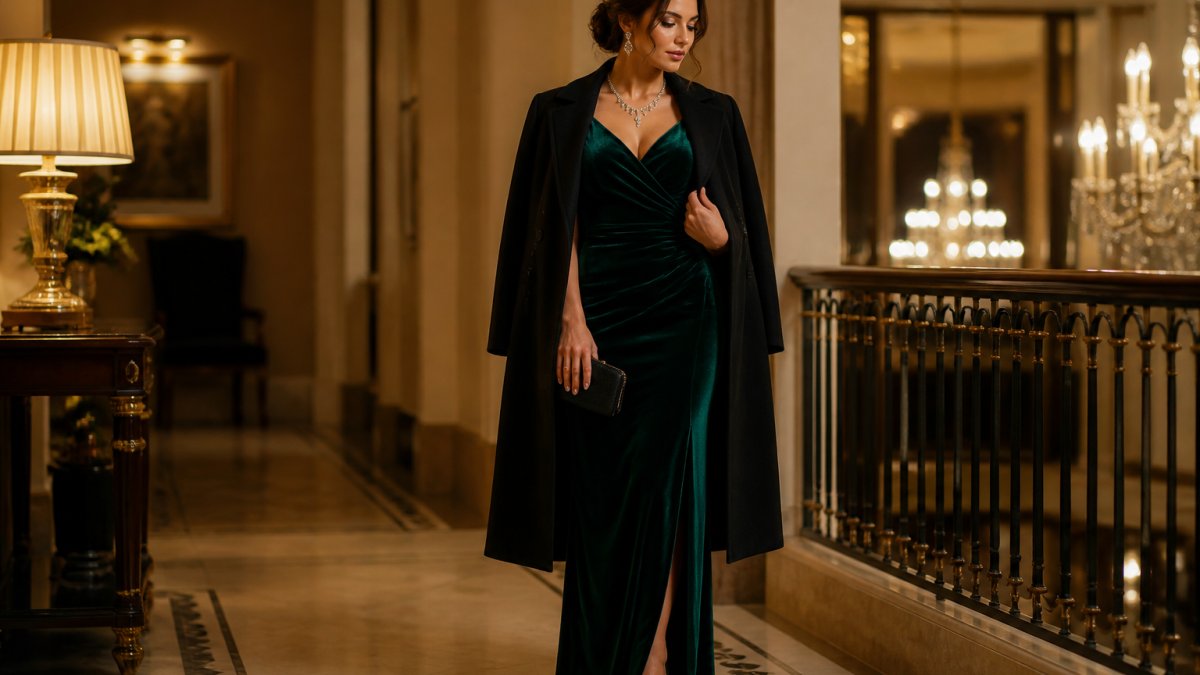
Step 1: Choose your dress first. Everything else builds from this. Pick something in a winter-appropriate fabric, like velvet, heavy satin, or structured polyester. Jewel tones (emerald, sapphire, burgundy) work better in winter than pastels.
Step 2: Layer underneath. Add a silk camisole or long-sleeved silk shirt under strapless or sleeveless designs. This keeps you warm and prevents visible undergarments.
Step 3: Select your outer layer. A tailored coat, pashmina wrap, or blazer goes over the dress. Make sure it complements the dress colour and silhouette; it should enhance, not fight.
Step 4: Choose hosiery and footwear. Opaque tights in black or nude, closed-toe heels in a neutral shade. Walk around in these before the event; comfort matters.
Step 5: Add jewellery and accessories. One statement piece, necklace or earrings, not both. A simple bracelet. A clutch or small evening bag in black or metallic.
Step 6: Check the full look. Stand in front of a mirror with all layers on.
Common Mistakes to Avoid
Most winter formal disasters happen because people ignore the practical side of dressing formally in cold weather.
Frequently Asked Questions
What fabrics are best for winter formal dresses?
Velvet, satin, and silk are ideal for winter formal wear. Velvet provides exceptional warmth and an elegant drape, whilst satin and silk offer sophistication with a luxurious feel. Heavy-weight polyester blends also work well, offering durability and insulation. These fabrics resist creasing and maintain their shape throughout the evening, making them perfect for formal events.
How do I stay warm at a winter wedding without ruining my outfit?
Layer strategically with tailored coats, pashmina wraps, or faux fur stoles that complement your dress rather than hide it. Choose outerwear in neutral tones or jewel shades that match your colour palette. A structured coat worn over your shoulders or a lightweight wrap adds warmth without compromising your silhouette. Remove layers once you're indoors where heating is available.
Can I wear black to a winter wedding?
Yes, black is entirely appropriate for winter formal events and weddings. It's elegant, slimming, and pairs beautifully with winter fabrics like velvet and satin. Black works particularly well with jewel-toned accessories and metallics. Avoid black only if the invitation specifically requests otherwise or if the wedding is during daylight hours in summer, where lighter colours are traditionally preferred.
What are the best shoes for a winter wedding?
Closed-toe heels or formal flats are ideal for winter weddings, offering warmth and stability on potentially slippery surfaces. Metallic or jewel-toned heels complement formal dresses beautifully. Consider shoes with good grip or traction if the venue is outdoors. Opaque hosiery or tights can extend warmth from your legs, allowing you to wear slightly lighter footwear whilst staying comfortable.