

Table of Contents
- Why Sustainable Fashion Choices Matter for Corporate Professionals
- Understanding Sustainable Fabrics for Clothing
- Building a Professional Capsule Wardrobe with Sustainable Workwear
- How to Build a Sustainable Work Wardrobe on a Real Budget
- Verifying Sustainability and Avoiding Greenwashing
- Care, Repair, and End-of-Life Decisions for Professional Clothing
- Practical Office Outfit Ideas Using Sustainable Pieces
- Frequently Asked Questions
Last Updated: October 19, 2026
Why Sustainable Fashion Choices Matter for Corporate Professionals
Building a professional wardrobe that aligns with your values doesn't mean sacrificing quality or style. Sustainable fashion choices for corporate professionals are a practical necessity: pieces designed to last reduce environmental impact, cut cost per wear, and build a wardrobe that works.
The real advantage is efficiency: durable, versatile pieces mean fewer shopping trips, less decision fatigue, and more confidence.
At MISTY'S, we've built our collection around this principle: atelier-grade craftsmanship designed to last.
Understanding Sustainable Fabrics for Clothing
The fabric you choose determines durability, environmental impact, and performance. Not all natural fibres are equally sustainable, and recycled materials come with trade-offs.
Natural Fibres: Organic Cotton, Hemp, and Bamboo
Organic cotton eliminates synthetic pesticides and uses significantly less water than conventional cotton.
Hemp is arguably the most sustainable natural fibre: it grows without pesticides, regenerates soil, needs minimal water, and softens with wear.
Bamboo viscose offers a silk-like drape, but production is chemical-intensive.
TENCEL's sustainable manufacturing standards outline how closed-loop production reduces water and chemical waste compared to conventional viscose.
Recycled and Biodegradable Materials
Recycled polyester diverts plastic from landfills and uses less energy than virgin polyester, performing well in blends that improve durability and reduce wrinkles.
Biodegradable fabrics like linen and hemp break down naturally at end-of-life, but only if you compost them rather than bin them, most people don't, which limits the real-world benefit.
No single fabric is perfect: recycled materials require less extraction but don't solve disposal, while natural fibres biodegrade but often require intensive farming.
Building a Professional Capsule Wardrobe with Sustainable Workwear
A capsule wardrobe works because every piece coordinates with others, each item earns its place by working with multiple pieces. What most guides lack is a plan you can run against your own dress code, climate and laundry routine.
A Dress-Code Framework You Can Apply
Start by counting the days you actually spend in each setting. A common pattern is three office days, one client-facing day and one remote day per week, that ratio should drive how many formal versus relaxed pieces you own.
A workable starting formula for a five-day week is:
- Two tailored bottoms (trousers or a skirt in navy, charcoal or black) that match at least three tops each.
- Four to five tops that bridge casual and formal: two structured shirts, two knit or jersey layers, one statement piece.
- One suit set or matching jacket-and-trouser combination for formal days and client meetings.
That's roughly 10-12 garments, enough to cover a full working week with one laundry cycle, the real constraint.
Adapting the Capsule to Formal, Business-Casual and Hybrid Dress Codes
Business formal. The anchor is the matching suit. Choose a solid colour so the jacket can be worn separately with tailored trousers, doubling the outfits.
Business casual. This is where most wardrobes fail, because the dress code is ambiguous.
Hybrid and remote. Build a 'camera layer' of two or three tops that photograph well under indoor lighting, solid colours, minimal patterns, clean necklines.
Foundational Pieces That Earn Their Place
Start with neutral bases: white, black, navy, and soft grey. Add one accent colour that suits your skin tone, letting you rotate the same bases without looking repetitive.
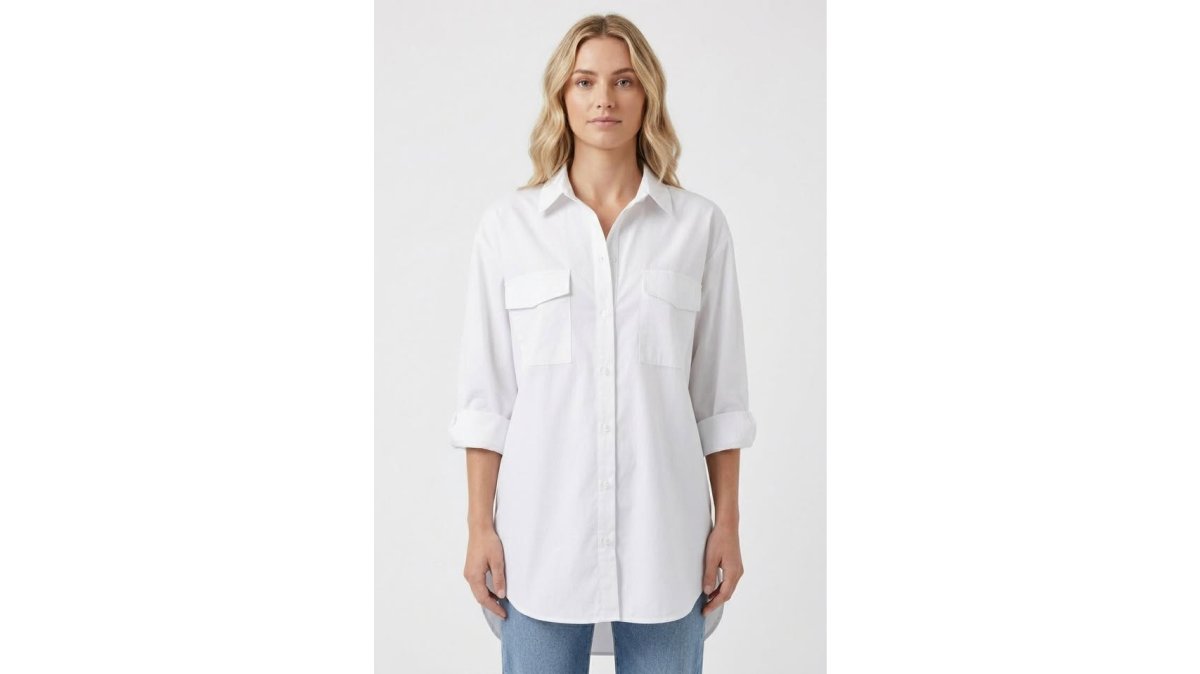
For business-casual environments, you need pieces that bridge structured and relaxed. The Aura Casual Loose Cotton-Linen Long-Sleeve Shirt at $100.00 works standalone or layered under blazers. Cotton-linen blends breathe well and soften with washing.

For formal dress codes, a slim-fit suit set provides the foundation. The Women's Slim-Fit Two-Piece Suit Set at $160.59 comes in multiple colours, allowing you to rotate between black for traditional corporate settings and softer tones like apricot or peacock blue for creative industries.
Layering and Versatility Across Seasons
Layering extends your wardrobe's flexibility and lifespan. The Vespera Plus-Size Four-Way Stretch Open-Front Cardigan Shirt with Pockets at $60.00 uses four-way stretch fabric that resists wrinkles across seasons and dress codes.
A minimalist pullover becomes your second-layer workhorse. The Aura Minimalist V-Neck Everyday Easy-Care Pullover at $100.00 uses easy-care polyester, no ironing, and comes in eight colours.
The strategy: buy fewer, higher-quality pieces, then layer strategically to create different looks.
How to Build a Sustainable Work Wardrobe on a Real Budget
Sustainable fashion doesn't require unlimited spending. It requires intentional spending.
Cost Per Wear and Garment Lifespan Planning
Calculate cost per wear before buying anything. A $200 piece worn 200 times costs $1 per wear. A $50 piece worn 10 times costs $5 per wear. The expensive piece wins.
Lifespan depends on fabric quality, construction, and care. Natural fibres and recycled blends typically last 3-5 years with proper maintenance; fast-fashion pieces often fail within one season.
Aura Casual Loose Cotton-Linen Long-Sleeve Shirt →
| Garment Type | Sustainable Cost | Expected Lifespan | Cost Per Wear (500 wears) |
|---|---|---|---|
| Cotton-linen shirt | $100 | 4-5 years | $0.20 |
| Tailored trousers | $80-120 | 3-4 years | $0.16-$0.24 |
| Suit set | $160 | 5-7 years | $0.23-$0.32 |
| Cardigan | $60 | 3-4 years | $0.12-$0.20 |
| Pullover | $100 | 4-5 years | $0.20 |
Second-Hand and Vintage Office Clothing
Pre-owned clothing eliminates manufacturing impact entirely. A vintage blazer or tailored dress from a quality brand costs a fraction of new and often outlasts contemporary pieces.
Check vintage and second-hand retailers for structured pieces like blazers, wool trousers, and silk blouses.
The trade-off: second-hand requires patience and flexibility on size and colour, but the savings are substantial.
Verifying Sustainability and Avoiding Greenwashing
Most brands claim sustainability. Few deliver it, greenwashing is rampant.
Look for specific certifications rather than vague language. Global Organic Textile Standard (GOTS) certification verifies organic fibre content and worker conditions.
Avoid claims like "eco-friendly," "natural," or "sustainable" without supporting evidence, these words mean nothing without third-party verification.
Ask direct questions: Where is this made? Who makes it? What certifications does it hold?
Care, Repair, and End-of-Life Decisions for Professional Clothing
A sustainable garment is only sustainable if you keep wearing it. Extending a garment's life by even a year or two typically beats any material swap at the point of sale.
A Maintenance Routine That Extends Garment Life
Read care labels and follow them, but apply a few rules that labels rarely spell out:
- Wash less often than you think. Tailored trousers and blazers rarely need washing after a single wear. Air them overnight and spot-clean marks. Over-washing is the biggest cause of premature wear in workwear.
- Wash cold and air-dry. Heat breaks down fibres and sets shrinkage. Natural fibres like cotton-linen blends soften and improve with proper care rather than degrading.
- Rotate, don't repeat. Give shoes a day off between wears and rotate shirts so no single piece takes all the strain. A simple rotation pattern roughly doubles the effective lifespan of your most-worn items.
Pilling, fading, and minor stains are normal, address them promptly. A fabric shaver removes pilling without damaging fabric, and spot-cleaning prevents stains from setting. These small interventions extend lifespan by years.
Tailoring and Repair: The Economics
Professional tailoring is worth the investment. A hemmed pair of trousers or a taken-in blazer fits better and lasts longer because proper fit prevents strain on seams.
Learn basic repairs: hand-sewing loose buttons, patching small holes, reinforcing seams. Keep a small repair kit, needle, thread in your two most common colours, spare buttons, and fix small faults before they become reasons to discard.
End-of-Life Decisions
When a piece reaches end-of-life, work through a short hierarchy rather than defaulting to the bin:
- Resell anything still wearable, structured pieces like blazers, wool trousers and silk blouses hold value best.
- Donate items that are clean and intact; charity retailers are the most common route for workwear.
- Repurpose worn items as cleaning cloths or repair fabric before disposal.
- Recycle only as a last resort, and check whether your local council or a retailer take-back scheme accepts textiles.
Composting is only realistic for 100% natural-fibre items and only if you have a compost system, most people don't. Textile waste is a significant environmental problem, and responsible disposal ensures your sustainable fashion choices don't become waste.
Textile Exchange's guidance on garment end-of-life options outlines disposal methods that maximise environmental benefit.
Practical Office Outfit Ideas Using Sustainable Pieces
Business-Formal Combinations
Start with the Women's Slim-Fit Two-Piece Suit Set in black or navy, paired with a crisp white or neutral blouse. Add the Vespera Meridian Vertical Minimalist Tote Bag at $200.00 for structured, professional carry.
For variation, swap the suit jacket for the Vespera Plus-Size Four-Way Stretch Open-Front Cardigan Shirt with Pockets over tailored trousers, polished without the formality of a full suit, ideal for hybrid environments or creative industries.
Smart-Casual and Hybrid-Work Outfits
Layer the Aura Casual Loose Cotton-Linen Long-Sleeve Shirt in white or soft blue over the Aura Minimalist V-Neck Everyday Easy-Care Pullover for depth. Add the Cotton-Linen Drawstring Cropped Pants at $56.87 for a relaxed, intentional silhouette. The Vespera Metro Urban Minimalist Commuter Tote Bag at $69.00 keeps everything organised.

For video calls or hybrid days, the Loose-Fit Cotton-Linen Shirt Dress with Mid Sleeves at $71.39 works standalone or layered with the cardigan, it photographs well on camera and stays comfortable all day.

The principle: mix structured pieces with relaxed ones, tailored trousers with soft, breathable tops, formal jackets with casual fabrics. This balance makes sustainable fashion choices work across professional contexts.
Building a sustainable work wardrobe is an investment in quality, longevity, and confidence.
At MISTY'S, we've designed our collection around this philosophy. Pair them with our professional tote bags, the Vespera Heritage Artisan Carry-All Tote Bag at $190.00 and the Vespera Artisan Full-Grain Leather Vertical Satchel at $120.00, and you have a complete system designed to serve you for years.
Frequently Asked Questions
What makes workwear truly sustainable?
Sustainable workwear combines low-impact materials (organic cotton, recycled polyester, TENCEL Lyocell), ethical production practices, and durability. A sustainable piece lasts years, not seasons. Look for brands that disclose their supply chain, use responsibly sourced fibres, and minimise water and chemical use. Garments designed to resist wear and maintain their shape through multiple washes, rather than fast-fashion items that pill or fade, represent genuine sustainability.
How can I build a professional capsule wardrobe on a budget?
Start with neutral, versatile basics: white and black cotton-linen shirts, tailored trousers, and a structured blazer. Calculate cost per wear, a $100 shirt worn 100 times costs $1 per wear, while a $30 shirt worn 5 times costs $6. Invest in fewer, higher-quality pieces that layer and mix easily. Add second-hand items from resale platforms for variety without the cost. Prioritise durability and timeless cuts over trends, and build slowly rather than buying a full wardrobe at once.
What fabrics are best for sustainable workwear?
Organic cotton, hemp, and bamboo are lower-impact natural fibres that breathe well in office settings. Recycled polyester reduces waste, while TENCEL Lyocell uses a closed-loop production process. Linen blends (like cotton-linen combinations) offer durability and comfort. Avoid virgin polyester and synthetic fabrics when possible. Check product listings for fibre content, many sustainable brands clearly state their materials. The best choice balances environmental impact, durability, and how well the fabric performs in a professional environment.
Is second-hand clothing suitable for corporate wear?
Yes, second-hand clothing is excellent for professional wardrobes. Vintage and pre-owned pieces from quality brands often have superior construction and timeless cuts compared to new fast-fashion items. Search resale platforms for classic blazers, trousers, and structured pieces in neutral colours. Inspect seams, zips, and fabric condition carefully. Second-hand shopping extends garment lifecycles, reduces waste, and offers access to atelier-grade pieces at a fraction of retail cost, making it both sustainable and budget-friendly.
How can I care for work clothes so they last longer?
Wash in cold water, use mild detergent, and air-dry whenever possible to reduce wear and fading. Turn garments inside out before washing to protect the exterior. Repair small issues, loose buttons, minor seams, immediately to prevent larger damage. Store on hangers rather than folded to maintain shape. Dry-cleaning is harsh; reserve it for structured pieces like suits and blazers. Rotate your wardrobe so pieces rest between wears. Proper care can double or triple a garment's lifespan, making even moderately priced items genuinely sustainable investments.