

Table of Contents
- Evening Wear Dress Codes Explained
- Cocktail Dress Code Requirements You Need to Know
- How to Style a Black Cocktail Dress Three Ways
- Evening Wear Accessories Guide: Finishing the Look
- Evening Wear for Every Season and Weather
- Comfort-First and Gender-Neutral Evening Style
- Building a Budget-Friendly Evening Capsule Wardrobe
- Frequently Asked Questions
Last Updated: September 16, 2026
Evening Wear Dress Codes Explained
Working out what do people wear in the evening? It starts with decoding the invitation, and the dress code line is your instruction manual. Formal, cocktail, and smart casual each set a different bar, and getting it wrong is the fastest way to feel out of place at an event.
Formal wear means floor-length gowns or a structured, well-tailored dress in a rich fabric. Cocktail attire sits a step below: knee-length to midi, polished, with a little shine. Smart casual is the loosest of the three, but it still means a considered outfit, not your weekday jeans and a t-shirt.
The trick most people miss when asking what do people wear in the evening? is that dress codes describe a mood, not a uniform. A velvet midi can read more formal than a plain silk maxi if the styling is sharper.
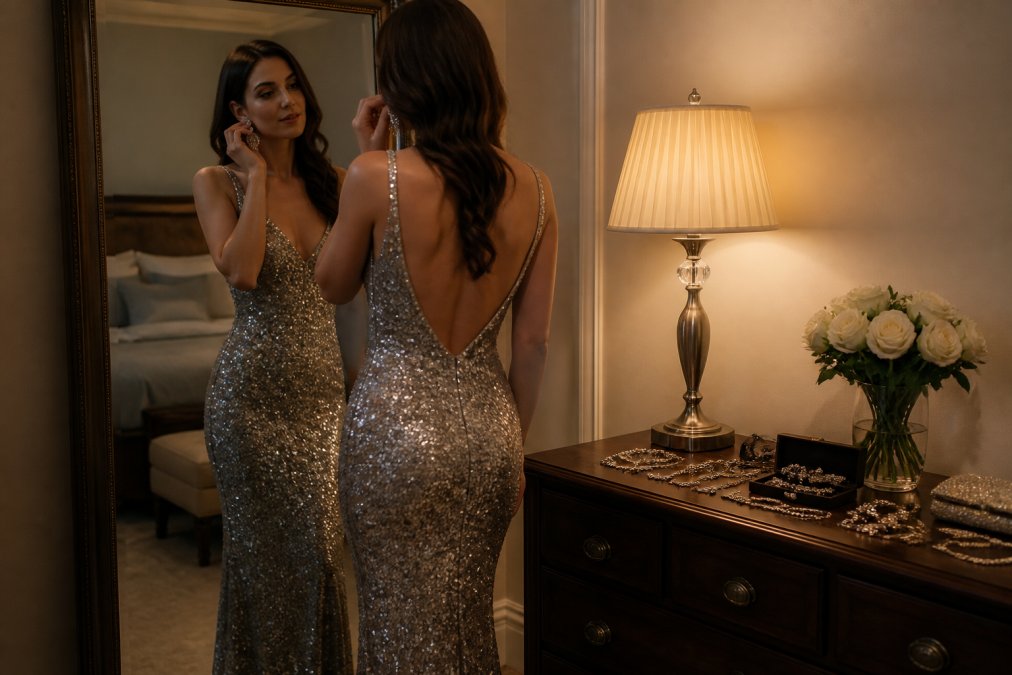
Black-Tie and White-Tie
White-tie is the most formal tier: floor-length gowns, long gloves, and serious jewellery. Black-tie relaxes slightly to elegant cocktail or full-length dresses with refined accessories. In practice, black-tie is what most gala and wedding invitations actually mean, even when the wording sounds grander than the reality.
Cocktail and Smart Casual
Cocktail calls for a knee-length or midi dress with polish: a slip dress, a fitted sheath, or a bardot top with tailored trousers. Smart casual opens the door to a blazer over a midi skirt, straight-leg trousers with a silk camisole, or a jumpsuit. The common thread is intent. If it looks like you thought about it, you're in the right territory.
Cocktail Dress Code Requirements You Need to Know
The cocktail dress code requirements come down to four things: length, fabric, footwear, and finish. Hit all four and you're safe at almost any evening event. But the reason most people still get it wrong is that they treat these as a checklist rather than a system, each choice affects the others.
- Length: Knee-length through midi. Avoid floor-length gowns (too formal) and mini hemlines (too casual for most cocktail settings). A midi that hits just below the knee is the safest register because it photographs well seated and standing.
- Fabric: Silk, satin, velvet, crepe, or a structured knit. Skip jersey, denim, and anything that creases the moment you sit down. The test is simple: scrunch a corner of the fabric in your hand for ten seconds. If it springs back smooth, it will survive a three-hour event.
- Footwear: Heels or dressy boots. Flats can work if they're polished and intentional. A block heel between 5cm and 7cm is the practical sweet spot, enough lift to read as evening, stable enough for uneven floors and long standing periods.
- Finish: One statement accessory, clean lines, and a clutch bag. Skip the tote. A clutch that fits a phone, a card, and a lipstick is the correct size; anything larger starts reading as daywear.
The mistake most often made is treating cocktail as "slightly fancy casual." It isn't. It's a specific register, and the women who nail it are the ones who treat the four requirements above as a system, not a suggestion.
The Climate Variable Most Guides Ignore
Cocktail requirements shift with the weather, and this is where generic advice falls apart. In a hot, humid evening, silk and satin cling and show sweat; a crepe or structured knit holds its shape and breathes better. In a cool evening, velvet and heavier satin work, but you need a layer you can remove indoors, a tailored blazer or a wrap that doesn't crush the dress underneath.
A common pattern is to choose the fabric first based on the forecast, then let the length and footwear follow. A sleeveless crepe midi with a block heel handles a warm evening; a long-sleeved velvet midi with dressy boots handles a cold one. Same dress code, different execution.
Body-Type Considerations That Actually Help
Most cocktail guides mention body types in passing. The useful version is about proportion, not shape. If you're tall, a midi can read short, check where the hem sits relative to your knee, not the model's. If you're petite, a midi can swamp you; a knee-length hem or a defined waistline restores balance. If you're curvy, a structured fabric skims rather than clings, which is why crepe and velvet outperform jersey at this dress code.
The point is not to flatter a shape. It's to make the outfit look intentional, which is what cocktail actually rewards.
How to Style a Black Cocktail Dress Three Ways
A black cocktail dress is the most versatile piece in an evening wardrobe, and the styling is what changes its register. One dress, three completely different evenings. Here's how to style a black cocktail dress for each.
Look 1: Polished and Professional
Pair a fitted black midi with a structured blazer, pointed heels, and a slim clutch. Keep jewellery minimal: small gold studs and a thin bracelet. This reads as boardroom-to-dinner and works for corporate annual events or work-adjacent evening functions.
Odette Sequined V-Neck High-Waist →
Look 2: Glamorous and Bold
Swap the blazer for a sequined or metallic statement piece layered over the dress, add strappy heels, and go for bold earrings. This is the gala version. It's also where a sequined gown from the MISTY'S evening collection earns its keep, since the fabric does the heavy lifting and you can keep accessories restrained.

Look 3: Relaxed and Effortless
Throw a cropped leather or denim jacket over the dress, switch to ankle boots, and carry a small crossbody. The dress stays the same; the energy drops a full notch. This is the version for a casual dinner or a night out where you want to look good without looking like you tried.
Evening Wear Accessories Guide: Finishing the Look
Evening wear accessories are what separate a good outfit from a finished one. The rule is simple: pick one statement piece, then let everything else support it. A clutch bag, a pair of statement earrings, and one bracelet is usually enough. More than that and the look starts competing with itself.
Metal tone matters more than people think. Gold jewellery warms up black, navy, and emerald; silver reads cooler and sharper against grey and icy tones. If your dress has hardware, match your jewellery to it. If it doesn't, choose based on the mood you want.
For footwear, strappy heels are the default, but dressy ankle boots work well for cooler evenings and give you more stability on uneven ground. A clutch should hold your phone, a card, and a lipstick.
Evening Wear for Every Season and Weather
Weather changes the brief more than most style guides admit.
The Comfort-First Angle Nobody Covers
The seasonal advice most guides give assumes you'll suffer for the look.
Gender-Neutral Weather Layering
Comfort-First and Gender-Neutral Evening Style
Comfort and style are not opposites, and the best evening outfits prove it.
Building a Budget-Friendly Evening Capsule Wardrobe
| Piece | Why It Earns Its Place | Works For |
|---|---|---|
| Black midi dress | Versatile base for any register | Cocktail, smart casual, dinners |
| Tailored blazer | Instantly sharpens any outfit | Corporate events, cool evenings |
| Straight-leg trousers | Comfortable, dressy with the right top | Smart casual, gender-neutral looks |
| Silk camisole or bardot top | Adds polish without bulk | Pairing with trousers or skirts |
| One statement gown | Covers formal invitations | Galas, weddings, black-tie |
| Neutral heels or dressy boots | Finishes every look | All occasions |
Frequently Asked Questions
What is the 3-3-3 rule for clothes?
The 3-3-3 rule is a packing and styling guideline: three tops, three bottoms, and three pairs of shoes that all mix and match. For evening wear, this translates to choosing a few versatile pieces, such as a slip dress, straight-leg trousers, and a blazer, that work across multiple events. It keeps your wardrobe focused and reduces outfit decision fatigue.
What is evening wear for a woman?
Evening wear covers everything from cocktail attire to formal gowns, depending on the event's dress code. For a cocktail party, a midi skirt with a bardot top or a well-fitting slip dress works well. For black-tie galas, a floor-length gown or a structured jumpsuit in a rich fabric is appropriate. The key is matching the formality level and choosing pieces that feel polished and comfortable.
How do you distinguish between cocktail and formal dress codes?
Cocktail attire sits between smart casual and formal wear. Hemlines typically fall at or just below the knee, and fabrics like silk or crepe are common. Formal dress codes, including black-tie, call for floor-length gowns or elegant separates in richer fabrics such as satin or sequins. Cocktail events usually start in the early evening, while formal events tend to be later and more ceremonial.
How do I choose the right accessories for an evening outfit?
Start with one statement piece, such as a sequined clutch or bold earrings, then keep the rest minimal. Match metals to your outfit's undertones: gold works well with warm colours, silver with cool tones. For footwear, choose heels or dressy boots that complement the silhouette. A well-chosen clutch bag and delicate jewelry can elevate even a simple evening ensemble without overwhelming it.