

Table of Contents
- Why Formal Dress Alterations Matter
- Common Evening Gown Alterations Explained
- Formal Dress Alterations Timeline: Planning Ahead
- What to Bring to Your Dress Fitting Appointment
- Finding a Qualified Seamstress for Your Formal Wear
- Cost Factors and Budget Planning for Alterations
- Final Fitting Checklist and Post-Alteration Care
- Frequently Asked Questions
Last Updated: September 25, 2026
Why Formal Dress Alterations Matter
Even stunning gowns rarely fit perfectly off the rack. Silhouette, length, and structure typically need adjustment for your body and occasion. Professional formal dress alterations transform a good dress into one that makes you feel genuinely confident for weddings, galas, and black-tie events.
Properly altered dresses show immediately: hems sit at the right length, seams follow your natural lines, and the silhouette feels intentional. For events you'll remember and photograph, you want to feel like yourself, only elevated.
At MISTY'S, we understand that finding the perfect formal dress is just the beginning. Many customers invest in atelier-grade pieces that deserve proper fitting. Understanding what formal dress alterations are possible, timelines, and costs helps you make the most of your investment.
Common Evening Gown Alterations Explained
Evening gowns often require multiple adjustments. Understanding what's possible and what fabric constraints exist helps you communicate clearly with your seamstress and set realistic expectations.
Hemming and Length Adjustments
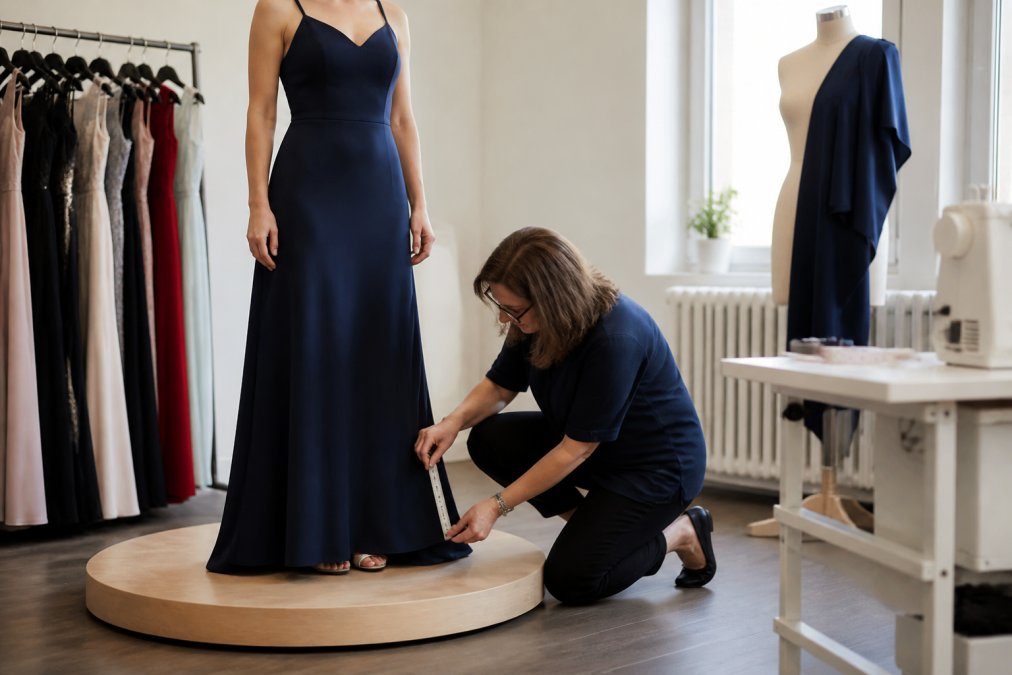
Hemming is the most common formal dress alteration. For floor-length gowns, the hem should just graze the top of your shoe or break slightly on the floor, depending on your height and shoe choice.
Fabric type fundamentally changes the hemming approach. Plain silk charmeuse allows straightforward blind hemming, while delicate fabrics like chiffon or tulle require French seaming or hand-stitching. Lace overlays require preserving the pattern at the hem line, which may not align with your ideal length. Beading, sequins, or appliques near the hem require temporary removal, hemming, and hand-reattachment.
Train-length adjustments require proportional adjustment to maintain silhouette and prevent uneven dragging. Beaded or heavily embellished trains require specialist handling.
Fabric weight affects cost and feasibility. Heavy fabrics like duchess satin hold hems well but require precise stitching; lightweight fabrics like chiffon may shift, requiring multiple fittings. Seamstresses charge based on fabric type, weight, and complexity, simple hemming costs less; beaded or lace-detailed hems cost significantly more.
Bust, Waist, and Hip Resizing
Adjusting the bodice and waist via side seams is common, but fabric construction and design intent create hard limits on how much a dress can be resized.
Letting out requires existing seam allowances (typically 1-2 cm per side). Structured fabrics like duchess satin allow adjustment; delicate fabrics like silk charmeuse cannot be let out significantly. Beaded or embellished side seams require removing beads, adjusting, and reattaching, labour-intensive and often not cost-effective.
Taking in is more flexible than letting out, but removing more than 5 cm total risks distorting darts, seams, and balance. Structured gowns with boning require adjusting internal structure as well.
Hip adjustments follow similar logic: letting out side seams or adding panels if tight, tapering if loose. Discuss weight fluctuations honestly with your seamstress, as temporary adjustments may use different techniques than permanent ones.
Neckline and Sleeve Modifications
Raising a neckline is straightforward on stable fabrics like duchess satin but requires careful handling on delicate fabrics to prevent puckering. Lace or beading may limit how much the neckline can be raised without compromising the design.
Lowering a neckline requires more skill and may not be possible if it compromises structural support or damages beadwork. Gowns with internal structure require adjusting or removing boning, a specialist task.
Sleeve length adjustments vary by style. Adding straps or sleeves requires matching fabric, often unavailable. Shortening is easier on straight sleeves than bell, cap, or flutter sleeves. Beaded sleeves require removing beads, adjusting, and reattaching, time-consuming.
Corset and Boning Adjustments
Formal gowns often feature internal structure, corsetry, boning, or structured panels, that creates silhouette and support. Adjusting these requires expertise and is one of the most technical alterations available.
If a dress feels restrictive or creates pressure points, a seamstress can modify boning placement, add support, or adjust corset tightness. Additional boning requires opening seams, inserting boning, and restitching, labour-intensive work.
Boning material matters: plastic is flexible and easier to adjust; steel is rigid and requires specialist tools. Ask potential seamstresses about corset experience, materials knowledge, and portfolio examples of structural adjustments.
White Chiffon Flower Lace Wedding Dress →
Formal Dress Alterations Timeline: Planning Ahead
Timing is critical when planning formal dress alterations. Timeline depends on complexity, workload, and how far in advance you book.
Simple hemming takes 2-3 weeks; complex work like resizing, boning adjustments, or beaded fabrics takes 4-6 weeks. Urgent alterations (within two weeks) incur rush fees and limited availability.
Book at least 6-8 weeks before your event for multiple alterations. This buffer accounts for delays and corrections.
What to Bring to Your Dress Fitting Appointment
Arrive prepared for your fitting to ensure accurate alterations. Bring:
- The dress itself, of course, clean and ready to try on
- The shoes you'll wear to the event, in the exact heel height you'll use. Heel height directly affects hem length, so this is non-negotiable.
- Any undergarments you'll wear beneath the dress, strapless bra, shapewear, or specific lingerie that affects how the dress sits
- A list of specific concerns: areas that feel too tight, too loose, or uncomfortable; length preferences; any structural issues you've noticed
- Photos or reference images if you want the neckline raised, sleeves shortened, or other specific changes
- Your availability for follow-up fittings, typically scheduled 1-2 weeks later
Finding a Qualified Seamstress for Your Formal Wear
Not all seamstresses are equally skilled with formal wear. Prioritise experience with evening gowns, wedding dresses, and formal wear specifically.
Cost Factors and Budget Planning for Alterations
Formal dress alteration costs vary widely. Simple hemming costs less; comprehensive alterations on beaded gowns cost significantly more.
Final Fitting Checklist and Post-Alteration Care
The final fitting is your opportunity to confirm the dress is perfect before the event. Use this detailed checklist, and know what to inspect for and when to request corrections:
Fit and Structure:
- Hem length is correct when wearing the exact shoes you'll use at the event. Walk, sit, and move to ensure the hem doesn't shift or drag.
- Neckline sits properly and doesn't gape, pull, or create unflattering bunching. Check from multiple angles in a mirror.
- Sleeves (if present) end at the right point on your wrist or arm without pulling or riding up when you raise your arms.
- Bust, waist, and hip areas fit comfortably without pulling, excess fabric, or visible seam strain. You should be able to breathe deeply and move freely.
- Seams lie flat and follow your natural lines. No diagonal pulling or twisting indicates poor fit.
- Boning or internal structure supports your frame without creating pressure points or discomfort. If you feel sharp edges or uneven support, flag this immediately.
Finish and Integrity:
- Beading, lace, or appliques are intact and not damaged during alterations. Inspect closely for loose beads, torn lace, or missing sequins.
- Zips, buttons, or closures function smoothly without catching, sticking, or straining the fabric.
- No loose threads or unfinished edges are visible on seams, hems, or closures.
- Fabric shows no stains, marks, or damage from the alteration process.
- Hem stitching is even and invisible (for blind hems) or appropriately finished for the fabric type (French seams on delicate fabrics, for example).
When to Request Corrections:
Minor issues warrant a touch-up request:
- A hem that's 0.5-1 centimetre off from your ideal length
- A single loose thread or small unfinished edge
- A zip that catches slightly but functions
- A seam that pulls minimally when you move in a specific way
Major issues that suggest rework is needed:
- Hem length is more than 1 centimetre off or visibly uneven
- Seams pull significantly or create visible distortion
- Beading or lace is damaged or missing in multiple areas
- Zips or closures don't function reliably
- Neckline or armholes create discomfort or visible gaping
- Internal boning creates pressure points or sharp edges
Post-Alteration Storage and Care:
Frequently Asked Questions
How far in advance should I book my formal dress alterations?
Book your alterations at least 4-6 weeks before your event. This timeframe allows your seamstress to complete the work without rushing and gives you time for a final fitting. For complex alterations involving beading, lace appliqués, or significant resizing, aim for 8-10 weeks. If your event is sooner, contact seamstresses immediately, some may accommodate rush orders for an additional fee.
What are the most common alterations required for evening gowns?
The most frequent alterations are hemming (adjusting length), taking in or letting out seams at the bust, waist, and hips, and adjusting necklines or sleeves. Many formal dresses also need bodice adjustments or boning repositioned for better support and silhouette. Beading or lace appliqué repairs and train or bustle modifications are common for bridal gowns. Your seamstress will assess which alterations your specific dress needs during the fitting.
What should I bring to my formal dress fitting appointment?
Wear the undergarments and shoes you'll wear on the day of your event, as these affect fit and length. Bring any jewellery, shawls, or accessories you plan to wear so your seamstress can ensure the dress complements them. Bring photos or fabric swatches if you're considering colour changes or adding embellishments. Wear minimal makeup and have your hair styled similarly to how you'll wear it, as this affects neckline fit. Write down any specific concerns or requests beforehand.
Is it better to buy a dress that is too big or too small for alterations?
Always choose a dress that is slightly too large rather than too small. Seamstresses can take in seams and adjust structural integrity more easily than letting out fabric, especially on formal wear with beading or delicate construction. If a dress is too small, you risk compromising the silhouette or damaging details during alterations. A dress that's one or two sizes too large can usually be tailored beautifully without excessive cost or structural risk.