

Table of Contents
- Best Fabrics for Cocktail Dresses: An Overview
- Satin: Sleek and Structured
- Chiffon: Light and Airy
- Lace: Delicate and Detailed
- Velvet: Luxurious and Rich
- Crepe and Georgette: Elegant Drape
- Luxurious Cocktail Dress Fabrics: Natural vs. Synthetic Fibres
- Summer Cocktail Dress Fabrics: Weight and Seasonality
Best Fabrics for Cocktail Dresses: A Complete Guide
Last Updated: July 29, 2026
When shopping for a cocktail dress, fabric matters more than most people realise. The right material transforms how a dress drapes, how comfortable you feel, and how confident you'll look. At MISTY'S, we've spent years helping women find fabrics that suit their body type, occasion, and climate. The difference between a luxurious dress and a cheap one often comes down to fibre composition and weight, not price.
Best Fabrics for Cocktail Dresses: An Overview
Choosing the right fabric depends on formality, season, body type, and movement needs. Some fabrics create structure and hold their shape. Others drape fluidly and move with your body.
According to fabric retailers across Australia, the most popular choices for evening wear fall into three categories: structured fabrics that create defined silhouettes, fluid fabrics that emphasise movement, and textured fabrics that add visual interest. Spotlight Australia's evening wear fabric guide notes that satin and crepe dominate formal occasions, while chiffon and georgette suit warmer months and layered designs.
The weight of a fabric, measured in grams per square metre, directly affects how it hangs on your body. Lightweight fabrics (under 150 gsm) are breathable but may cling to curves. Medium-weight fabrics (150-250 gsm) offer the sweet spot for most body types, providing structure without bulk. Heavy fabrics (over 250 gsm) create dramatic silhouettes but feel stiff in warm weather.
| Fabric Type | Weight (gsm) | Best For | Drape Quality |
|---|---|---|---|
| Chiffon | 30-50 | Warm weather, layering | Fluid, ethereal |
| Georgette | 40-70 | Summer evening wear | Soft, flowing |
| Satin | 100-150 | Formal events, structure | Smooth, sleek |
| Crepe | 120-180 | Year-round elegance | Subtle texture, graceful |
| Velvet | 250-400 | Winter, statement pieces | Rich, luxurious |
| Lace | Varies | Overlays, details, romance | Delicate, intricate |
Satin: Sleek and Structured
Satin creates an unmistakable luxurious sheen that catches light beautifully. The smooth, glossy surface reflects light, making it ideal for fitted silhouettes that need to hold their shape throughout an evening. A satin dress will look polished at the start and end of the night with no drooping or sagging.
One honest limitation: satin shows every snag, watermark, and fingerprint. It requires careful handling during wear and storage. Sitting down in satin can create wrinkles that take time to fall out. For Australian summers, traditional satin can feel heavy and warm.
Spotlight Australia's satin fabric collection offers stretch satin options starting from $20 per metre, which adds give to the fabric so it moves with your body instead of against it, making it more forgiving for all-night wear.
Quality varies dramatically with satin. High-quality satin feels liquid and drapes beautifully. Low-quality satin feels plasticky and cheap. If ordering online, request fabric swatches before committing.
Chiffon: Light and Airy
Chiffon is the opposite of satin in almost every way. It's sheer, lightweight, and creates flowing movement. The fabric feels weightless against your skin, making it perfect for warm weather and layered designs. Chiffon's transparency means it requires lining or a slip underneath.
The magic of chiffon lies in its drape. The fabric naturally falls into elegant folds without needing structure from the garment itself. This makes chiffon ideal for dresses with asymmetrical hemlines, flutter sleeves, or wrap designs.
Chiffon comes in pure silk versions and polyester versions. Pure silk chiffon, available from Rathdowne Fabrics at $50 per metre, feels luxurious and breathes beautifully. Polyester chiffon costs less but can feel slightly plasticky and doesn't breathe as well. For Australian summers, the breathability difference matters significantly.
Chiffon is delicate to sew and difficult to care for. The fabric snags easily, and seams can pucker if sewn incorrectly. Chiffon requires careful washing, hand wash in cool water or dry clean only, depending on fibre content.
Lace: Delicate and Detailed
Lace adds romance, sophistication, and visual interest to any cocktail dress. The intricate patterns catch light and create depth that solid fabrics can't achieve. Quality lace can cost $40-$80+ per metre, which is why lace dresses command higher prices. Cheap lace looks thin and flimsy. Quality lace feels substantial and drapes beautifully.
Silk World's lace collection offers French and Italian laces suitable for cocktail wear, though pricing requires contacting the supplier. The investment is worth it for a dress you'll wear multiple times.
Lace works best as either an all-over pattern or as strategic accents on sleeves, necklines, or hemlines. An all-lace dress requires careful undergarment selection since lace is transparent. Most quality lace dresses include a slip or built-in lining.
Lace snags easily and requires careful handling. Jewellery, rough textures, and even fingernails can catch the delicate fibres. Washing requires hand washing or dry cleaning; machine washing will damage the pattern.
Velvet: Luxurious and Rich
Velvet creates a sensory experience the moment you touch it. The soft pile feels luxurious against your skin, and the way it absorbs and reflects light creates depth and richness that other fabrics can't match. Velvet reads as expensive and formal, perfect for cocktail wear.
The trade-off is that velvet is challenging to work with and requires specific care. The pile crushes easily, so sitting down can create marks that take time to disappear. The fabric also shows dust and lint, requiring careful handling and storage. In warm weather, velvet can feel uncomfortably warm and heavy.
Velvet works best for winter cocktail events and formal occasions where you want to make a bold statement. The richness pairs beautifully with jewel tones, emerald, sapphire, burgundy, creating a luxurious aesthetic appropriate for formal dinners and evening events.
Spotlight Australia's velvet collection includes various velvet types suitable for garment construction. If you choose velvet, plan to wear it to events where you'll be standing or moving frequently, not sitting for long periods.
Crepe and Georgette: Elegant Drape
Crepe and georgette offer a middle ground between structured fabrics like satin and fluid fabrics like chiffon. Both have subtle texture from their weave, creating visual interest without the shine of satin or the transparency of chiffon. These fabrics balance elegance with practicality for cocktail wear.
Crepe has a slightly crinkled texture that resists wrinkles naturally. Wear a crepe dress all evening and it will look nearly as fresh at the end as at the beginning. This makes crepe ideal for women who prioritise comfort and low-maintenance fabrics. The texture also flatters most body types by adding visual interest without clinging to curves.
Lincraft's crepe fabric range offers satin-back crepe starting from $15 per metre, which combines crepe's texture with satin's sheen. This hybrid option gives you wrinkle resistance with a more formal appearance than standard crepe.
Georgette is similar to crepe but lighter in weight and slightly more fluid. It drapes beautifully and creates elegant movement without crepe's heaviness. For Australian summers, crepe and georgette offer breathability combined with wrinkle resistance.
Luxurious Cocktail Dress Fabrics: Natural vs. Synthetic Fibres
The choice between natural and synthetic fibres affects comfort, durability, care requirements, and cost.
Natural Fibres: Silk, Cotton and Wool
Silk is the gold standard for formal wear. It breathes beautifully, feels luxurious against the skin, and drapes with an elegance that synthetic fibres struggle to match. Silk is surprisingly durable when cared for properly and can last for decades.
The challenge with silk is cost and care. Pure silk fabrics cost significantly more than synthetic alternatives. Silk requires gentle handling, hand washing or dry cleaning, careful storage away from sunlight, and protection from moisture and insects.
Cotton is breathable and comfortable but rarely used for cocktail dresses because it lacks the formal aesthetic of silk or the structure of synthetic blends. Cotton wrinkles easily and requires frequent pressing.
Synthetic Alternatives: Polyester, Nylon and Rayon
Polyester dominates the cocktail dress market because it's affordable, durable, and easy to care for. Polyester holds colour well, resists wrinkles, and can be machine washed. For budget-conscious shoppers, polyester offers excellent value.
High-quality polyester blends (polyester mixed with natural fibres) offer a good compromise between affordability and comfort. Nylon is lightweight and stretchy, making it ideal for fitted dresses that need to move with your body. Rayon (viscose) is a semi-synthetic fibre made from cellulose that feels luxurious and drapes beautifully, making it a good alternative to silk at a lower price point.
Spandex (elastane) is added to many cocktail dress fabrics to provide stretch and recovery. A small percentage of spandex (2-5%) allows the dress to move with your body while maintaining shape.
Summer Cocktail Dress Fabrics: Weight and Seasonality
Australian summers present specific challenges for cocktail wear. High humidity, heat, and outdoor events require fabrics that breathe, resist wrinkles, and maintain their appearance despite perspiration.
Lightweight fabrics (under 150 gsm) are essential for summer cocktail wear. Chiffon, georgette, and lightweight crepe all work beautifully in warm weather. These fabrics allow air circulation against your skin and don't trap heat.
Linen-blend fabrics offer breathability and relaxed elegance suitable for summer evening events. Moisture-wicking synthetic blends have entered the market specifically for warm-weather formal wear, pulling perspiration away from your skin and drying quickly.
What to avoid in summer: heavy velvet, thick crepe, dense satin, and layered lace. These fabrics trap heat and feel uncomfortable in warm weather.
Cocktail Dress Fabric Properties: Understanding Drape, Weight and Texture
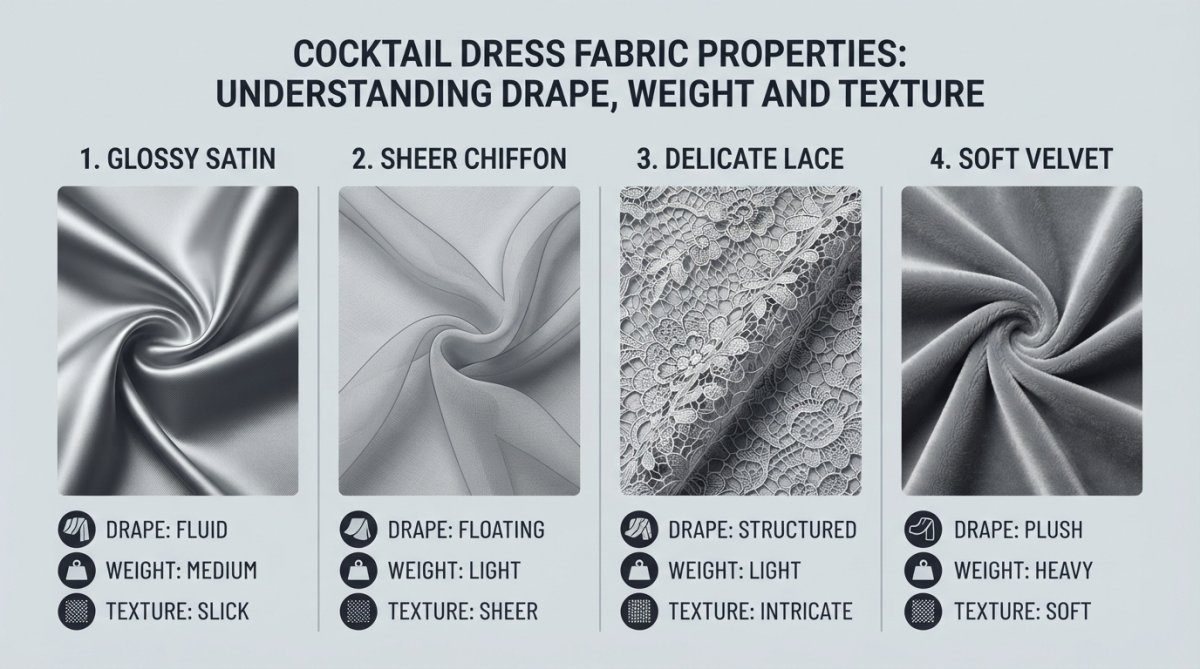
Drape refers to how fabric hangs on your body. Some fabrics cling and emphasise every curve. Others flow loosely and create a forgiving silhouette.
Fabrics with excellent drape include chiffon, georgette, and rayon. These fabrics flow naturally without needing structure from the garment design. Fabrics with minimal drape include satin, velvet, and structured crepes, which hold their shape and create defined silhouettes.
Weight affects both how the fabric feels and how it drapes. Lightweight fabrics feel insubstantial and require careful garment construction. Medium-weight fabrics feel substantial and drape beautifully. Heavy fabrics create dramatic silhouettes but can feel uncomfortable on petite frames.
Texture adds visual interest and affects how light reflects off the fabric. Smooth textures (satin, chiffon) reflect light evenly. Textured fabrics (crepe, lace, velvet) create depth and hide imperfections better than smooth fabrics. Opacity matters for transparency, chiffon and lace are transparent and require lining or slips, while satin, crepe, and velvet are opaque and work alone.
How to Choose the Right Fabric for Your Body Type
Different fabrics flatter different body types. For pear-shaped bodies (wider hips, narrower shoulders), fluid fabrics like chiffon and georgette work beautifully, skimming over hips without clinging. For apple-shaped bodies (weight around the middle), structured fabrics like satin and crepe work well, holding their shape and creating a defined waistline.
For hourglass figures (balanced curves), most fabrics work well. The key is choosing fabrics that emphasise your natural shape without clinging awkwardly. For rectangular body types (minimal curves), textured fabrics and layered designs create the illusion of curves. Lace, velvet, and patterned fabrics add visual interest.
For petite frames, lightweight fabrics are essential. Heavy fabrics overwhelm petite bodies. Chiffon, lightweight crepe, and delicate lace work beautifully. For plus-size figures, choose fabrics that provide structure without adding bulk. Medium-weight crepe, stretch satin, and structured jersey knits work beautifully.
The most important consideration is fit. The right fabric in the wrong size will never look good. Prioritise fit first, then choose fabrics that complement your shape.
Fabric Durability and Care Considerations
How long a cocktail dress lasts depends partly on fabric choice and partly on care.
Satin requires dry cleaning or careful hand washing. Wrinkles require steaming. Snagging is a constant concern. Chiffon requires hand washing or dry cleaning and careful handling during wear and storage.
Crepe is remarkably durable and low-maintenance. Many crepe dresses can be hand washed in cool water and air dried. The fabric resists wrinkles naturally, so no steaming is required.
Velvet requires dry cleaning and careful storage. The pile crushes easily, so velvet dresses need garment bags and careful handling. Lace requires careful handling and dry cleaning.
Synthetic blends (polyester-heavy fabrics) are generally durable and low-maintenance. Many can be machine washed on gentle cycles. Colours hold well, and wrinkles resist development.
The durability consideration matters if you're investing in an expensive dress. A $300 silk satin dress that requires dry cleaning for every wear will cost more to maintain than a $300 crepe dress that hand washes easily. Factor in care costs when comparing dress prices.
Selecting the best fabrics for cocktail dresses comes down to understanding your body type, the occasion, the season, and your lifestyle. At MISTY'S, we curate cocktail and evening gowns in fabrics that balance elegance with practicality, from luxurious crepe that resists wrinkles to breathable chiffon perfect for warm weather. Our atelier-grade craftsmanship ensures that every dress uses quality fabrics that feel as beautiful as they look. With worldwide shipping and an easy returns policy, you can explore our collection with confidence, knowing that if a dress doesn't work for you, returning it is hassle-free. Continue shopping at MISTY'S to find the perfect cocktail dress in the fabric that suits your needs.
Frequently Asked Questions
What are the best fabrics for cocktail dresses in hot Australian weather?
Lightweight, breathable fabrics work best for warm climates. Silk chiffon, georgette, and lightweight crepe offer excellent airflow whilst maintaining elegance. Synthetic alternatives like polyester blends provide durability and wrinkle resistance. Avoid heavy velvet, brocade, and dense jacquard in summer. Look for fabrics with natural fibres or moisture-wicking synthetics that won't cling to the body in heat.
How do natural and synthetic fibres differ in summer cocktail dress fabrics?
Natural fibres like silk are breathable and temperature-regulating, ideal for hot weather, but require delicate care and can be expensive. Synthetic fibres such as polyester and rayon are affordable, wrinkle-resistant, and easy to maintain, but may be less breathable. Many modern cocktail dresses blend both, combining silk's luxury with synthetic durability. Choose based on your climate, care preferences, and budget.
Which fabrics work best for different body types in cocktail dresses?
Structured fabrics like satin and crepe suit pear and apple shapes by providing definition. Fluid fabrics like chiffon and georgette flatter curvier figures by skimming rather than clinging. Stretch crepe offers comfort and body-sculpting support for all shapes. Lace adds visual interest without bulk. Consider your silhouette: flowing fabrics create movement, structured fabrics add definition, and textured fabrics like velvet add depth and dimension.
What's the difference between cocktail dress fabric properties like drape, opacity, and sheen?
Drape refers to how a fabric falls and moves, fluid fabrics like chiffon create elegant movement, whilst structured fabrics like satin hold shape. Opacity determines transparency; sheer fabrics need lining, whilst opaque ones stand alone. Sheen is the fabric's lustre; glossy satins and silks appear formal and luxurious, whilst matte crepes and velvet offer sophistication without shine. Understanding these properties helps you choose fabrics that match your desired look and occasion.
This article was written using GrandRanker