

Table of Contents
- What Makes a Fabric Right for an Evening Jumpsuit
- Eveningwear Fabrics Compared: Weight, Drape and Sheen
- The Best Fabric for a Formal Jumpsuit: Crepe, Silk and Structured Blends
- Velvet, Lace and Embellished Fabrics for Evening Glamour
- How to Style a Formal Jumpsuit: Shoes, Jewellery and Layering
- Evening Jumpsuit Outfit Ideas for Weddings, Galas and Parties
- Climate, Season and Care: Choosing Fabric That Lasts
- Conclusion
- Frequently Asked Questions
Last Updated: October 18, 2026
What Makes a Fabric Right for an Evening Jumpsuit
A dress can hide a lot; a jumpsuit cannot.
Evening jumpsuits need woven fabrics with memory rather than soft knits. Jersey clings where you want it to skim and droops where you want it to hold.
According to Textile Institute guidance on fabric performance, a fabric's weight and weave structure determine how it drapes and recovers, which is why two garments in the same fibre can behave completely differently.
Eveningwear Fabrics Compared: Weight, Drape and Sheen
Compare evening fabrics on four measures: weight in grams per square metre, drape, sheen, and whether they need lining.
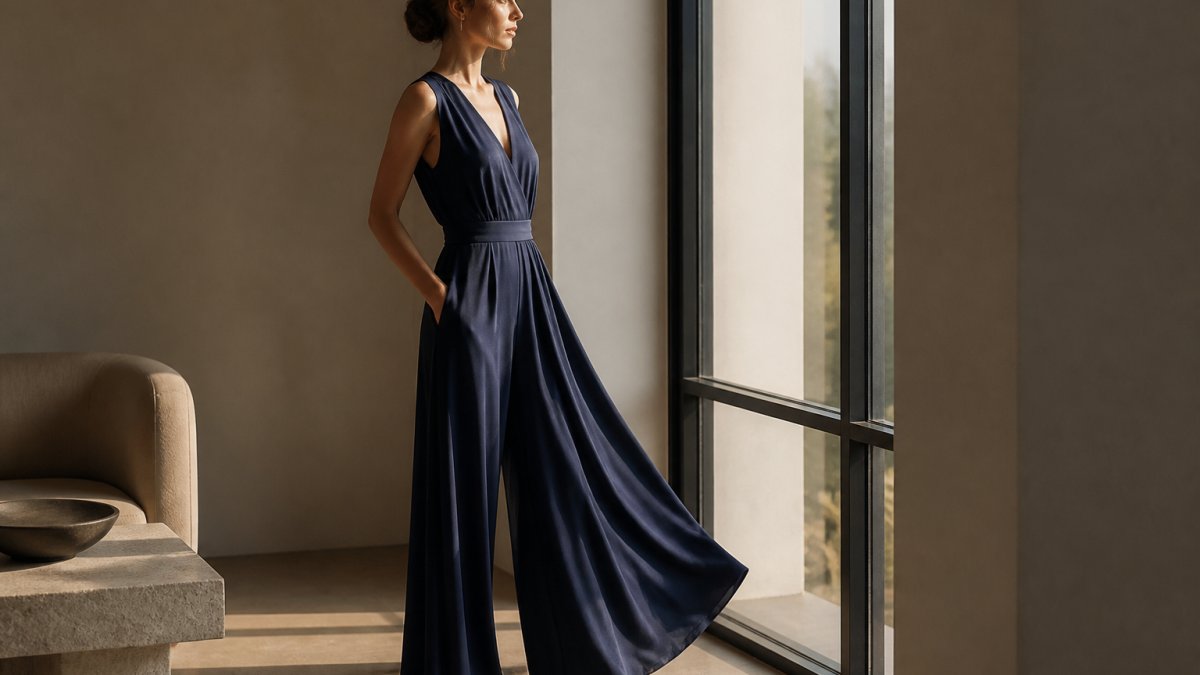
Fabric weight and opacity
Lightweight cloth under roughly 150 gsm reads as summer and needs a lining in any pale colour. Medium weight, around 150 to 250 gsm, is the sweet spot for evening jumpsuits: substantial enough to skim the body, light enough to move.
Opacity matters more in a jumpsuit than a dress because the trouser leg is backlit by every downlight and camera flash.
Drape and movement in a full-length jumpsuit
Drape is how a fabric falls under its own weight. Fluid cloth such as silk crepe or rayon challis moves with the leg and photographs beautifully in motion. Crisp cloth such as duchess satin or a wool blend holds a shape and reads more architectural. Neither is better; they produce different silhouettes.
The Best Fabric for a Formal Jumpsuit: Crepe, Silk and Structured Blends
The best fabric for a formal jumpsuit is a medium-weight crepe, because it holds a tailored line, resists creasing through a long event, and skims rather than clings. Silk and structured blends follow closely, each suited to a different silhouette.
Crepe for polished, flattering silhouettes
Crepe is woven with a slightly twisted yarn, giving it a pebbled surface and matte finish. That texture makes it forgiving: it diffuses light instead of reflecting it, so it does not highlight every contour, and it drapes cleanly and recovers from sitting.
For a full-length formal jumpsuit, crepe is our default recommendation: it photographs well under flash, travels without creasing badly, and works in a straight or wide leg. Cheap crepe can feel papery, so check the weight before you commit.
Silk, satin and duchess satin
Silk is the luxury reference point: breathable, fluid and warm to the touch. Satin is a weave, not a fibre, and its shine comes from light hitting the float yarns. Duchess satin is the heaviest, stiffest version, ideal for a sculpted bodice and a dramatic leg.
The trade-off with satin is honesty: it shows every seam, crease and undergarment line. If you choose satin for an evening jumpsuit, budget for a lining and a proper foundation layer.
Velvet, Lace and Embellished Fabrics for Evening Glamour
Velvet delivers the most glamour per metre of any evening cloth. Its pile absorbs light and returns a deep, rich glow, and its weight holds a sculpted leg beautifully. The catch is warmth and care: velvet is a cool-weather fabric that needs careful storage to protect the pile.
Lace works best as a panel or overlay rather than the whole garment: all-over lace can look like lingerie and needs a solid lining through the torso and leg.
Our Floral Patchwork Lace Jumpsuit shows how lace works as a textural detail rather than the entire cloth, in a lightweight polyester that suits spring and summer events. For a bolder evening statement, the Bianca Halter Backless Wide-Leg Jumpsuit uses a dense, thick-weight polyester weave that gives an opaque finish and a fluid, architectural drape through the leg, which is exactly what a floor-length cut needs.

How to Style a Formal Jumpsuit: Shoes, Jewellery and Layering
Style a formal jumpsuit by letting the fabric dictate the accessories. A fluid crepe and a structured duchess satin need different shoes, jewellery and layering, because they move and reflect light differently.
Match the shoe to the drape and the hem
A fluid medium-weight woven, such as silk crepe or a good rayon blend, moves with the leg; pair it with a pointed heel or fine strappy sandal so the hem skims the floor.
Match heel height to hem clearance: if the trouser leg breaks over the shoe, a higher heel keeps the line clean; if the hem sits just above the floor, a lower block heel prevents pooling.
Bianca Halter Backless Wide-Leg Jumpsuit →
Jewellery should follow the neckline and the sheen
A halter neckline wants drop earrings and bare wrists; a high neckline wants a cuff or a single strong ring. Sheen matters too: matte crepe absorbs light and can carry more metal, while satin reflects light and looks better with one focal piece. If the fabric is embellished or beaded, skip the necklace entirely.
Layering depends on weight and structure
A tailored blazer or cropped jacket sharpens a straight-leg cut in a crisp cloth. Avoid a long coat over a fluid wide leg, because it flattens the drape. For velvet, a cropped jacket in a contrasting matte texture keeps the pile from looking heavy; for lightweight crepe in a warm room, a sheer layer adds coverage without bulk.
Bags and foundation layers
A small structured clutch keeps the line clean, but check it against the fabric: smooth satin can snag on a rough clasp, and a beaded bag can catch on lace or fine crepe. Foundation layers matter more in a jumpsuit than a dress because the trouser leg is backlit; a seamless, matte layer in a tone close to the fabric prevents show-through, and a light shaping layer helps fluid fabric skim rather than cling.
Evening Jumpsuit Outfit Ideas for Weddings, Galas and Parties
Match the outfit to the dress code and the room, not the trend. Evening jumpsuit outfit ideas work best when fabric weight, sheen and stretch match the formality of the event. A jumpsuit has to survive sitting, walking, stairs, photographs and a long evening, so fabric choice is a performance decision as much as a style one.
| Occasion | Fabric to choose | Why it works | Styling direction |
|---|---|---|---|
| Black-tie gala | Duchess satin or velvet | Holds a sculpted line and reads as luxury under flash | Statement earrings, heeled sandal, clutch |
| Cocktail party | Medium-weight crepe | Matte finish resists creasing and skims the body | Minimal gold hardware, pointed heel |
| Wedding guest | Silk crepe or lace detail | Fluid drape photographs well in motion | Soft draping jewellery, block heel |
| Rooftop or resort event | Fluid medium-weight woven | Breathable and light enough for warm rooms | Bare shoulders, strappy sandal |
| Cool-weather evening | Velvet or wool blend | Traps warmth and holds shape | Cropped jacket, closed-toe heel |
Fabric performance through a full evening
A jumpsuit is judged by how it behaves after three hours, not how it looks in the mirror. Crepe recovers well from sitting and resists creasing, making it the safest choice for a long dinner or ceremony plus reception. Satin shows every crease and seam, so it suits a shorter event or seated gala.
Static is a practical issue in dry, air-conditioned rooms, especially with polyester satin and lightweight viscose; a lining or anti-static underskirt reduces cling.
Climate and season specifics
Warm-weather events suit silk crepe, rayon challis, Tencel and lightweight viscose: breathable, fluid and comfortable across a long evening. Cool-weather events suit velvet, duchess satin and wool blends, which hold shape and trap warmth.
Strong air-conditioning can make lightweight crepe feel limp in photographs, while heavy satin in a humid room feels unbearable by the main course. Choose the fabric for the room, then the lining for the season: unlined lightweight crepe for a warm rooftop, lined medium-weight crepe for a cool ballroom.
For a modern wedding reception or upscale rooftop party, a halter-neck wide-leg cut in a heavy woven cloth reads as formal without looking like a recycled bridesmaid dress. That is the quiet advantage of a jumpsuit: it looks considered rather than borrowed.
Climate, Season and Care: Choosing Fabric That Lasts
Care decides how long the garment lasts. Dry cleaning protects structured cloth, satin and velvet, while many crepes and polyester blends wash gently at home. Store velvet hanging so the pile does not crush, and never press satin directly with a hot iron.
For sizing guidance, our product pages note that boutique sizing can run smaller than standard retail, so measure your bust and natural waist against the chart rather than ordering your usual size. Our Australian Competition and Consumer Commission guidance on online returns is worth a read if you want to understand your rights when a garment does not match its description.
Conclusion
The right fabric turns a jumpsuit from a risky purchase into the most reliable piece in your evening wardrobe. Weight gives it structure, drape gives it movement, and sheen decides how it reads under event lighting. Match all three to the occasion and season, and the silhouette takes care of itself.
Frequently Asked Questions
What fabric is best for an evening jumpsuit?
Crepe is the most reliable choice for an evening jumpsuit because it holds a tailored shape without clinging and resists creasing through a long event. Silk and satin work well for a fluid, luxurious look, while velvet suits cooler months and black-tie settings. For structure through the bodice with comfort in the leg, a medium-weight crepe or a polyester crepe blend is the safest all-round option. Always check opacity in daylight before committing.
Is crepe a good fabric for a formal jumpsuit?
Yes. Crepe is one of the best fabrics for a formal jumpsuit because its slightly textured surface hides wrinkles and its weight lets it drape cleanly without showing every line. It tailors well through the waist and holds a straight or wide leg without collapsing. Look for medium to heavy crepe for evening wear, and check that the garment is lined through the bodice if the crepe is light in colour.
Is satin suitable for an evening jumpsuit?
Satin is suitable, but the weight matters more than the name. Light satin shows every crease and needs a full lining; heavy duchess satin holds a sculpted shape and photographs well. Choose satin for a sleek, glamorous evening jumpsuit and keep the silhouette simple, since the sheen already draws attention. Avoid unlined light satin in pale colours, which can turn transparent under event lighting.
Can you wear velvet to an evening event?
Velvet suits evening events, particularly in cooler months and after-dark settings. It absorbs light rather than reflecting it, so it reads as rich and understated rather than flashy. The trade-off is warmth and care: velvet needs pressing with steam rather than an iron, and it can crush in storage. A velvet jumpsuit with a simple straight or wide leg balances the fabric's depth without looking heavy.
How do you choose a fabric that drapes well in a jumpsuit?
Drape comes down to weight and fibre. Rayon challis, Tencel and silk fall softly and move with the body, which suits wide legs and relaxed silhouettes. Crisp fabrics like duchess satin and heavy crepe hold an architectural line instead. Hold the fabric at the shoulder and let it fall: if it folds in stiff angles it will look structured, and if it ripples in soft folds it will move. Match that behaviour to the silhouette you want.
Choosing an evening jumpsuit online comes down to trusting the cloth and the cut. MISTY'S builds atelier-grade pieces with worldwide shipping and an easy returns policy, so you can judge the fabric in person without the risk. Explore the collection and find the jumpsuit that fits the occasion.