

Table of Contents
- Why Lace Requires Specialist Care
- Quick Comparison: Best Gentle Detergents for Delicate Lace
- How to Choose a Detergent for Delicate Fabrics
- Hand-Washing Delicate Lace: Step-by-Step
- How to Wash Lace in a Washing Machine
- Washing Machine Settings for Lace Protection
- How to Dry Delicate Fabrics Without Damage
- Common Mistakes That Damage Lace
- Frequently Asked Questions
Last Updated: October 16, 2026
Why Lace Requires Specialist Care
Lace is constructed differently from most fabrics. Its open weave, delicate fibers, and intricate patterns demand a washing approach that respects those qualities. A standard wash cycle, even on a gentle setting, can snag threads, distort the pattern, or weaken the fibres. This is where choosing the right detergent becomes critical. The best gentle detergents for delicate lace fabrics are specifically formulated to clean without the harsh surfactants that damage fine construction.
A mild, pH-neutral formula won't strip the fabric's natural sheen or cause yellowing over time. Plant-based options reduce the risk of chemical buildup that can trap in fibres and make lace stiff. Fragrance-free varieties prevent discolouration and allergic reactions on sensitive skin.
The real challenge isn't just cleaning lace, it's cleaning it without compromise. Lace fibres are thinner than standard cotton or polyester. They're also more prone to tangling and stretching when wet. A detergent designed for delicate fabrics accounts for this. It works at lower concentrations, rinses more completely, and leaves no residue that would stiffen or dull the pattern.
Quick Comparison: Best Gentle Detergents for Delicate Lace
| Detergent Type | Best For | Key Feature | Typical Price Point |
|---|---|---|---|
| Liquid mild detergent | Hand-washing lace | No residue, complete rinse | Budget-friendly |
| pH-neutral formula | All lace types | Preserves colour and sheen | Mid-range |
| Plant-based detergent | Sensitive skin, heirloom pieces | Natural ingredients, gentle action | Premium |
| Fragrance-free option | Delicate vintage lace | Prevents yellowing and staining | Mid-range |
| Detergent sheets | Travel and small loads | Portion control, minimal waste | Varies |
How to Choose a Detergent for Delicate Fabrics
Selecting the right detergent starts with understanding what lace actually needs. Not all "gentle" products are created equal. Some contain enzymes designed to break down protein stains, useful on cotton, destructive on delicate fibres. Others include optical brighteners that can yellow lace over time.
pH-Neutral Formulas
A pH-neutral detergent sits at 7 on the pH scale, matching the natural pH of most fabrics. This balance prevents the chemical breakdown that acidic or alkaline cleaners cause. Lace fibres are particularly sensitive to pH extremes. Alkaline detergents can swell fibres and weaken them. Acidic ones can cause brittleness and colour fading.
Look for detergents explicitly labeled "pH-neutral" or "pH-balanced." These formulas clean effectively without forcing the fabric's structure to work against the wash solution. They're especially important for heirloom lace or pieces you plan to wear for decades.
Many mainstream detergents don't disclose their pH. If the label doesn't state it, assume the product may be outside the neutral range. Specialist brands that focus on delicate fabric care almost always highlight pH-neutral formulation because it's a key selling point.
Plant-Based and Fragrance-Free Options
Plant-based detergents use surfactants derived from natural sources, coconut oil, vegetable matter, or mineral salts, rather than synthetic chemicals. These break down oils and dirt just as effectively as conventional surfactants, but they're gentler on fibres and less likely to cause skin irritation.
Fragrance-free varieties eliminate one of the biggest culprits in lace damage: synthetic perfumes. Fragrances can stain lace directly, especially white or pale pieces. They also linger in the fabric even after multiple rinses, potentially attracting dirt over time. Fragrance-free doesn't mean the detergent smells like nothing, it means no added scent compounds.
For vintage lace or pieces you're storing long-term, fragrance-free is non-negotiable.
Liquid vs. Powder vs. Detergent Sheets
Each format has practical advantages for lace care.
Liquid detergent dissolves completely in water and leaves no residue. This matters for lace because powder particles can lodge in the open weave, making the fabric feel stiff. Liquid also makes it easier to soak lace before washing, you can dissolve it fully in cool water, then submerge the garment.
Powder detergent can work for lace if you pre-dissolve it thoroughly in warm water before adding the garment. The risk is that undissolved particles will settle into the lace pattern. If you use powder, always test the water with your hand first to ensure no grit remains.
Detergent sheets are a newer option that combines convenience with portion control. They dissolve quickly and leave no residue. They're ideal for travel or small loads, though they cost more per wash than liquid or powder. For regular lace care, sheets are overkill, but they're excellent for hand-washing a single delicate piece while away from home.
For most lace, liquid is the safest choice. It's easier to control the concentration, rinse completely, and ensures no particles remain in the fabric.
Hand-Washing Delicate Lace: Step-by-Step
Hand-washing is the gold standard for lace. It gives you complete control over water temperature, agitation, and rinse cycles. Here's how to do it properly.
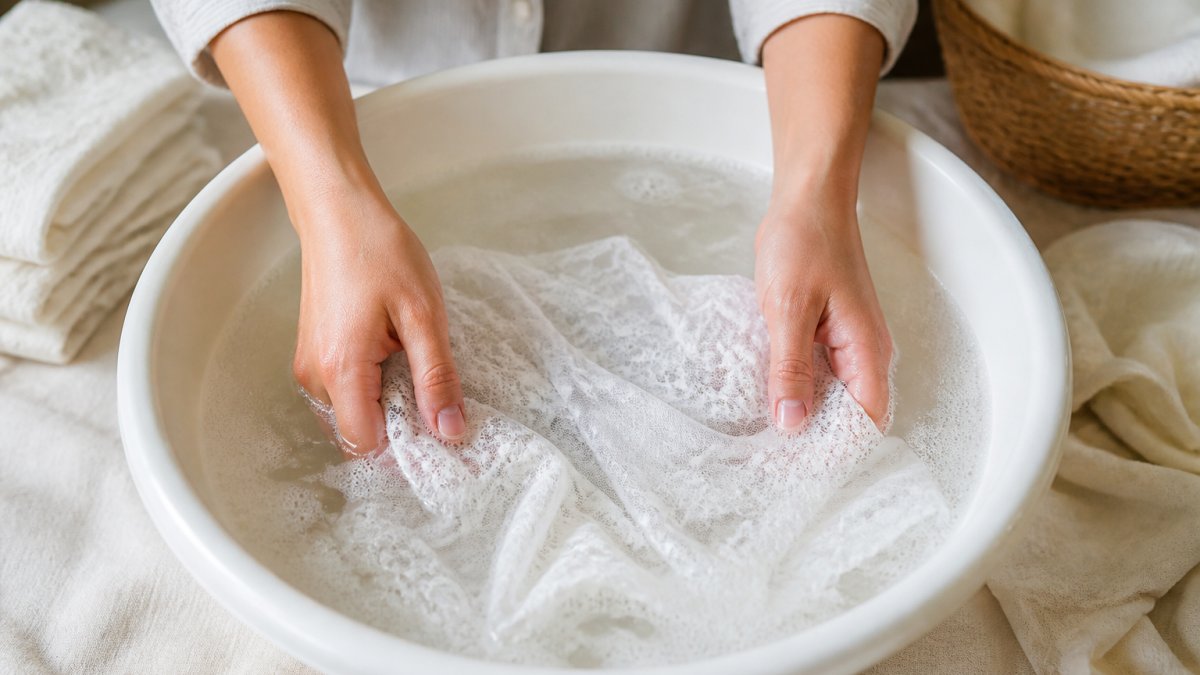
Step 1: Prepare your washing basin. Fill a clean basin or sink with lukewarm water, around 25-30°C. Water that's too hot weakens lace fibres.
Step 2: Submerge and soak. Gently lower the lace garment into the water, supporting it with both hands. Let it soak for 10-15 minutes.
Step 3: Gentle agitation. After soaking, gently squeeze the soapy water through the lace. Don't wring, twist, or rub.
Step 4: First rinse. Drain the soapy water. Refill the basin with clean lukewarm water and gently squeeze it through the lace.
Step 5: Final rinse with cool water. On the last rinse, use slightly cooler water, around 20°C. This helps close the lace fibres and restore sheen.
Step 6: Remove excess water. Don't wring the garment. Instead, gently press it against the basin or sink to remove excess water.
How to Wash Lace in a Washing Machine
Some lace can be machine-washed if you take precautions. Sturdy lace with tight weaves, like lace overlays on cotton dresses, is safer in the machine than delicate vintage lace. MISTY'S pieces like the Women Wedding Dress Sleevless Flowers Lace Dress with nylon-blend construction can tolerate a delicate cycle, though hand-washing is still recommended for longevity.

The key is using a mesh laundry bag and a delicate cycle. The bag protects lace from tangling with other fabrics and reduces agitation. Never wash lace with heavy items like jeans or towels, the friction will snag threads.
Use cold water and select the shortest delicate or hand-wash cycle available. Add only the amount of detergent recommended for a small load, lace doesn't require a full dose. Overloading with detergent leaves residue that dulls the fabric.
For bridal lace or heirloom pieces, skip the machine entirely. The risk isn't worth the convenience.
Washing Machine Settings for Lace Protection
If you choose to machine-wash lace, these settings matter.
Women Wedding Dress Sleevless Flowers Lace Dress →
Water temperature: Cold water (below 20°C) is essential. Warm or hot water can cause lace fibres to weaken and colours to bleed. Cold water is also gentler on the detergent's surfactants, meaning they won't work as aggressively.
Cycle selection: Use the delicate, hand-wash, or lingerie cycle if your machine offers it. These cycles run at lower speeds and shorter durations than standard cycles. Some machines allow you to manually set cycle duration, aim for 15-20 minutes maximum.
Spin speed: Lower spin speeds are better. High-speed spinning can stretch lace and cause wrinkles that are difficult to remove. If your machine has a variable spin setting, choose the lowest option.
Water level: Use more water than you think necessary. Lace needs room to move freely without tangling. A crowded machine creates friction and snagging.
Load size: Never fill the machine more than halfway. Lace should have plenty of space to agitate gently without contact with other fabrics or the machine's drum.
How to Dry Delicate Fabrics Without Damage
Drying is where many people make costly mistakes. Lace fibres are most vulnerable when wet. They stretch easily and can lose their shape permanently if dried incorrectly.
Never use a tumble dryer. Heat and mechanical action will damage lace beyond repair. Don't hang lace on a clothesline either, the weight of water will stretch the fibres and distort the pattern.
The best method is air-drying flat or partially rolled. Lay the lace garment on a clean, dry towel in a shaded area. Arrange the lace so the pattern is visible and the fabric lies flat.
For pieces like the Floral Lace Off-Shoulder Top, lay it flat and smooth out any wrinkles by hand while still slightly damp. This prevents creases from setting permanently.

Drying time varies by humidity and lace thickness. Most pieces dry within 12-24 hours. Don't rush the process with fans or heat.
Once dry, store lace in a cool, dark place away from direct sunlight. Sunlight fades colours and weakens fibres over time. Acid-free tissue paper or cotton muslin are ideal storage wraps, avoid plastic bags, which trap moisture.
Common Mistakes That Damage Lace
Understanding what not to do is as important as knowing the right method.
Using hot water is the most common mistake. People assume hotter water cleans better, but it weakens lace fibres and can cause permanent shrinkage.
Rubbing or scrubbing stains instead of soaking them out. Friction damages the delicate weave.
Wringing or twisting the garment to remove water. This stretches fibres and can cause permanent distortion. Gentle squeezing is the only safe method.
Using fabric softener or bleach. Fabric softener coats lace and makes it stiff, the opposite of what you want. Bleach yellows lace and weakens fibres.
Machine-washing without a mesh bag. Even on a delicate cycle, lace can snag on the drum or tangle with other fabrics.
Storing lace while damp. Moisture trapped in lace promotes mildew and yellowing. Always ensure lace is completely dry before storing.
Ironing lace at high temperatures. If ironing is necessary, use the lowest heat setting and place a cloth between the iron and the lace.
The best detergents for delicate lace fabrics, whether liquid, pH-neutral, or plant-based, are only part of the equation. We recommend hand-washing as the safest approach for our lace pieces, including heirloom-quality gowns like the Gabriella Retro Thin V Neck Long Sleeve White Lace Gown and everyday pieces like the White Sleeveless Halter-Neck Lace Top.

Caring for lace properly extends its life and preserves its beauty. The detergent you choose is your first line of defense against damage.
Frequently Asked Questions
What is the best detergent for washing lace?
The best detergent for lace is a pH-neutral, mild formula specifically designed for delicate fabrics. Look for plant-based or fragrance-free options that avoid harsh surfactants, bleach, and optical brighteners. Liquid detergents dissolve more easily than powders and are gentler on intricate lace fibre. Detergent sheets can also be used for precise dosing and minimal residue.
Can you use regular laundry detergent on lace?
Regular laundry detergent is not recommended for lace. Standard formulas contain strong surfactants, enzymes, and additives designed for heavy soiling and tough fabrics, which can weaken delicate lace fibres, cause yellowing, and damage the intricate construction. Regular detergents may also leave residue that dulls the appearance. Always use a gentle, pH-neutral detergent specifically formulated for delicate fabrics or hand-washing to preserve your lace garments.
Is a pH-neutral detergent better for delicate fabrics?
Yes, pH-neutral detergents are significantly better for delicate fabrics like lace. Most lace fibres, silk, wool, and synthetic blends, are sensitive to alkaline conditions. Alkaline detergents can cause fibre swelling, colour fading, and weakening of the fabric structure. pH-neutral formulas maintain the natural balance of the fibres, reduce shrinkage risk, and help preserve colour and sheen. They also minimise detergent residue, which can accumulate and make lace look dull over time.
How do you hand-wash a lace dress without damaging it?
Fill a basin with lukewarm water (around 20-25°C) and add a small amount of mild, pH-neutral detergent. Submerge the lace dress gently and let it soak for 10-15 minutes without agitation. Gently swish the water through the fabric; do not rub, wring, or scrub. Rinse thoroughly in clean, lukewarm water until all detergent residue is gone. Support the wet garment with both hands to prevent stretching, then gently squeeze out excess water. Lay flat on a clean towel to air-dry, reshaping as needed.
Should you use fabric softener on lace?
Fabric softener is not recommended for lace. Softeners leave a coating on fibres that can dull the delicate appearance of lace, trap dirt, and cause buildup over repeated washes. They can also weaken fine fibres and may cause staining or discolouration. Instead, use a gentle detergent and ensure thorough rinsing to keep lace soft and lustrous naturally.