

Table of Contents
- What You'll Need: Tools and Preparation
- How to Measure Yourself for Formal Dresses: Step-by-Step
- How to Measure Bust, Waist and Hips for Dress Sizing
- Formal Dress Size Chart Australia: Using Your Measurements
- What to Wear Under a Formal Dress During Measuring
- How Dress Styles Affect Your Measurements and Fit
- Tips for Accurate Measuring and Common Mistakes to Avoid
- Troubleshooting Common Fit Issues After Measuring
How to Measure Yourself for Formal Dresses
Last Updated: July 26, 2026
Getting the right fit for a formal dress starts with accurate measurements. Whether you're shopping for a prom dress, wedding gown, or evening event, knowing how to measure yourself for formal dresses ensures you'll order the correct size and avoid costly returns. At MISTY'S, we've helped thousands of customers find their perfect fit by mastering this essential skill.
According to Australian Fashion Industry Association sizing guidance, proper measurement techniques reduce fit issues by up to 60% when ordering formal wear online. Below, we'll walk you through every measurement you need, explain what to wear while measuring, and show you how to use your numbers to find your perfect size.
What You'll Need: Tools and Preparation
You'll need a soft measuring tape (the flexible kind used for sewing), a notepad and pen, a full-length mirror, and ideally a second person to help. Wear undergarments similar to what you'll wear under the formal dress itself, if you're planning to wear a strapless bra, measure in that bra. Undergarments affect your measurements by a quarter inch to half an inch, so matching them to your intended formal wear setup is crucial.
Stand barefoot on a flat surface, or wear the heels you plan to wear with the dress. Keep your posture relaxed and natural, stand straight but don't suck in your stomach or tense your muscles.
How to Measure Yourself for Formal Dresses: Step-by-Step
(https://dmqavs-jd.myshopify.com/products/new-womens-off-shoulder-slim-fit-formal-dress)es: Step-by-Step]Taking your measurements requires patience and attention to detail. Follow these steps in order, and write down each number as you go. The key is keeping the measuring tape snug but not tight, it should feel like a gentle hug, not a restriction.
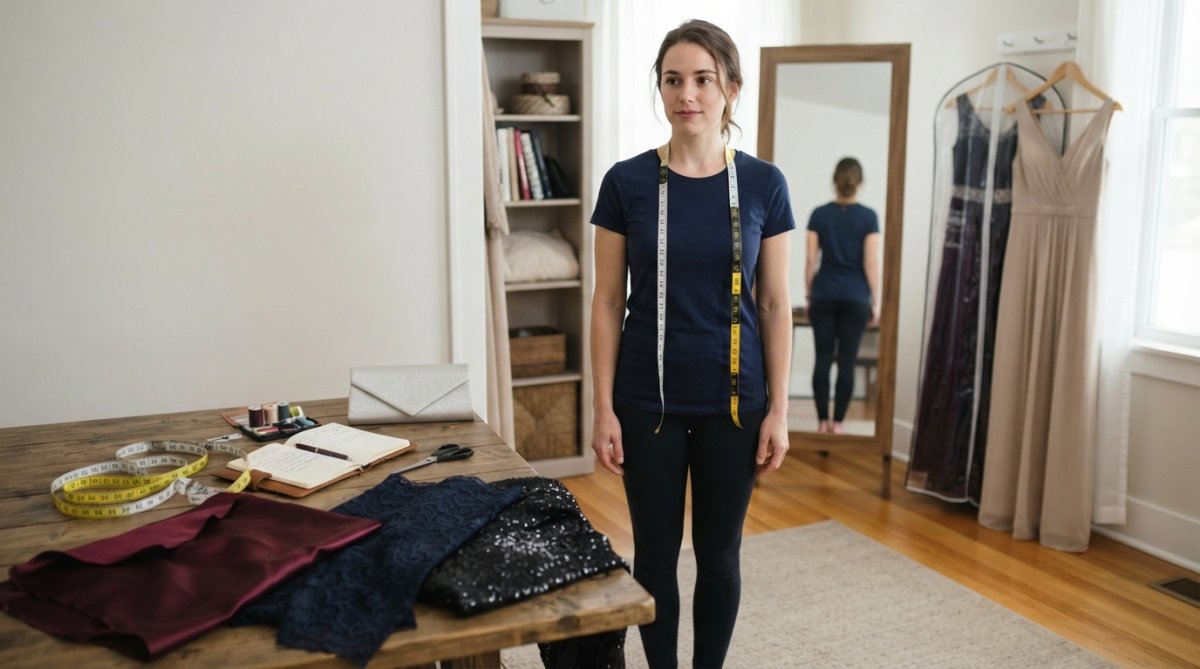
Step 1: Measure Your Bust
Stand with your arms relaxed at your sides. Wrap the measuring tape around the fullest part of your bust, keeping it parallel to the floor. The tape should sit comfortably without pinching. Breathe normally and have your helper read the measurement, or use the mirror to check the tape position yourself. Bust measurement is one of the most critical numbers for formal dresses, determining how the bodice will fit across your chest.
Step 2: Measure Your Waist
Find your natural waist, the narrowest part of your torso, usually just above your belly button. Wrap the measuring tape around this area, keeping it parallel to the floor. The tape should be snug but not tight, you should be able to breathe comfortably and fit one finger between the tape and your body. Your waist measurement is particularly important for fitted styles like mermaid gowns or structured A-line dresses.
Step 3: Measure Your Hips
Stand with your feet together. Measure around the fullest part of your hips and buttocks, keeping the tape parallel to the floor. This is typically 7 to 9 inches below your natural waist, depending on your body shape. Hip measurement matters most for skirt silhouettes, as A-line dresses rely heavily on accurate hip measurements to ensure the skirt flows properly.
Step 4: Measure Hollow to Floor for Dress Length
This measurement determines how long the dress will be on your body. Stand barefoot or in the heels you'll wear with the dress. Find the hollow at the base of your neck where your collarbone meets your shoulder. Have your helper measure straight down from this point to the floor, or measure to where you want the dress to end, typically at your ankle for formal wear.
How to Measure Bust, Waist and Hips for Dress Sizing
Your bust, waist, and hip measurements form the foundation of formal dress sizing. Most formal dress size charts use bust measurement as the primary sizing indicator, with waist and hip measurements as secondary checks. If your bust is a size 8 but your hips are a size 10, you'll need to decide whether the dress should fit your bust or hips, depending on the dress style.
For example, a fitted mermaid gown requires accurate hip and waist measurements because the silhouette hugs your body. An A-line dress is more forgiving at the hips but still needs an accurate bust measurement for the bodice. Strapless and structured styles depend heavily on bust measurement since the bodice provides most of the support.
When comparing your measurements to a size chart, look for a size where your bust measurement falls within the listed range. Then check whether your waist and hip measurements align with that same size. If they don't, note the differences, you may need alterations, or you may want to size up or down depending on the dress style.
Formal Dress Size Chart Australia: Using Your Measurements
Australian formal dress sizing follows a consistent standard, though individual designers may vary slightly. When you have your measurements, convert them to centimetres if the size chart uses metric units. One inch equals approximately 2.54 centimetres. Most Australian retailers, including MISTY'S, provide size charts that show bust, waist, and hip measurements in both centimetres and inches.
| Size | Bust (cm) | Waist (cm) | Hips (cm) | Best For |
|---|---|---|---|---|
| XS | 80 | 61 | 87 | Petite frames, smaller builds |
| S | 85 | 66 | 92 | Small to average frames |
| M | 90 | 71 | 97 | Average frames |
| L | 95 | 76 | 102 | Larger frames |
| XL | 100 | 81 | 107 | Full-figured builds |
| XXL | 105+ | 86+ | 112+ | Extended sizing |
Keep in mind that formal dress sizing often runs differently than casual clothing. A woman who wears a size 10 in everyday clothes might be a size 8 or 12 in formal wear, depending on the designer and the dress style. Taking your own measurements and consulting the specific size chart for the dress you're interested in is essential. Many formal wear retailers, including MISTY'S, offer easy returns if the dress doesn't fit, but getting it right the first time is always easier.
What to Wear Under a Formal Dress During Measuring
The undergarments you wear while measuring significantly affect your results. If you plan to wear a strapless bra with your formal dress, measure in that bra. If you'll wear a structured corset or shapewear, wear those during measuring. Shapewear can change your measurements by up to half an inch at the waist and hips.
Avoid measuring in a sports bra or a bra that's too loose or too tight. The goal is to measure in undergarments that provide realistic support and shaping. Don't wear multiple layers of clothing, wear just the undergarments and perhaps a thin top if you need to feel more comfortable while measuring.
How Dress Styles Affect Your Measurements and Fit
Different formal dress silhouettes place different demands on your measurements.
A-Line Silhouettes
A-line dresses are the most forgiving formal dress style because the skirt flares out from the waist. Your hip measurement matters less than your bust and waist measurements. For A-line dresses, prioritise accurate bust measurement, the bodice must fit correctly because the skirt's flare starts at the waist. If you're between sizes, an A-line dress is a good choice because you can size to your bust without worrying as much about hip fit. The hollow-to-floor measurement is especially important because the length dramatically affects the silhouette.
Mermaid and Fitted Gowns
Mermaid and fitted gowns hug your body from the bust through the hips before flaring out at the knee or lower thigh. These styles require all three measurements, bust, waist, and hips, to be accurate. Many women choose to size to their hip measurement because the fitted skirt portion is the most noticeable part of the dress. The hollow-to-floor measurement is critical because the length affects where the flare begins.
Strapless and Structured Styles
Strapless and structured formal dresses depend entirely on accurate bust measurement because the bodice provides all the support. A dress that's too large will slip down; one that's too small will be uncomfortable. When measuring for a strapless dress, wear the strapless bra you plan to wear with the dress, as the bra's support affects how your bust measurement translates to dress fit.
Tips for Accurate Measuring and Common Mistakes to Avoid
Keep the measuring tape parallel to the floor for every measurement. Don't pull the tape too tight, it should be snug enough that it doesn't slip, but loose enough that you can fit one finger underneath. Measure in the same position every time: feet together, arms relaxed at your sides, posture straight but natural.
Take your measurements multiple times and compare the results. Write down your measurements immediately, don't rely on memory. A common mistake is measuring over clothing; always measure over just your undergarments. Another frequent error is not accounting for the undergarments you'll wear with the dress. Write down exact measurements, including half-inches, rather than rounding.
Troubleshooting Common Fit Issues After Measuring
If your dress is too tight in the bust, the bodice will pull and create stress wrinkles. A tailor can let out a bust seam by up to half an inch, but beyond that, you may need to reorder a larger size. A waist that's too loose can be taken in relatively easily by adjusting the side seams. Hip fit issues vary depending on dress style, for A-line dresses, loose hips are usually fine, while for mermaid gowns, hip fit is critical.
Length problems are the easiest to fix. A dress that's too long can be hemmed by any tailor. A dress that's too short is trickier, as you can't add length unless there's extra fabric in the hem allowance. If your dress arrives and the fit isn't quite right, contact MISTY'S about our easy returns policy. Some fit issues can be solved with the right undergarments, if a dress is slightly loose, wearing shapewear underneath can help smooth and support your body.
Measuring yourself accurately is the foundation of finding a formal dress that fits beautifully. Taking the time to get your bust, waist, hip, and length measurements right eliminates most fit problems before you even order. At MISTY'S, we provide detailed size charts for every dress in our collection, and our atelier-grade craftsmanship means each dress is designed to fit beautifully when you order the correct size. With our worldwide shipping and easy returns policy, you can shop with confidence knowing that if adjustments are needed, we've made the process simple.
Frequently Asked Questions
What measurements do I need to take when measuring myself for a formal dress?
You'll need four key measurements: bust (at the fullest part), waist (at your natural waist), hips (at the fullest part of your buttocks), and hollow to floor (from your collarbone hollow down to the floor for dress length). These measurements form the foundation for accurate sizing using any formal dress size chart. Always measure while wearing the same undergarments you'll wear with the dress, a strapless bra is ideal for formal wear.
How do I use my measurements with a formal dress size chart Australia?
Once you have your bust, waist, hip and length measurements in centimetres, compare them against the formal dress size chart provided by the retailer. Australian sizing typically follows standard conversions, but charts vary by brand. If your measurements fall between sizes, consider the dress style: fitted silhouettes like mermaid gowns require sizing up, while relaxed A-line dresses may fit true to size. When in doubt, choose the size that matches your bust measurement first.
Should I measure myself or ask someone to help me?
While you can measure yourself, having a friend or family member assist ensures greater accuracy, especially for hollow-to-floor and back measurements. If measuring alone, use a mirror to check that your measuring tape is parallel to the floor and not twisting. The key is keeping the tape snug but not tight, it should allow you to breathe normally and move comfortably. Take measurements multiple times to verify consistency.
What's the difference between formal dress sizing and regular clothing sizes in Australia?
Formal dresses, particularly gowns and bridesmaid dresses, often run smaller than everyday fashion. Formal wear emphasizes silhouette and structure, so sizing is typically cut more fitted through the bust and waist. International brands may use different sizing standards than Australian retailers. Always check the specific size chart for the dress you're interested in rather than assuming your regular dress size will apply. Many customers find they need to size up when ordering formal wear online.
This article was written using GrandRanker