

Table of Contents
- What You'll Need to Measure Yourself for Gowns
- How to Measure Bust, Waist and Hips
- How to Measure Hollow to Floor
- Tips for Accurate Measurements When Measuring Yourself for Gowns
- Using a Dress Size Chart Australia for Your Measurements
- Common Mistakes to Avoid
- Self-Measuring vs. Professional Fitting
- Conclusion
Last Updated: August 16, 2026
What You'll Need to Measure Yourself for Gowns
Taking accurate measurements for gowns requires minimal equipment, but each item plays a specific role in ensuring precision. A soft measuring tape is essential, rigid measuring tapes or rulers won't conform to your body's curves and will give inaccurate readings. The tape should be flexible enough to sit snugly against your skin without bunching or twisting.
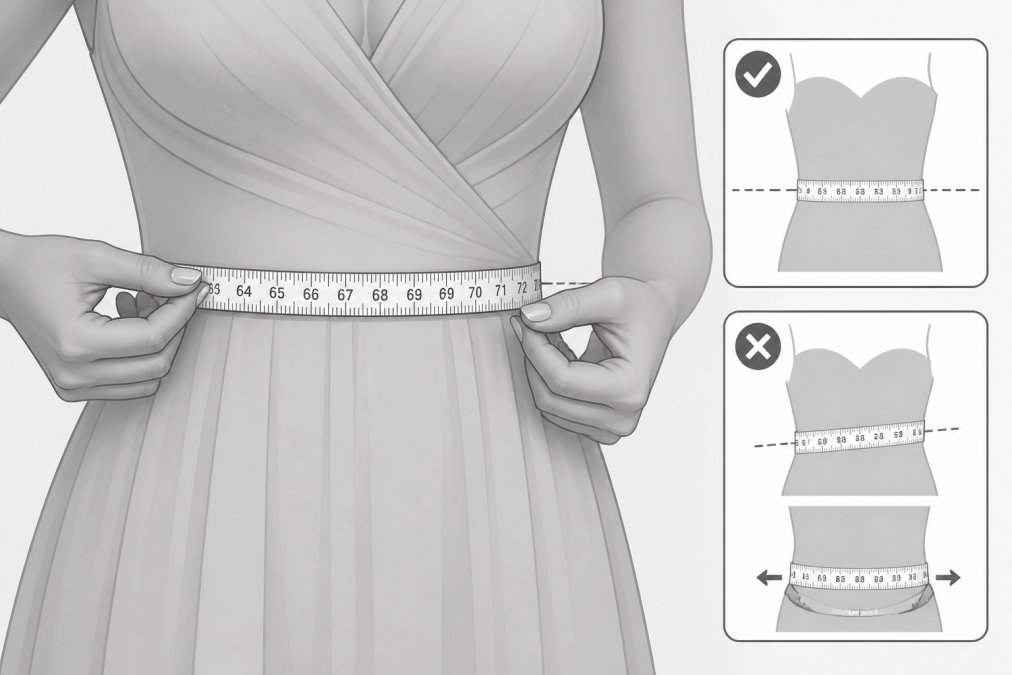
A full-length mirror is invaluable for seeing your posture and ensuring the tape sits parallel to the floor where it should. Poor posture throws off measurements significantly, and a mirror lets you catch that before recording numbers. Position the mirror so you can see your entire body from head to toe.
Wear fitted clothing or undergarments during measurement, nothing loose or stretchy that will compress your body. Many people prefer to measure in a well-fitted bra and smooth undergarments. Avoid shapewear, as it artificially changes your body dimensions and won't reflect how a gown will actually fit once you're wearing it.
You'll also want a notepad or phone to record measurements immediately. Write them down as you go rather than trusting your memory. Finally, have someone available to help if possible. Self-measuring works, but a second person can ensure the tape stays level and parallel to the floor, which is harder to judge alone.
How to Measure Bust, Waist and Hips
These three measurements form the foundation of how to measure yourself for gowns and determine your size across most standard sizing charts. Each one requires slightly different tape placement and technique, and getting them right is crucial for ordering the correct size online.
Measuring Your Bust
Your bust measurement is taken at the fullest part of your bust. Stand in front of your full-length mirror with your shoulders relaxed and your arms at your sides. Wrap the soft measuring tape around your chest at the widest point, typically at the nipple line. The tape should sit parallel to the floor and feel snug but not tight. You should be able to fit one finger comfortably between the tape and your skin.
Don't pull the tape taut or compress your chest. The goal is to measure how the fabric will actually sit against your body when you're wearing a gown. Take the measurement while standing naturally, not while holding your breath or sucking in your stomach. Record the number in centimetres.
Measuring Your Waist
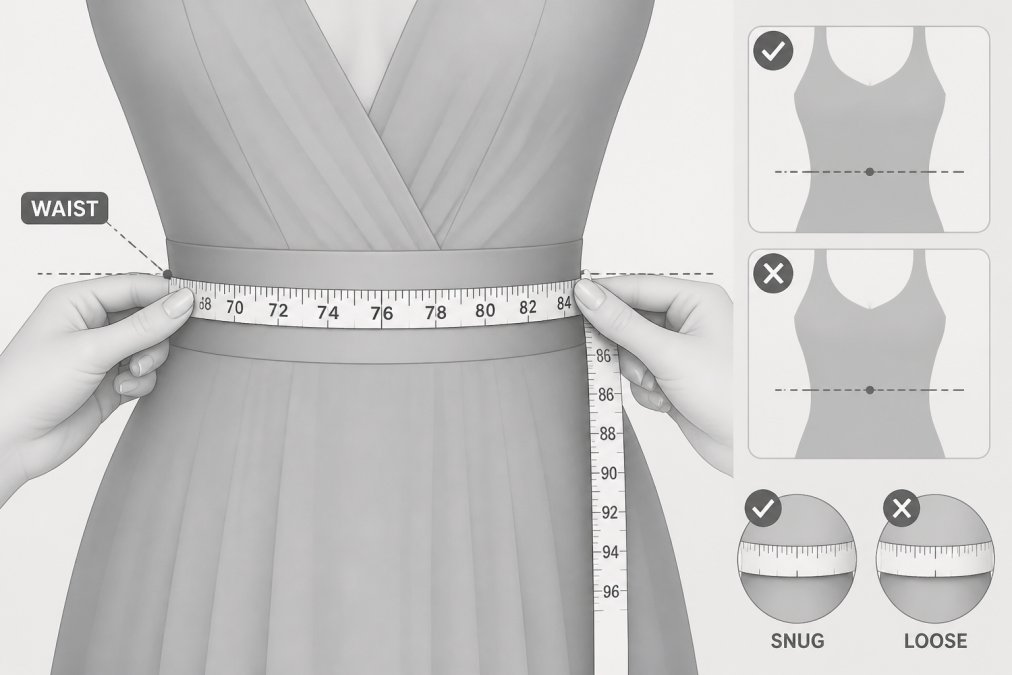
Your natural waistline is typically the narrowest part of your torso, usually about 2-3 centimetres above your hip bone. Locate this point by bending slightly to the side, you'll feel a natural crease where your waist bends. This is where your waist measurement should be taken.
Wrap the tape around your body at this natural waistline, keeping it parallel to the floor. Again, the tape should be snug but not tight. Many people make the mistake of measuring too low (at the hip) or too high (at the rib cage). The natural waistline is the key reference point. Keep your posture upright and relaxed, and avoid tensing your abdominal muscles. Record this measurement carefully.
Measuring Your Hips
Hip circumference is measured at the fullest part of your hips and buttocks. This is typically 18-20 centimetres below your natural waistline, though it varies by body shape. Stand with your feet hip-width apart and wrap the tape around the widest point of your hips, keeping it parallel to the floor.
The tape should sit snugly without compressing your flesh. This measurement is particularly important for gowns with fitted silhouettes or those that fall straight from the waist. If your gown has a fitted bodice and a flowing skirt, the hip measurement determines how snugly the transition sits.
How to Measure Hollow to Floor
The hollow-to-floor measurement is the vertical distance from the hollow at the base of your neck down to the floor. This measurement is critical for determining the correct length of your gown and ensuring it doesn't drag or fall too short.
Stand barefoot in front of your full-length mirror wearing the shoes you plan to wear with your gown. If you haven't selected shoes yet, wear heels of similar height to what you expect to wear, the heel height directly affects gown length. Place the end of your soft measuring tape at the hollow of your neck (the small indentation where your collarbone meets your neck). Let the tape hang straight down along your body to the floor.
Make sure the tape hangs vertically and doesn't angle away from your body. A common mistake is letting the tape drift forward or to the side, which adds centimetres to your measurement. Have someone help hold the tape in place at your neck if possible, or use a second mirror to verify the tape is straight. Record the measurement from hollow to floor in centimetres. This single measurement prevents the most common fitting issue: gowns that are the wrong length.
Tips for Accurate Measurements When Measuring Yourself for Gowns
Accuracy in measurement directly determines whether your gown will fit properly when it arrives. Small errors compound into significant sizing problems. Here are the practices that make the difference between measurements you can trust and ones you'll regret.
Measure yourself twice and compare the results. If the two measurements differ by more than 1 centimetre, take a third measurement. Consistency across multiple attempts indicates accuracy. If your measurements vary significantly, you're likely changing tape tension or posture between attempts.
Keep your posture consistent throughout all measurements. Stand naturally with your shoulders relaxed and your weight evenly distributed on both feet. Slouching or leaning changes your body's dimensions noticeably. Many people unconsciously hold their breath or tense their muscles during measurement, which artificially changes their dimensions. Breathe normally and stay relaxed.
Ensure the tape sits parallel to the floor for every measurement. A tape that angles upward or downward on one side will give an incorrect reading. Use your full-length mirror to verify the tape's angle before recording. If you're measuring alone, this is one area where a helper is genuinely valuable, they can see angles you cannot from your position.
Take measurements at the same time of day if possible. Your body's dimensions fluctuate slightly throughout the day due to hydration, meals, and activity. Morning measurements tend to be the most consistent. Avoid measuring immediately after exercise, when your body may be slightly swollen, or late in the day after consuming significant food or water.
Record measurements immediately. Don't estimate or round. Write down the exact number you see on the tape. Many ordering errors stem from people rounding 86.5 centimetres down to 86 or up to 87, then forgetting which way they rounded.
Using a Dress Size Chart Australia for Your Measurements
Once you have your measurements, you need to translate them into a size using a dress size chart. Australian sizing standards vary slightly from international sizing, so using an Australian dress size chart ensures you're ordering the correct size for how to measure yourself for gowns in the local market.
Standard Australian dress sizes typically range from size 6 through size 20, with corresponding measurements for bust, waist, and hip circumference. Most dress size charts list these measurements in centimetres. Compare your bust, waist, and hip measurements against the chart to identify which size corresponds to your body.
A common challenge arises when your measurements fall between sizes or when different measurements point to different sizes. For example, your bust might align with a size 12, but your hips might align with a size 14. This happens frequently and reflects natural body variation.
When measurements don't align perfectly, prioritise the measurement that's most critical for the specific gown silhouette. For fitted gowns, the bust measurement is usually the limiting factor, a gown that's too tight in the bust is difficult to alter. For gowns with fitted waists and flowing skirts, waist measurement takes priority. For straight-cut gowns or those with generous skirts, hip measurement matters most.
Many online retailers, including MISTY'S, offer size guidance specific to their collections. Their measurements may vary slightly from standard Australian sizing due to how individual collections are cut. Always check the retailer's specific size chart rather than assuming standard sizing applies.
Common Mistakes to Avoid
Several measurement errors appear repeatedly and lead to sizing problems. Understanding these pitfalls helps you avoid them.
Measuring over loose clothing is the most common error. Your clothing compresses your body and adds centimetres to your measurements. Measure in fitted undergarments or bare skin for accuracy. Similarly, measuring while wearing shapewear distorts your natural dimensions. Shapewear compresses your body by 2-5 centimetres depending on the garment, and your gown won't compress the same way, creating a mismatch.
Using a rigid measuring tape or ruler instead of a soft measuring tape produces inaccurate results. Rigid tools can't conform to your body's curves and often slip or sit unevenly. A soft measuring tape costs very little and is essential for proper measurement.
Pulling the tape too tightly is another frequent error. When you pull the tape snug, you're compressing your body slightly. The gown fabric won't compress the same way, so your measurements won't match how the gown actually fits. Snug but not tight is the standard, you should be able to fit one finger under the tape comfortably.
Measuring at inconsistent points creates size mismatches. The bust should be at the fullest part, the waist at the natural waistline, and the hips at the fullest point. If you measure the bust too high or the waist too low, you'll get readings that don't correspond to actual gown fit.
Forgetting to account for heel height when measuring hollow to floor is a costly mistake. A 5-centimetre heel makes a meaningful difference in how a gown's length appears and functions. If you measure in flat shoes but wear heels with your gown, the length will be wrong.
Self-Measuring vs. Professional Fitting
Both approaches have distinct advantages, and understanding the differences helps you choose the right method for your situation.
Self-measuring is accessible, convenient, and free. You control the timing and can take as long as needed to get measurements right. For people ordering online from retailers like MISTY'S, self-measuring is the only practical option. Many people successfully measure themselves by following clear instructions and taking time to verify accuracy. The key is patience, rushing through measurements introduces errors.
Professional fitting, typically done at a bridal shop, tailor, or formal wear retailer, offers expertise and accountability. A professional can identify posture issues, ensure tape placement is precise, and often has experience with how specific gown collections fit. They can also account for variations in how different designers cut their gowns. Professional fitting is particularly valuable if you have an unusual body shape, significant asymmetry between left and right sides, or if you've had difficulty with sizing in the past.
The main limitation of professional fitting is availability and cost. Not everyone has access to a formal wear specialist nearby, and professional fitting services often charge fees. For online shoppers, professional fitting isn't an option unless you visit a physical retailer before ordering.
A hybrid approach works well for many people: measure yourself carefully at home, then visit a retailer in person to verify your measurements against their sizing before ordering online. This gives you the accuracy of professional guidance without committing to purchasing from that retailer.
Conclusion
Measuring yourself accurately for gowns requires attention to detail and proper technique, but it's entirely achievable with the right approach. The soft measuring tape, full-length mirror, and fitted undergarments are your essential tools. Taking time to measure twice, keeping your posture consistent, and ensuring the tape sits parallel to the floor prevents the most common errors.
When you're ready to order, MISTY'S provides detailed size guidance and an easy returns policy, so if your measurements don't align perfectly with their sizing, you have the flexibility to exchange or return your gown. Their atelier-grade craftsmanship and worldwide shipping mean you can access high-quality evening wear from anywhere, with confidence in the fit. Take your measurements carefully, consult the size chart, and shop with confidence knowing that how to measure yourself for gowns is a skill you've now mastered.
Frequently Asked Questions
What are the three main measurements for a dress?
The three essential measurements are bust (the fullest part of your chest), waist (your natural waistline), and hips (the fullest part of your hip area). For gowns, you'll also need hollow to floor, which runs from the hollow of your neck to the floor. These measurements determine how a gown will fit through the bodice, how it sits at your waist, and the overall silhouette. Taking these accurately ensures the dress drapes properly and requires minimal tailoring.
Should I wear a bra when measuring for a gown?
Yes, wear the undergarments you plan to wear with the gown. If you're wearing shapewear or a specific bra style, put it on before measuring. This ensures your measurements reflect how the gown will actually fit your body. Your measurements can vary by up to 5 centimetres depending on what you're wearing underneath, so consistency matters when comparing to size charts.
How do I know if my measurements match a dress size chart Australia?
Take all your measurements, then compare them to the dress size chart provided on the retailer's website. Most size charts show bust, waist, and hip ranges for each size. If your measurements fall between two sizes, order the larger one, gowns can be tailored down, but adding fabric is difficult. Always check the specific retailer's chart, as sizing varies between brands and designers.
What if my measurements don't match standard sizing?
Measurement discrepancies are common, especially if you have an hourglass, pear, or athletic build. If your bust is a size 10 but your hips are a size 12, order based on your largest measurement and plan for tailoring. Many formal gowns are designed to be altered. A seamstress can adjust the waist, bodice, and hemming to create a custom fit that flatters your body's unique proportions.
This article was written using GrandRanker