

Table of Contents
- Why Velvet Gowns Wrinkle and Crease
- How to Steam a Velvet Dress Without Damaging the Pile
- How to Iron Velvet Safely with Protective Methods
- How to Get Wrinkles Out of a Dress Without a Steamer
- How to Care for Velvet Clothing to Prevent Wrinkles
- Common Mistakes to Avoid When Removing Wrinkles from Velvet
- When to Use Professional Cleaning for Velvet Gowns
- Frequently Asked Questions
Last Updated: October 21, 2026
Why Velvet Gowns Wrinkle and Crease
Velvet is luxurious but delicate. Its pile, the tiny fibres that give it soft texture, crushes easily.
Pressure marks happen when velvet sits against itself or gets compressed. A gown stored in a tight space shows wrinkles for weeks, and hanging it the wrong way flattens the pile along the hanger.
Most velvet wrinkles aren't permanent. They respond well to moisture and gentle heat, no aggressive ironing needed, just lift those fibres back up.
How to Steam a Velvet Dress Without Damaging the Pile
Steaming is the safest way to remove wrinkles from velvet gowns safely. Steam relaxes the pile without the direct heat and pressure of an iron. It's gentle enough for delicate sequins and embellishments too.
The key is distance and control: too close saturates the fabric, too far and the steam does nothing.
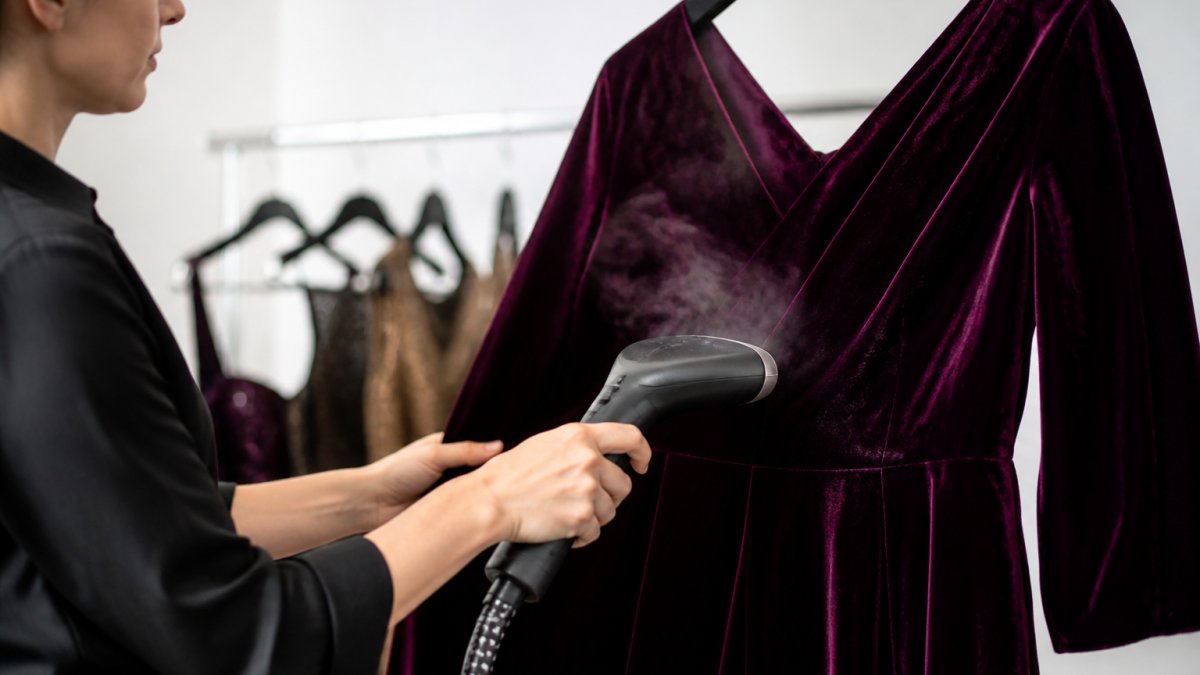
Steaming distance and duration
Keep your steamer 15-20 centimetres from the fabric so steam reaches the pile without soaking it.
Never hold the steamer in one spot, stationary steam creates wet patches that take hours to dry.
For a full-length gown, expect 10-15 minutes. Start at the top, work down, and let each section dry slightly before moving on.
If your steamer has a dial, use medium heat, high heat risks damaging delicate fabrics or embellishments.
Using a steamy bathroom to relax fabric
A steamy bathroom is free and surprisingly effective for minor wrinkles. Hang your gown on a sturdy hanger while you shower or run hot water, with the door closed to trap humidity.
The warm, moist air relaxes the pile naturally. After 20-30 minutes, hang the dress in a cool room to dry; wrinkles should soften noticeably.
It works best for light creases and pressure marks; deep wrinkles need steam or moisture applied more directly.
How to Iron Velvet Safely with Protective Methods
Ironing is the highest-risk method here and usually the wrong first choice for a gown. Before plugging in the iron, check pile type, lining, embellishments, seams and the care label, each changes whether pressing is safe at all.
First, decide whether ironing is appropriate
Work through this order before any heat touches the fabric:
- Read the care label. If it says dry clean only, or names a fibre you cannot identify, stop and use indirect steam or a professional cleaner instead.
- Check the pile type. Short, dense pile (often called velvet or velour) tolerates a protected press better than long, loose pile (crushed velvet, panne, devoré), which marks permanently under pressure.
- Inspect embellishments. Beads, sequins, crystals, appliqué and glued trims can crack, melt or lift under an iron. If decoration covers the wrinkled area, do not iron it.
- Check the lining and interlining. Many gowns have a separate lining, boning or fusible interfacing. Pressing the back of the velvet can crush or shine the lining, and fusible layers can bubble under heat.
- Check seams and hems. Thick or multi-layered seams (waistbands, princess seams, horsehair braid hems) create ridges that press through to the pile side.
If any check raises doubt, skip the iron and steam or hang instead.
Using a velvet board or pile-protecting surface
A velvet board (needle board) has a dense bed of fine metal bristles that supports the pile so the iron's weight doesn't flatten it, the only surface that lets you press velvet face-down without crushing the nap.
- Place the board on a firm, flat ironing surface.
- Lay the gown face-down so the pile sinks into the bristles.
- Press the back of the fabric only, with a dry iron on the lowest setting.
Without a velvet board, a clean thick terry towel or folded cotton cloth substitutes, but support is less even and the risk of a flattened patch higher. Test on an inside hem first.
Cool settings and low heat guidelines
- Use the lowest setting your iron offers, and switch off the steam function entirely. Moisture plus direct heat is what causes water spotting and permanent pile flattening.
- Press in short passes of a few seconds, lifting the iron between passes.
- Work from the least visible area (inside hem, inside seam allowance) outward, so any error is hidden.
The safest ironing approach for a velvet gown is to iron the back of the fabric on the lowest dry setting over a velvet board, and only after confirming the care label, pile type, lining and embellishments allow pressing at all.
How to Get Wrinkles Out of a Dress Without a Steamer
Not everyone has a steamer, and that's fine. You have other options that work just as well for velvet gowns.
Water mist and damp cloth techniques
Fill a spray bottle with distilled water and mist the wrinkled areas lightly, don't soak.
Moisture relaxes the pile while gravity smooths creases. Best for light wrinkles; takes 1-2 hours.
For stubborn creases, lay a damp clean cloth over the area for 10-15 minutes, then remove and hang to dry.
Never wring or squeeze a velvet gown. Water drips off, don't force it.
Hanging and gravity method
Sometimes the simplest fix is time. Hang your gown on a padded hanger in a warm room overnight; the fabric's weight and gentle air circulation release light wrinkles on their own.
Best for pressure marks from packing or storage, it won't fix deep creases, but it's zero-risk and free.
Ensure decent air flow, a bedroom or living room with a window beats a stuffy closet.
Gentle brushing to restore the nap
A soft clothes brush or soft-bristled garment brush can lift crushed pile and restore texture. Brush gently in one direction, following the nap.
Brush against the nap, then with it to smooth back down, this lifts the fibres and redistributes them evenly.
Celeste Velvet Sequin Strapless Column Dress in Dusk Pink →
Brushing works best on crushed areas and light wrinkles; pair it with a moisture method above for better results.
How to Care for Velvet Clothing to Prevent Wrinkles
The best wrinkle removal is prevention. Smart storage and handling keep your velvet gowns looking fresh longer.
Storage and hanging techniques
Always hang velvet gowns on wide, padded hangers. Narrow hangers create permanent shoulder marks.
Store in a cool, dry place away from direct sunlight. Sunlight fades velvet and can set wrinkles into the fabric.
Don't fold velvet gowns for long-term storage. Folded creases become set over time.
Leave space between garments. Crowded closets compress fabric and create wrinkles. Velvet needs room to breathe.
Checking care labels and fabric construction
Always read the care label before treating a velvet gown. Some velvet is cotton-based, others are polyester or silk blends.
Check for special embellishments like sequins, beads, or crystals. These need gentler handling. Steam and water can damage glued-on decorations.
Inspect seams and hems too. Delicate stitching on formal gowns may not survive aggressive steaming or brushing.
At MISTY'S, our velvet gowns like the Celeste Velvet Sequin Strapless Column Dress in Dusk Pink come with detailed care instructions.

Common Mistakes to Avoid When Removing Wrinkles from Velvet
Don't use high heat. High heat flattens velvet permanently.
Don't soak the fabric. Velvet absorbs water slowly and dries slowly.
Don't hang wet velvet in direct sun. Sun exposure fades velvet and sets wrinkles permanently.
Don't use a regular clothes brush on wet velvet. Brushing wet pile can tangle the fibres.
Don't store velvet in plastic bags. Plastic traps moisture and encourages mildew.
Don't ignore the care label. Some velvet fabrics have special requirements.
When to Use Professional Cleaning for Velvet Gowns
Most light creases and pressure marks respond to hanging, indirect steam or a steamy bathroom. Professional cleaning is the right call when the risk of home treatment outweighs the cost of the clean. Use this decision tree to judge where your gown sits.
A decision tree for handing over the gown
Step 1, What does the care label say?
- "Dry clean only" or a fibre you cannot identify: go straight to a professional. Do not steam, mist or press.
- "Dry clean" recommended but not exclusive: home steaming is usually acceptable for light creases; anything deeper goes to the cleaner.
- Machine or hand wash permitted: home methods are generally safe, but still test first.
Step 2, How severe is the wrinkle?
- Light pressure marks from hanging or packing: try hanging and a steamy bathroom first.
- Set creases along folds or hems: indirect steam, then reassess.
- Sharp creases that survive 24 hours of hanging and steaming: professional.
Step 3, What is the construction?
- Structured bodice, boning, corsetry, heavy interfacing: professional. Home steam can distort the shape.
- Beading, sequins, crystals, glued appliqué, feathers: professional, unless the decoration is confined to an area you can avoid entirely.
- Silk pile, viscose pile, devoré or panne: professional. These mark permanently under home heat and moisture.
Step 4, Has anything gone wrong?
- Water spots, colour bleed, a shiny flattened patch, a scorch mark or a crushed nap: stop and call a cleaner. Continued home treatment makes these worse.
What to tell the cleaner
A short, specific brief gets a better result than handing over the dress and hoping:
- Name the fibre and pile type if you know it, and point to the care label.
- Describe what caused the crease (storage, packing, sitting) and what you have already tried.
- Flag every embellishment, even small ones, and any loose stitching or missing beads.
What professional cleaning can and cannot fix
A specialist cleaner can usually relax set creases, lift crushed pile, remove water marks and restore shape on structured gowns. What they cannot reliably reverse is heat damage: a scorched pile, a melted synthetic fibre or a permanent shine from direct ironing.
Cost varies with the gown's complexity, but formal gown cleaning is typically quoted per garment rather than per hour, and heavily beaded or structured pieces sit at the higher end.
Frequently Asked Questions
Can you steam a velvet gown safely?
Yes, steaming is one of the safest methods to remove wrinkles from velvet gowns. Hold the steamer 15-20 centimetres away from the fabric and use short bursts of steam. Never let the steamer nozzle touch the pile directly, as this can flatten the velvet's texture. The moisture and heat work together to relax creases without the direct pressure that ironing creates. Always check the care label first to confirm the gown's fabric composition.
How do you remove pressure marks from velvet?
Pressure marks flatten the pile and require gentle moisture and brushing. Hang the gown in a steamy bathroom for 15-20 minutes to allow humidity to relax the fibres. Once damp, use a soft-bristled brush and brush gently against the nap direction to lift the pile back up. For stubborn marks, try a damp cloth pressed lightly over the area, then brush once dry. Avoid rubbing hard, as this can damage the delicate velvet surface.
What's the best way to store a velvet gown to prevent wrinkles?
Store velvet gowns on padded hangers in a cool, dry wardrobe away from direct sunlight. Avoid folding, which creates permanent creases. If you must pack the gown for travel, roll it loosely in acid-free tissue paper rather than folding. Keep it away from moisture and humidity, but ensure the storage area has some air circulation to prevent mildew. Check the care label for any specific storage instructions, especially for gowns with sequins or embellishments like the Celeste Velvet Sequin Strapless Column Dress.
Can you iron velvet without damaging it?
Ironing velvet requires extreme caution and a protective surface. Use a velvet board or thick towel placed pile-side up, then place the gown on top with the reverse side facing the iron. Set the iron to low heat (around 120°C or below) and press very lightly without sliding. Never use direct heat on the pile side, as this flattens the nap permanently. For most velvet gowns, steaming or hanging in a steamy bathroom is a safer alternative to ironing.