

Table of Contents
- Step 1: Use Zoom and Lighting to Inspect Fabric Visually
- Step 2: How to Read Clothing Composition Labels Before You Buy
- Step 3: Understanding Fabric GSM for Clothing and Why It Matters
- Step 4: Signs of High Quality Garment Construction to Look For
- Step 5: How to Verify Fabric Quality Online Using Return Policies
- Step 6: Digital Fabric Analysis Tools and Sustainable Quality Markers
- Step 7: Common Mistakes When You Verify Fabric Quality Online
- Conclusion
- Frequently Asked Questions
Last Updated: September 15, 2026
Step 1: Use Zoom and Lighting to Inspect Fabric Visually
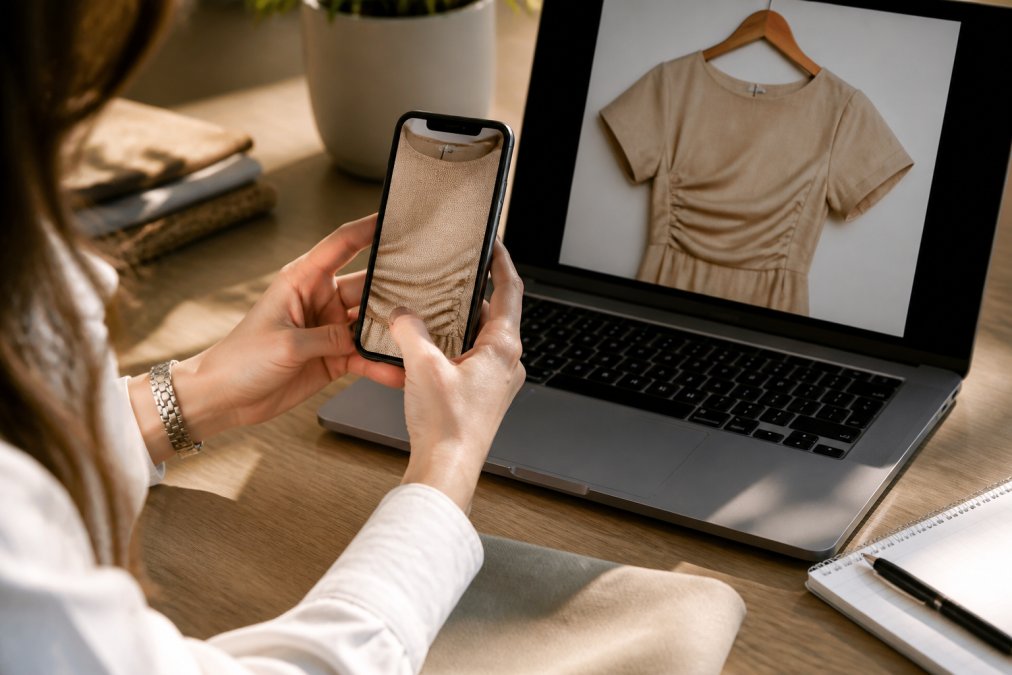
Learning how to verify fabric quality online starts with your screen, not your hands. Zoom functionality on product pages is your first real tool: it reveals weave structure, surface texture, and finishing details that flat thumbnails hide.
Pull up the image on a laptop rather than a phone. Crank the brightness, then look at the fabric where light falls across it. A visible warp and weft grid suggests a stable woven cloth. A blurry, uniform surface usually means heavy digital smoothing, or a knit so loose it will lose shape after two wears.
Check three things at maximum zoom:
- Stitch count at seams and hems: tight, even lines beat sparse, wavy ones
- Hardware quality: zips, hooks and buttons should look weighty, not stamped
- Opacity: hold the image against your mental picture of daylight
What most shoppers miss is that lighting direction tells you more than colour. Side-lit shots expose texture; flat front-lit shots conceal it.
Step 2: How to Read Clothing Composition Labels Before You Buy
Reading a composition label is the fastest way to separate natural fibers from synthetic fibers before you spend a cent. Consumer law requires suppliers to disclose fibre content, so a listing that hides it is already telling you something (Country of origin claims).
Look for fibre percentages with named components, not vague phrases like "premium blend." A dress listed as polyester with no percentage breakdown gives you nothing to assess. A label reading 95% polyester, 5% elastane tells you exactly how it will drape, breathe and wear.
Here's how the main fibres behave:
- Natural fibres (silk, wool, cotton, linen): breathe well, age gracefully, wrinkle honestly
- Synthetic fibers (polyester, nylon, acrylic): hold shape, resist creasing, can pill
- Blends: inherit the strengths and weaknesses of each component
The thing nobody tells you about composition labels is that order matters. Fibres are listed by weight, so the first name is the dominant one. A "silk blend" that leads with polyester is a polyester dress with a marketing problem.
For evening wear, a lined polyester crepe can outperform an unlined silk that creases in an hour. Judge the fibre against the job, not against a hierarchy.

Step 3: Understanding Fabric GSM for Clothing and Why It Matters
Understanding fabric GSM for clothing turns a vague "feels nice" into a number you can compare across listings. GSM stands for grams per square metre, and it measures fabric weight, which in turn signals density, durability and how a garment will hang.
Most product pages bury GSM in the details, if they mention it at all. When a brand publishes it, that's a transparency signal worth noting. As a rough guide:
- Lightweight (under 150 GSM): sheer summer fabrics, linings, delicate drapes
- Midweight (150-250 GSM): shirting, structured dresses, most occasion wear
- Heavyweight (250+ GSM): suiting, coats, upholstery-grade weaves
GSM isn't a quality score on its own. A 90 GSM silk chiffon is a beautiful, deliberate choice; a 90 GSM polyester jersey is a thin, see-through compromise. The number only means something next to the fibre and the intended use.
If a listing quotes GSM, compare it to the garment's purpose. If it doesn't, ask. A brand that can't answer is a brand that doesn't know its own supply chain.
Step 4: Signs of High Quality Garment Construction to Look For
Signs of high quality garment construction show up in the details long before they show up in the fit. Seam integrity, stitch density and finishing are all visible in good product photography, if you know where to look and what numbers to expect.
Start at the stress points. Shoulder seams, armholes, waistbands and centre-back zips take the most tension, so they are where cheap construction fails first. Then work through the following checklist.
Stitch density. On woven garments, a quality seam typically runs 10-12 stitches per inch (roughly 4-5 per centimetre) (Professional Certificate in Garment Quality: Evaluation of Sewn Products). Below about 8 per inch, the seam is sparse and prone to grinning, the fabric pulls apart between stitches under tension. Above about 14 per inch, the needle perforates the yarn and weakens it. On knits, look for a stitch that stretches with the fabric rather than snapping when pulled.
Seam type. The finish on the inside tells you the price bracket:
- French seams: the raw edge is enclosed in a folded, stitched pocket. Common on unlined silk and fine cotton. No fraying, no overlocking visible.
- Bound seams: a strip of fabric or tape wraps the raw edge. Common on unlined jackets and better shirting.
- Flat-felled seams: two folded edges interlocked and topstitched. The strongest option, standard on denim and workwear.
- Overlocked (serged) edges: fast and functional, but the raw edge remains exposed. Fine on a knit tee, a warning sign on a structured dress.
Pattern matching. On stripes, checks and large prints, the pattern should align across side seams, centre back and pocket joins. Misalignment means the cutter prioritised fabric yield over appearance, a reliable marker of cost-cutting.
Topstitching. Even spacing, no skipped stitches, no puckering, and thread colour matched to the fabric. Puckering usually means the seam was sewn too tight or the fabric was not stabilised.
Lining. Structured dresses and jackets should be lined. A lining protects the outer fabric, improves drape and hides the internal construction. An unlined structured bodice is a shortcut, not a design choice.
Interfacing and structure. Collars, cuffs and waistbands should hold their shape without feeling like cardboard. Fused interfacing that bubbles after one dry clean is a common failure on budget garments.
A common mistake is judging construction from the front only. Before you buy, request or look for:
- A back view
- An inside-out view showing seam finish
- A hem close-up
- A shot of the zip and its top and bottom stops
If a listing shows only styled front shots, treat the construction as unverified.
Step 5: How to Verify Fabric Quality Online Using Return Policies
A return policy is a quality indicator hiding in plain sight, and it is the one signal almost no fabric-quality guide explains properly. Brands confident in their fabric and construction make returns simple, because they know most customers keep the garment once it is in their hands. Brands that expect complaints build friction into the process.
Read the policy before you read the reviews. Four questions matter:
- Who pays return shipping? A prepaid label or a flat, low-cost return fee signals confidence. A requirement to ship at your own expense, often more than the garment's value for international orders, is a soft barrier.
- How long is the return window? A window of 30 days or more lets you inspect the fabric in daylight, wear it briefly and compare it against your wardrobe (Consumer rights and guarantees). A 7- or 14-day window pressures you into a rushed decision.
- What is excluded? Look specifically for exclusions on sale items, altered garments, or anything with tags removed.
Step 6: Digital Fabric Analysis Tools and Sustainable Quality Markers
Step 7: Common Mistakes When You Verify Fabric Quality Online
Watch for these traps:
| Mistake | Fix | Impact |
|---|---|---|
| Trusting thumbnails | Use zoom and side-lit photos | Avoids colour and texture surprises |
| Skipping fibre content | Read the composition label | Predicts drape and breathability |
| Ignoring GSM | Compare weight to purpose | Filters out flimsy occasion wear |
| Overlooking returns | Check who pays shipping | Protects your budget |
| Relying on one review | Read pilling complaints | Anticipates long-term wear |
Conclusion
Frequently Asked Questions
How can you tell if a fabric is high-quality just by looking at photos?
Look for close-up shots showing weave structure and surface texture. High-quality fabrics have consistent dye, no visible pilling, and clean seam finishes. Check if the retailer provides zoom functionality and multiple angles. Also examine how the fabric drapes on the model, since stiff or uneven folds can signal lower quality. At MISTY'S, product pages include detailed images so you can inspect construction before buying.
What fabric specifications should I look for in product descriptions?
Check for fibre content, GSM (grams per square metre), and weave type. Natural fibres like silk or cotton often indicate better breathability and durability. GSM tells you fabric weight: 180-250 GSM suits evening wear, while 300+ GSM works for structured jackets. Also look for care instructions and lining details. These specs help you verify fabric quality online without touching the garment.
Does fabric weight indicate better quality for evening wear?
Heavier GSM doesn't always mean better quality, but it affects drape and opacity. For evening gowns, 200-300 GSM provides elegant drape without being too heavy. Lightweight fabrics under 150 GSM may feel flimsy or be see-through. Understanding fabric GSM for clothing helps you predict how a dress will hang and whether it needs lining. Pair GSM with fibre content for a full picture.
How can I use return policies to verify fabric quality risk-free?
A clear, hassle-free return policy lets you order with confidence and inspect the fabric in person. Check if return shipping is free, how long you have to return, and refund timelines. MISTY'S offers easy returns so you can verify fabric quality online without financial risk. If a retailer hides its return policy or charges high restocking fees, that's a red flag for quality confidence.