

Table of Contents
- Why Fabric Choice Matters for Summer Formal Events
- Natural vs Synthetic Fibres: What Works Best in Heat
- Breathable Formal Wear Fabrics That Keep You Comfortable
- Fabric Weight and Texture: Finding Your Ideal Silhouette
- How to Style Summer Evening Gowns for Maximum Comfort
- Formal Dress Fabric Care Tips for Longevity
- Choosing the Right Fabric for Your Event Type
- Frequently Asked Questions
Last Updated: September 27, 2026
Why Fabric Choice Matters for Summer Formal Events
Selecting the right summer formal dress fabrics balances breathability with structure, allowing air circulation while maintaining the polished silhouette formal occasions demand. When temperatures climb and humidity rises, the wrong fabric choice can leave you uncomfortable, wrinkled, or self-conscious.
At MISTY'S, we've curated a collection of summer formal wear that prioritises natural and blended fibres specifically chosen for warm-weather performance. Understanding fibre content and weight transforms you from guessing at online listings to making informed decisions that match your body, your event, and your climate.
Natural vs Synthetic Fibres: What Works Best in Heat
Natural fibres win in warm weather because they allow moisture to move away from your skin. Cotton absorbs and releases moisture, linen breathes exceptionally, and silk drapes luxuriously without trapping heat. Synthetics like polyester and nylon hold moisture against your body, creating clammy discomfort during long events.
Natural fibres require more attention when washing and wrinkle more easily than synthetics. Cotton-linen blends offer breathability with improved wrinkle resistance and easier maintenance. Synthetic blends (cotton-polyester or linen-viscose) are common in formal wear because they balance practical performance with summer comfort.
Many formal dress manufacturers favour blends because pure natural fibres can feel too casual or unstructured for evening wear. A 70% cotton, 30% linen blend delivers softness and breathability with enough body to hold an elegant shape. Check fibre content first, it's the foundation of summer formality.
Breathable Formal Wear Fabrics That Keep You Comfortable
Breathable fabrics are essential for summer formal events, particularly outdoor celebrations where air conditioning isn't an option. The fabrics that perform best combine moisture-wicking properties with the structural integrity formal occasions require.
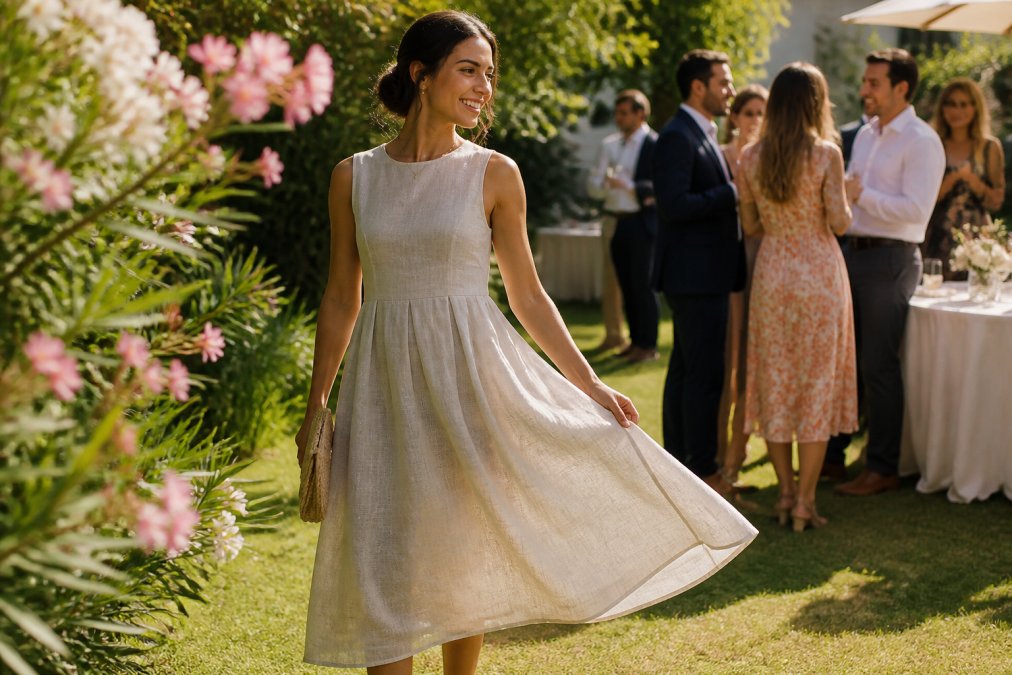
Cotton and Cotton-Linen Blends
Cotton is the gold standard for summer comfort, it breathes naturally, absorbs moisture without clinging, and feels soft against the skin. Cotton-linen blends address pure cotton's wrinkle tendency while maintaining exceptional breathability. The MISTY'S Aria Cotton-Linen Body-Shaping Midi Dress ($200.00) combines a premium cotton-linen weave with integrated panelling, offering comfort and subtle structure.

Cotton-linen dresses suit daytime formal events, garden parties, and outdoor celebrations. The fabric's natural, textured hand-feel reads as sophisticated. Look for blends that specify the ratio: 50/50 cotton-linen offers maximum breathability, while 70/30 cotton-linen provides better wrinkle resistance.
Silk and Silk Alternatives
Silk is the luxury choice for summer formal wear, it drapes beautifully, feels cool, and regulates temperature naturally. However, pure silk requires careful handling and professional cleaning, making it expensive. Silk alternatives like viscose rayon offer similar drape and comfort at lower cost with simpler care.
Viscose rayon mimics silk's luxurious feel while being more durable and easier to care for. It breathes well and resists wrinkles better than pure silk. However, viscose is less stable when wet, so it's best for indoor or covered outdoor events.
Lightweight Synthetics and Blends
When natural fibres alone don't provide enough structure, lightweight synthetic blends step in. Polyester-cotton blends combine breathability with wrinkle resistance and durability. A 65% polyester, 35% cotton blend breathes better than pure polyester while resisting wrinkles far better than pure cotton.
Look for fabrics described as "anti-wrinkle" or "easy care", these typically contain synthetic components. The MISTY'S Summer Bestseller Women's Solid Color One-Shoulder Slim-Fit Ruffled Hem Dress ($69.02) features lightweight, skin-friendly fabric with excellent air permeability and anti-wrinkle properties.
Fabric Weight and Texture: Finding Your Ideal Silhouette
Fabric weight is an important specification for summer formal dresses. Understanding it lets you make informed decisions that account for humidity and heat.
Understanding GSM and Why It Matters in Heat
Fabric weight directly determines breathability, drape, and performance in warm, humid conditions. Lightweight fabrics (under 120 GSM) feel airy but may lack structure or become transparent when wet. Medium-weight fabrics (120-200 GSM) are ideal for summer formal wear, they hold an elegant silhouette whilst remaining breathable. Heavier fabrics (over 200 GSM) trap heat and moisture, making them uncomfortable for extended outdoor events.
A cotton-linen blend can drape elegantly without clinging or showing sweat marks.
How to Find GSM Information When Shopping Online
Check the "Fabric Composition" or "Product Details" section for fabric weight information. If it isn't listed, contact the retailer directly. Use fibre content and care instructions as clues.
Humidity and Fabric Weight: The Australian Summer Challenge
High humidity changes how fabric weight performs. Medium-weight fabrics can remain structured and opaque even when damp, making them suitable for outdoor events.
Textured finishes can be valuable in humidity. For outdoor summer formal events, consider textured medium-weight fabrics.
Textured vs Smooth Finishes for Summer Formality
Smooth, lustrous finishes are formally elegant but can show wrinkles, water marks, and sweat stains. These finishes may work best for air-conditioned indoor events.
Aria Cotton-Linen Body-Shaping Midi →
Textured finishes can be more forgiving in heat and humidity. They can maintain a polished appearance longer and disguise minor moisture marks. Textured fabrics may suit daytime summer events and outdoor celebrations.
How to Style Summer Evening Gowns for Maximum Comfort
Australian summer formal events are frequently held outdoors, in gardens, on beaches, in parks, or in marquees, where your dress faces challenges indoor events don't: snags, grass stains, sand, and prolonged heat exposure without climate control.
Undergarments for Heat and Humidity
Heavy shapewear traps heat and moisture, making you uncomfortable within an hour. Instead, choose seamless, moisture-wicking undergarments designed for warm weather, or select a dress with built-in structure like the MISTY'S Aria Cotton-Linen Body-Shaping Midi Dress.
For silk or delicate fabrics, wear a silk slip underneath to reduce friction and prevent sweat marks. A lightweight cotton slip works equally well for cotton-linen blends. The slip acts as a moisture barrier, extending the time between washes.
Protecting Your Dress at Outdoor Venues
Outdoor summer formal events demand practical protection strategies:
For garden parties and outdoor receptions: Wear a lightweight linen button-down shirt open over a slip dress. The MISTY'S Cotton Linen Button-Down Midi Shirt ($65.74) adds sophistication whilst allowing air circulation and protecting your dress from sun exposure and snags.
For beach or waterfront events: Choose darker colours (navy, charcoal, deep jewel tones) to hide sand and salt-water marks. Avoid pure silk, which stains easily. Cotton-linen blends and viscose rayon are more forgiving. Consider a dress you can rinse in fresh water immediately after the event.
For grass venues: Choose tightly woven fabrics (high GSM, dense weaves like jacquard or sateen) that resist snagging. Avoid delicate lace overlays or embroidery. Consider a midi length (hitting mid-calf) rather than floor-length for outdoor garden events, it's more practical and equally formal.
Accessory Choices for Heat and Practicality
Heavy jewellery that sits close to the neck or shoulders restricts air flow and creates heat pockets. Opt for lightweight pieces, delicate necklaces, drop earrings, or statement bracelets that sit away from the body. Avoid metal jewellery that heats up in direct sun.
Choose shoes you can walk in comfortably on uneven outdoor surfaces (grass, gravel, sand). Flat sandals or low heels are more practical than stilettos for outdoor venues and increasingly accepted as formal-appropriate for daytime summer events.
Timing and Preparation for Outdoor Events
Arrive early to acclimate to the outdoor temperature. If the event is in direct sun, position yourself in shaded areas when possible to keep cool and prevent sun fading.
Bring a lightweight shawl or pashmina for sun protection and warmth if the evening cools. Choose natural fibres (linen, cotton, silk) that add breathability rather than trapping heat.
Formal Dress Fabric Care Tips for Longevity
Proper care extends the life of your formal dresses and maintains their appearance through multiple events. Natural-fibre dresses (cotton, linen, silk) generally require gentler handling than synthetic blends. Always check the care label, but most cotton-linen blends can be hand-washed or machine-washed on a gentle cycle in cool water.
Air-drying is preferable to machine drying for formal wear, as heat can damage delicate fibres and set wrinkles. Hang dresses to dry rather than laying them flat. For silk or viscose dresses, hand-washing in cool water with mild detergent is safest.
Choosing the Right Fabric for Your Event Type
Different formal occasions suit different summer formal dress fabrics. Outdoor daytime events (garden parties, outdoor ceremonies) call for breathable, wrinkle-resistant fabrics like cotton-linen blends. These fabrics look fresh and relaxed while maintaining formal elegance. Evening galas and indoor receptions allow for more delicate fabrics like silk or viscose, since climate control and shorter exposure times reduce wrinkle concerns.
Frequently Asked Questions
What is the most breathable fabric for formal evening wear?
Cotton-linen blends and lightweight silk offer the best breathability for formal occasions. Cotton-linen combinations provide excellent moisture-wicking and air circulation whilst maintaining a polished appearance. Silk has natural temperature-regulating properties that help keep you cool. Avoid heavy synthetics like polyester blends, which trap heat and moisture. For summer events, look for fabrics with a lower GSM (grams per square metre) rating, which can indicate a lighter, more breathable weave.
How do I choose a summer formal dress fabric that doesn't show sweat?
Select darker colours in moisture-wicking natural fibres. Cotton-linen blends in navy, black, or deep jewel tones are ideal because they hide moisture marks better than light shades. Look for fabrics with a structured weave that maintains their shape when damp, such as cotton-linen or silk blends. Avoid clingy synthetics that emphasise moisture patches. Consider garments with strategic panelling or layered construction, which can help distribute moisture evenly and reduce visible marks on the fabric surface.
Is silk or chiffon better for hot weather formal events?
Silk is superior for hot weather because it naturally regulates temperature and allows air circulation against the skin. Chiffon, whilst lightweight and elegant, is often made from synthetic fibres that don't breathe as effectively. Pure silk or silk-blend fabrics offer better moisture management and comfort during extended wear. However, silk requires more careful handling and maintenance. If you prefer lower-maintenance options, high-quality cotton-linen blends deliver similar breathability with easier care, making them practical for outdoor summer events.
How should I care for delicate summer formal fabrics?
Hand-wash silk and delicate blends in cool water with gentle detergent, then air-dry away from direct sunlight. Cotton-linen blends can typically be machine-washed on a gentle cycle. Always check the garment's care label first. Iron silk and linen whilst slightly damp using a low to medium heat setting, and consider using a pressing cloth to protect the fabric. Store formal dresses on padded hangers in a breathable garment bag to prevent dust accumulation. For beaded or embellished pieces, avoid washing and instead spot-clean or have them professionally cleaned.