

Table of Contents
- How Fabric Quality Affects the Look and Feel of Your Cocktail Dress
- Best Fabrics for Evening Gowns and Cocktail Wear
- How to Identify High-Quality Fabric in Cocktail Dresses
- Durability and Longevity: Why Quality Fabrics Last
- How to Care for Silk and Satin Dresses to Preserve Quality
- Budget-Friendly Ways to Spot Quality Without Overpaying
- Sustainability and Ethical Sourcing in Cocktail Dress Fabrics
- Conclusion
Last Updated: August 18, 2026
How Fabric Quality Affects the Look and Feel of Your Cocktail Dress
The difference between a cocktail dress that photographs beautifully and one that looks flat comes down to fabric quality. Superior fibre content and construction determine how a dress moves on your body, catches light in photographs, and holds its shape throughout the evening.
A well-constructed dress in premium materials drapes with intention, maintains its silhouette, and develops elegance rather than looking worn. Poor fabric choices lead to visible seams, loss of structure, and synthetic sheen that photographs poorly under any lighting.
At MISTY'S, we've built our evening wear collection around this principle. Every piece is selected for how its fabric performs at the event itself, not just in the showroom.
Drape and silhouette
The way a fabric drapes fundamentally determines your silhouette. Excellent drape clings where it should and flows where needed, creating clean lines that flatter your frame. Poor drape results in bunching, pulling, or an unflattering tent-like effect.
Drape depends on fibre weight, weave structure, and how the fabric responds to gravity. Heavier fabrics with tightly woven structures maintain their intended silhouette. A properly weighted fabric creates the sophisticated silhouette that defines high-quality evening wear, feeling substantial without being stiff.
Photogenic qualities under lighting
Fabric choice determines how your dress photographs under different lighting. Premium fabrics like silk and satin have subtle lustre that enhances rather than overwhelms, appearing dimensional in photographs. Synthetic alternatives produce flat, plasticky reflection that reads poorly in both natural daylight and artificial lighting.
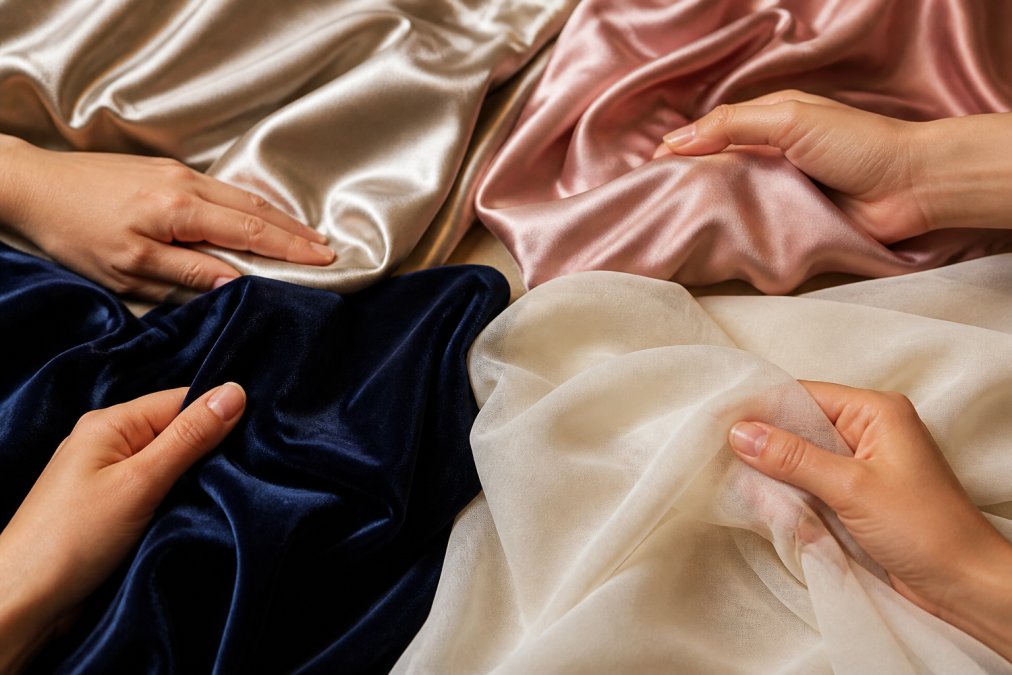
Texture also affects light interaction. Velvet absorbs light, creating rich depth. Chiffon allows light to pass through, producing an ethereal quality. These textural differences are core to how the dress appears in photographs and in person.
Best Fabrics for Evening Gowns and Cocktail Wear
Understanding which fabrics deliver the best performance for evening wear helps you make informed choices about why fabric quality matters for cocktail dresses.
Satin: lustre and structure
Satin offers lustrous finish and inherent structure that holds silhouette beautifully. The weave creates that signature sheen while maintaining enough body to support tailoring. Satin drapes with intention and photographs exceptionally well under lighting, holding creases and seams cleanly.
The drawback is maintenance. Satin shows water spots, requires careful cleaning, and can snag if handled roughly. High-quality satin commands premium pricing, which is why MISTY'S pieces like the Ladies Evening Dress Sexy Tube Top Satin represent a significant investment in durability and visual impact.

Silk: breathability and hand-feel
Silk delivers unmatched breathability and luxurious hand-feel that synthetic alternatives cannot replicate. The fibre naturally regulates temperature, making it comfortable for extended wear even in warm environments. Silk drapes with fluidity, creating movement that enhances your silhouette.
Pure silk requires careful handling. It wrinkles more readily than satin, demands professional cleaning, and can be damaged by moisture. For formal events where comfort matters as much as appearance, silk remains the premium choice.
Velvet: texture and weight
Velvet creates visual depth and tactile richness that no other fabric achieves. The pile structure absorbs light, producing sophisticated, dimensional appearance. Velvet has sufficient weight to maintain structured silhouettes and photographs beautifully under all lighting conditions.
The limitation is breathability. Velvet can feel warm during extended wear, making it better suited to cooler seasons. The fabric also shows dust and requires regular brushing to maintain appearance.
Chiffon: opacity and movement
Chiffon offers lightweight, floaty aesthetic with excellent drape. The sheer nature creates ethereal quality, though it typically requires layering for opacity in formal wear. Chiffon moves beautifully and naturally resists wrinkles, but lacks structure and requires careful tailoring.
Synthetic alternatives: when they work and when they fail
Synthetic fabrics like polyester, nylon, and acetate offer affordability, easy care, and wrinkle resistance. The problem arises when synthetics attempt to replicate natural fibres. A polyester "satin" lacks the subtle lustre of real satin, appearing flat and plasticky instead.
Synthetics succeed in blends. A silk-polyester blend maintains breathability and hand-feel while improving durability. A satin-polyester blend preserves structure while reducing maintenance demands. The key is transparency about fibre content.
How to Identify High-Quality Fabric in Cocktail Dresses
Learning to assess fabric quality before purchasing protects you from poor choices.
Fibre content and natural versus synthetic
The fibre content label is your first assessment tool. Natural fibres, silk, wool, linen, cotton, offer distinct advantages in breathability, hand-feel, and longevity. Read the label carefully. "100% silk" means pure silk. "Silk blend" or "silk-polyester" indicates a mixture. An 80% silk with 20% polyester blend maintains most of silk's benefits while improving durability. Be cautious of vague labelling like "silk-like" or "satin finish," which are marketing terms for synthetics.
Weight, weave and textile integrity
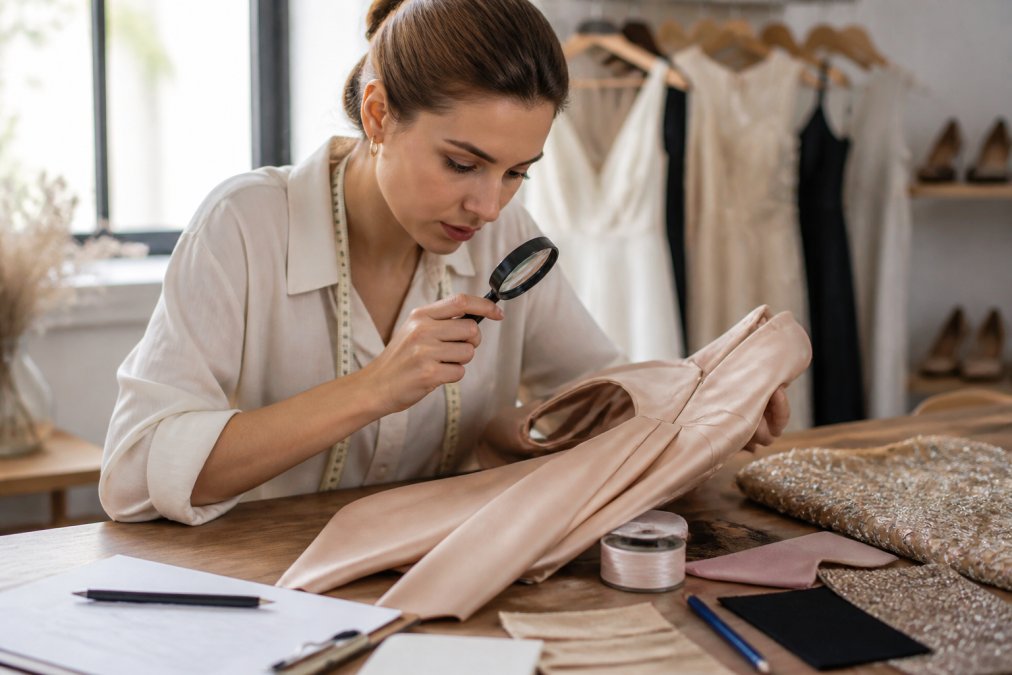
Hold the fabric and assess its weight. Quality evening wear should feel substantial with enough body to suggest durability. Examine the weave closely, a tight, even weave indicates quality construction. Loose, irregular weaves suggest manufacturing shortcuts.
Check the seams. They should be straight, evenly spaced, and finished cleanly. Puckered seams or raw edges indicate poor construction. Quality seams are reinforced and often finished with binding or overlocking to prevent fraying.
Finish quality: sheen, smoothness and crease recovery
Quality satin and silk should have subtle, dimensional lustre, not flat, plastic-like shine. Test crease recovery by gently folding the fabric. Quality fibres recover quickly when released. Synthetics often hold creases permanently.
Durability and Longevity: Why Quality Fabrics Last
A dress made from quality fabrics will outlast cheaper alternatives by years.
Seam strength and construction standards
Durability begins with seam construction. Quality seams use appropriate thread weight, proper tension, and sufficient stitch density. Weak seams fail under stress, a common problem in fast-fashion garments.
Quality construction includes binding, overlocking, or French seams that prevent fraying and reinforce the seam line. Reinforced stress points, underarms, side seams, hem attachment, indicate thoughtful design. Cheap construction skips these reinforcements, leading to early failure.
Resistance to pilling, snagging and wrinkles
Quality fabrics resist pilling, those small balls of fibre that form on worn fabric. Premium natural fibres and tight weaves resist this degradation. Snagging is another durability marker, loose weaves and weak fibres snag easily, creating visible damage.
Wrinkle resistance depends on fibre type. Quality natural fibres recover from wrinkles when hung properly. Poor-quality synthetics hold wrinkles permanently.
How to Care for Silk and Satin Dresses to Preserve Quality
Proper care extends the life of quality fabrics significantly.
Cleaning and storage essentials
Silk and satin require professional dry cleaning rather than home washing. Professional cleaners understand fabric-specific needs and use appropriate solvents and techniques.
Store dresses on padded hangers in breathable garment bags. Avoid plastic bags, which trap moisture. Keep storage areas cool and dry, away from direct sunlight. Fold delicate items carefully using acid-free tissue paper between folds to prevent creasing.
Handling delicate finishes
Avoid contact with rough surfaces that snag delicate fabrics. Remove jewellery before dressing to prevent snagging. Treat stains immediately but gently by blotting rather than rubbing. Brush velvet gently with a soft brush to restore the pile. Never press velvet with direct heat; use a steamer instead.
Budget-Friendly Ways to Spot Quality Without Overpaying
Start with the fibre content label. Natural fibres cost more to produce, so higher natural fibre percentages indicate investment in quality. A dress with 70% natural fibre content signals better construction than one with 30%.
Examine the weight and hand-feel. Quality fabrics feel intentional, neither too thin nor stiff. Check the seams and construction details, these are visible regardless of price point. Quality seams and finished edges indicate a maker who invested in construction.
Compare pricing within categories. If most satin cocktail dresses cost £200-250, one priced at £80 likely cuts corners. Look for brands that specialise in evening wear. MISTY'S focuses specifically on formal occasions, meaning every piece prioritises drape, lighting response, and durability for special events.
Sustainability and Ethical Sourcing in Cocktail Dress Fabrics
Quality fabrics often align with sustainability and ethical practices. Premium natural fibres require responsible sourcing to maintain their properties. Ethical silk sourcing ensures fair wages and responsible land use. Peace silk, produced without killing silkworms, offers an alternative for consumers prioritising animal welfare.
Synthetic fabrics present a different sustainability challenge. While durable and requiring less frequent replacement, their production is petroleum-dependent and they don't biodegrade. Quality synthetic blends that last longer represent a more sustainable choice than cheap synthetics replaced frequently.
The most sustainable choice is investing in quality pieces you'll wear for years. A dress lasting a decade has far less environmental impact than five cheaper dresses replaced every two years.
Understanding why fabric quality matters for cocktail dresses transforms how you shop for evening wear. Quality fabrics deliver superior drape, photograph beautifully, feel luxurious against your skin, and last for years. When investing in a piece for a significant event, the fabric choice determines whether that investment pays off in confidence and longevity.
At MISTY'S, every cocktail dress in our collection is selected for fabric performance. From the lustrous satin in our Ladies Evening Dress Sexy Tube Top Satin to the three-dimensional structural possibilities in our Satin Three-Dimensional Flower Dress For Women, we prioritise fabrics that deliver the sophistication and durability your special occasion deserves. With worldwide shipping and our easy returns policy, finding the right dress in the right fabric has never been more accessible.

Frequently Asked Questions
What is the best fabric for a cocktail dress?
The best fabric depends on the occasion and your comfort. Satin offers lustrous elegance and structure for formal events. Silk provides breathability and a luxurious hand-feel, making it ideal for all-day wear. Velvet adds texture and drama for evening galas. Chiffon creates movement and opacity for layered looks. Quality matters more than fibre type, a well-constructed satin will outperform a poorly made silk. Look for natural fibres or high-quality blends with tight weaves and strong seam construction.
How does fabric weight affect the drape of a cocktail dress?
Heavier fabrics like satin and velvet hold their shape and create structured silhouettes that photograph well. Lightweight fabrics like chiffon drape fluidly and move with your body, offering comfort for long events. Medium-weight blends balance both qualities. The weave density and fibre type also matter, a tight weave creates crisp drape, while a loose weave produces softer movement. For formal occasions, medium to heavier weights generally maintain their shape better throughout the evening.
What are the signs of high-quality fabric in formal wear?
Quality fabrics show consistent colour, smooth finish, and tight, even weaves with no loose threads or pilling. Run your hand across the surface, it should feel soft and uniform. Check the fibre content label: natural fibres like silk and wool, or quality blends with 70% natural content, indicate better durability. Examine seams closely; they should be straight, even, and reinforced. Press the fabric gently; it should recover quickly from creasing. Higher weight (measured in grams per square metre) usually signals better construction and longevity.
How do I care for silk and satin dresses to keep them looking new?
Hand wash silk and satin in cool water with gentle detergent, or use a delicate machine cycle in a mesh bag. Avoid twisting or wringing; instead, gently squeeze out excess water. Air dry flat or hanging away from direct sunlight and heat. Store on padded hangers in a breathable garment bag to prevent dust and moisture damage. For satin, avoid friction against jewellery or rough surfaces, which can cause snagging. Professional dry cleaning is recommended for stubborn stains. Press on low heat with a pressing cloth between the iron and fabric to protect the finish.
This article was written using GrandRanker