

Table of Contents
- Choosing Formal Shoes for Long Events: Start With the Event, Not the Shoe
- How to Choose Comfortable Formal Shoes for Women (Heel Height and Shoe Styles)
- The Best Shoes for Standing All Day at a Wedding
- How to Break In Formal Shoes Before the Event
- How to Prevent Blisters in Dress Shoes (and What to Pack on the Night)
- A Step-by-Step Fitting Method for Formal Shoes
- Conclusion: Choosing Formal Shoes for Long Events Comes Down to Three Checks
- Frequently Asked Questions
Last Updated: October 14, 2026
Choosing Formal Shoes for Long Events: Start With the Event, Not the Shoe
Choosing formal shoes for long events is really a planning task, not a shopping task. The shoe that survives a three-hour dinner fails at a six-hour wedding with a grassy photo spot.
So we start with the event. Ask three questions before you look at a single pair:
- How many hours will you be on your feet?
- What surfaces will you walk on?
- How much standing, walking and dancing is involved?
The answers narrow your options fast. A cocktail reception on carpet asks something very different from a garden wedding with gravel paths.
Match the Shoe to the Dress Code and the Venue
Dress code tells you the formality level. Venue tells you the practical limits.
Black tie and formal dress codes call for closed-toe leather styles, refined satin or patent finishes. Cocktail and smart casual open the door to dress sandals, slingbacks and block heels.

Then check the ground. The Australian government's venue and event safety guidance is a useful reminder that venues vary widely in layout, flooring and access, and your footwear should suit the space you'll actually be standing in.
- Carpet and ballroom floors: almost any heel works.
- Grass and gravel: block heels, wedges or low heels only.
- Marble and polished tile: add grip; smooth soles slip.
- Long staircases: skip stilettos.
Get this pairing right and half the comfort problem solves itself.
How to Choose Comfortable Formal Shoes for Women (Heel Height and Shoe Styles)
Comfortable formal shoes for women come down to heel height, heel shape and fit, not brand or price. A low, wide heel beats a tall, thin one every time for an event that runs past four hours.
Here's how the main styles compare.
| Style | Typical heel | Best for | Watch out for |
|---|---|---|---|
| Kitten heel | 3-5 cm | Long ceremonies, all-day wear | Less height |
| Block heel | 6-8 cm | Weddings, dancing, grass | Bulkier look |
| Wedge | 5-8 cm | Outdoor events, gravel | Can feel heavy |
| Stiletto | 8 cm+ | Short events, photos | Sinking, fatigue |
| Loafer or flat | 0-2 cm | Office wear, travel | Less formal in some settings |
Heel Heights, Silhouettes and What Each One Asks of Your Feet
Every heel height shifts load onto the ball of your foot. The higher and thinner the heel, the more your toes carry and the faster fatigue sets in.
A 3-5 cm kitten heel keeps you close to the ground, so your calf and arch do far less work. A 6-8 cm block heel gives real height with a wide base that spreads pressure and stays stable. Anything above 8 cm concentrates weight on a small area and asks a lot of your feet over a long night.
Silhouette matters too. A pointed toe looks sharp but can pinch across the toes. A square or rounded toe gives more room. Slingbacks and back straps hold the heel without gripping the toes.
For a long event, our pick is a block heel in the 6-8 cm range. The Enchanté French-Style Pointed-Toe Chunky-Heel Slingback Pumps sit right in that band, with a slingback strap that keeps the heel secure without pinching.

The Best Shoes for Standing All Day at a Wedding
The best shoes for standing all day at a wedding are low-to-mid block heels, wedges or well-fitted flats with a secure strap. Stability and a wide base matter more than height when you are upright for hours.
Think about the wedding timeline. Ceremony, photos, cocktail hour, dinner, speeches, dancing. That is easily six hours on your feet, often on mixed surfaces, and the demands change stage by stage.
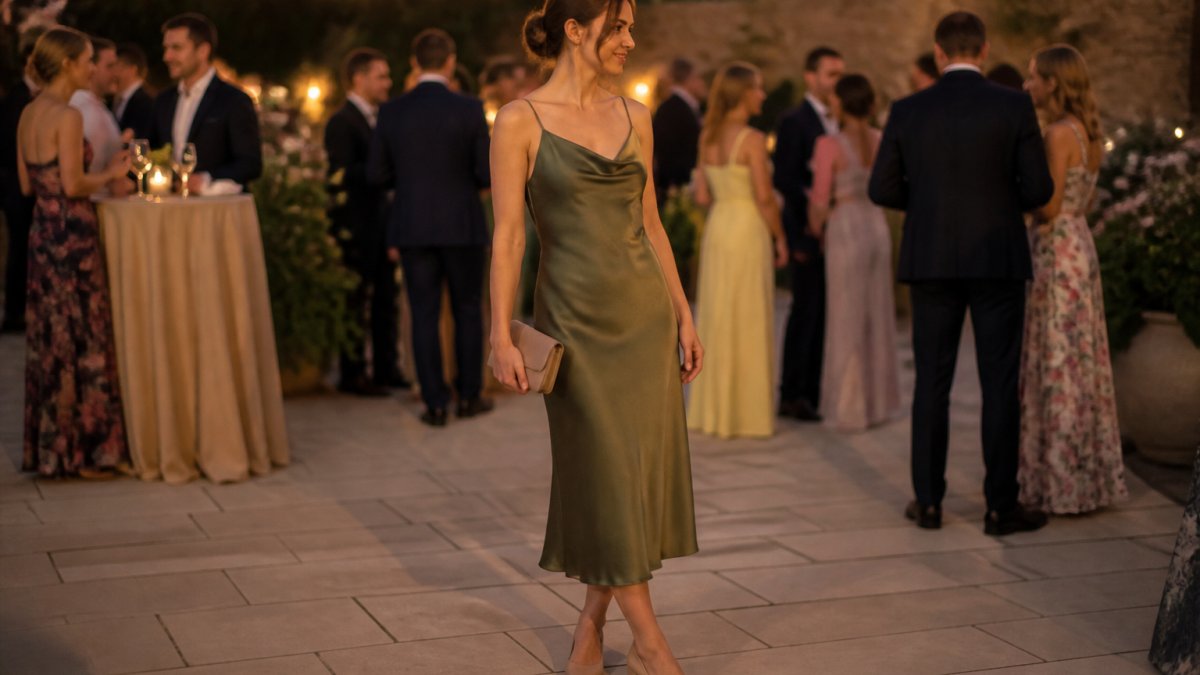
A useful way to choose is to match the shoe to the stage that asks the most of your feet, not the stage you are most excited about.
| Event stage | Typical duration | Surface | Best footwear |
|---|---|---|---|
| Ceremony | 30-60 min standing | Carpet, tile or grass | Kitten heel, block heel or flat |
| Photos | 30-60 min standing and walking | Grass, gravel, paving | Block heel or wedge |
| Cocktail hour | 60-90 min standing | Mixed, often carpet or decking | Block heel or back-strap flat |
| Dinner and speeches | 90-120 min seated | Carpet or tile | Any comfortable style |
| Dancing | 60-120 min active | Smooth floors | Secure strap, low-to-mid heel |
The stage with the longest standing or walking time should set the shoe. For most weddings that is photos and cocktail hour, which is why block heels and wedges outperform stilettos over a full day.
A few styles handle this well:
- Block heels stay stable on grass and gravel and spread pressure across a wide base.
- Kitten heels keep you comfortable through long ceremonies and seated stretches.
- Wedges spread weight and handle uneven ground, though they can feel heavy after several hours.
- Back-strap flats give support without height and are easy to walk in.
The Sasha Frosted Open-Toe High Block Heels use a thick block heel for height with a solid base, which helps on grass or paving. The Enchanté Kitten-Heel Bow Sandals sit at 3-5 cm, a sensible choice when the ceremony runs long.
Enchanté French-Style Pointed-Toe Chunky-Heel Slingback Pumps →

If the day mixes grass photos with a ballroom reception, choose for the grass. A block heel or wedge that handles gravel will also handle carpet. The reverse is not true.
How to Break In Formal Shoes Before the Event
Break in formal shoes over one to two weeks, not the night before. New leather and patent need time to soften and mould to your feet.
A simple plan:
- Day 1: Wear them indoors for 20 minutes.
- Day 3: Wear them for an hour around the house.
- Day 5: Take a short outdoor walk on pavement.
- Day 7: Wear them for a full errand run.
- Two days before: Do a final 30-minute wear, then rest them.
Thin socks help stretch tight spots early on. A shoe stretcher works for a tight toe box. Leather conditioner softens stiff uppers.
One warning: patent leather doesn't stretch much. If patent feels tight in the shop, it will stay tight. Size up or choose a different finish.
How to Prevent Blisters in Dress Shoes (and What to Pack on the Night)
Prevent blisters in dress shoes by controlling friction and moisture before they start. Most blisters come from rubbing, not from the shoe being too small.
What works:
- Break shoes in first. Never wear brand-new shoes to a long event.
- Use blister patches on known hot spots before you leave.
- Choose moisture-wicking socks or liners if your shoes allow them.
- Keep feet dry. Sweat softens skin and speeds up rubbing.
- Add gel cushions at the ball of the foot for high heels.
Pack a small rescue kit for the night:
- Blister patches and plasters
- A compact gel cushion
- Foldable flats for the trip home
- A small foot balm
For foot health basics, the healthdirect guide on caring for your feet is a good starting point if you blister easily or have ongoing foot pain.
A Step-by-Step Fitting Method for Formal Shoes
Fit formal shoes at the end of the day, when your feet are at their largest. Feet swell through the day and during long events, so a morning fit can feel tight by evening.
Follow this method in-store:
- Measure both feet. Most people have one foot slightly larger.
- Shop late afternoon or evening.
- Wear the hosiery you'll wear to the event.
- Stand and walk at least ten steps in each shoe.
- Check the toe box. You want a thumb's width of space at the front.
- Press the sides. No pinching across the widest part.
- Test the heel. It should hold without slipping out.
- Try the other shoe on your other foot before deciding.
If you're between sizes, size up. A slightly loose shoe with a strap or insert beats a tight one. Sizing varies between brands, so always check the specific size chart.
Conclusion: Choosing Formal Shoes for Long Events Comes Down to Three Checks
Long events punish the wrong shoe. But three checks fix most of it: match the shoe to the event, keep the heel low and wide, and break them in early.
At MISTY'S, our evening and occasion range is built for exactly this. You get atelier-grade craftsmanship, worldwide shipping, and an easy returns policy if the fit isn't right. Browse the collection and find a pair you can actually dance in.
Frequently Asked Questions
How do I choose comfortable formal shoes for a long event?
Match the heel to the schedule first. A block heel of 6 to 8 cm, like the Enchanté slingback pumps at $120.00, spreads weight across a wider base than a stiletto and stays stable on grass or carpet. Then check fit: your heel should not lift when you walk, and the widest part of your foot should sit in the widest part of the shoe. Break them in across two or three shorter wears before the day, and pack gel cushions and blister plasters so a small rub never becomes the memory you take home.
Are block heels more comfortable than stilettos for long events?
Yes, for most people. A block heel puts more surface area on the ground, which reduces the sideways wobble your ankle has to correct with every step. That matters most on grass, gravel, cobblestones and thick carpet, where thin heels sink or catch. The Sasha Frosted Open-Toe High Block Heels at $89.00 use exactly this logic: height without the instability. If you love a stiletto for photos, wear it for the ceremony and swap into a block heel for dancing.
How should formal shoes fit to avoid blisters?
Buy for the larger foot, not the smaller one, and shop late in the afternoon when feet are at their fullest. There should be about a centimetre of space in front of your longest toe, no gaping at the heel, and no pressure over the knuckles of your toes. A slingback or adjustable strap helps because you can tighten or loosen it as your feet swell. If you sit between sizes in a band-style shoe, size up rather than down, since a tight band rubs far more than a slightly roomy one.
How can I make new formal shoes more comfortable before an event?
Wear them indoors on carpet for 20 minutes, then 40, then an hour, building up over about a week. Add a thin gel insole if the sole feels hard, and rub a small amount of leather conditioner or shoe stretch spray on any tight spot on leather uppers. For a wedding or gala, pack blister plasters, a spare pair of cushioned flats, and a small stick of anti-chafe balm. A kitten heel such as the Enchanté bow sandals at $110.00 needs almost no breaking in, which makes it a smart backup pair.
A long event shouldn't end with you limping to the car. Get started with MISTY'S and choose formal shoes that carry you from the ceremony to the last dance. Continue shopping our occasion range for atelier-grade styles with worldwide shipping and hassle-free returns.