

Table of Contents
- Why Velvet Works for Winter Events
- How to Style a Velvet Dress for Winter
- Layering a Velvet Evening Gown for Cold Weather
- Best Fabrics for Winter Formal Wear
- Velvet Evening Gown Care Tips
- Common Mistakes to Avoid with Velvet Gowns
- Frequently Asked Questions
Last Updated: September 10, 2026
Why Velvet Works for Winter Events
Yes, a velvet evening gown is one of the best choices for winter events, and the reason comes down to fibre structure rather than fashion convention. Velvet's dense pile traps a layer of still air against the body, which is exactly how insulation works (energy.gov). That same pile scatters light across the surface instead of reflecting it flatly, giving the fabric its characteristic depth and lustre.
Clients who would never wear a silk slip dress to a July gala in a draughty hall will happily wear velvet in the same room and stay comfortable.
The practical case is straightforward. Velvet is a woven fabric with a cut pile, traditionally made from silk, cotton or synthetic blends. The pile gives it weight, and weight is what separates a gown that photographs well under event lighting from one that looks thin and washed out.
How to Style a Velvet Dress for Winter
Styling velvet for winter is largely about restraint. The fabric is already the statement, so the goal is to support it rather than compete with it. Get the colour, silhouette and accessories right and the rest falls into place.
Choosing the Right Colour and Silhouette
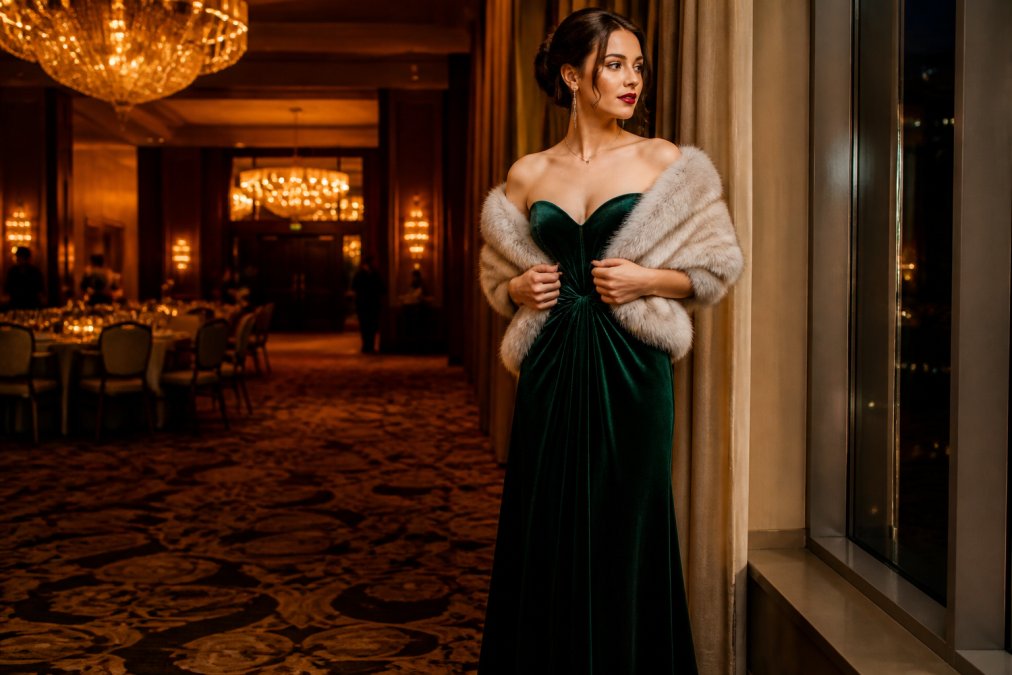
Deep, saturated colours suit winter velvet better than pastels. Emerald, burgundy, navy, black and royal blue all read as luxurious under warm indoor lighting, while pale shades can flatten out in photographs.
On silhouette, the fabric's weight matters. A heavier velvet holds structure, so it flatters column and A-line cuts particularly well. A floor-length velvet gown in a column shape creates an unbroken vertical line, which is why it remains the default choice for black tie and winter formal dress codes.
Accessories, Shoes and Bags That Pair Well
Pair velvet with materials that contrast in texture but match in formality:
- Metallic jewellery: gold or silver picks up the pile's sheen without fighting it
- Satin or velvet shoes: smooth satin heels echo the gown's lustre
- Structured clutch: a small hard-case bag suits the gown's formality
- Faux fur or velvet stole: adds warmth and completes the winter look
Avoid pairing velvet with heavily textured bags or chunky jewellery. The contrast gets muddy rather than interesting.
Layering a Velvet Evening Gown for Cold Weather
Layering over velvet works best with pieces that add warmth without crushing the pile. A bolero, a tailored cape or a long stole all sit over the shoulders and come off easily once you're inside.
What most guides miss is that the layering problem isn't the coat, it's what's underneath. Velvet shows every ridge and seam beneath it, so the base layer has to be smooth.
Undergarment Solutions for a Smooth Line
Seamless, smooth-cup underwear in a shade close to your gown's colour prevents lines showing through the pile. For strapless and column styles, a well-fitted longline bra gives support without visible edges.
For extra warmth without bulk, thermal slips and fine merino layers sit flat under velvet. Skip anything with lace edges or raised seams; they will show.
Best Fabrics for Winter Formal Wear
Velvet leads the field for winter formal wear, but it isn't the only option, and not all velvet behaves the same way. The right choice depends on the event, the venue's heating and how long you'll be standing around.
| Fabric | Warmth | Drape | Best For |
|---|---|---|---|
| Velvet | High | Structured, holds shape | Black tie, winter weddings, galas |
| Heavy satin | Medium | Fluid, glossy | Evening wear in heated venues |
| Brocade | Medium-high | Stiff, sculptural | Statement gowns, cocktail events |
| Wool crepe | High | Soft, matte | Day-to-evening formal wear |
What Actually Decides Warmth and Comfort
Two factors decide most of this: fabric weight and breathability. Weight determines how much still air the fabric traps, and breathability determines whether that trapped air becomes a comfort asset or a liability once you're indoors.
Velvet's warmth comes from its cut pile, not its fibre alone. The pile height and density control how much air sits between the fabric and your skin. A dense, short pile insulates efficiently without adding bulk; a long, loose pile traps more air but can flatten under a coat or a seatbelt.
The backing matters just as much as the pile. A silk- or viscose-backed velvet breathes noticeably better than a polyester-backed one, because the base cloth governs how moisture and heat move away from the body. In a packed function room, that difference is the gap between comfortable and clammy.
Silk, Crushed and Synthetic Velvet Compared
- Silk velvet: the finest pile, the deepest colour response and the best breathability. It is also the most delicate and the most expensive, and it marks easily.
- Viscose or rayon velvet: a close visual match to silk at a lower cost, with good drape and moderate breathability. A practical middle ground for most formal events.
- Cotton velvet: heavier and more matte, with a firmer hand. It holds structure well but reads less formal than silk or viscose.
- Crushed velvet: a pressed, irregular pile that gives a textured, light-catching finish. It hides creasing better than a smooth pile but is less formal.
- Synthetic velvet (polyester): durable, affordable and crease-resistant, but the least breathable. Fine for a short event in a cool venue; less comfortable across a long evening in a heated room.
Matching Fabric to Venue
A useful rule is to match the fabric's breathability to the venue's temperature control. Heated ballrooms and hotel function rooms suit lighter, more breathable velvets and fluid fabrics like heavy satin. Marquee weddings, historic halls and outdoor ceremonies reward denser piles and structured fabrics like brocade or wool crepe.
If you're unsure, a mid-weight viscose velvet is the safest all-rounder: warm enough for a cold arrival, breathable enough to stay comfortable once the room fills up.
Velvet Evening Gown Care Tips
Caring for a velvet evening gown comes down to three rules: never crush it, never soak it, and never iron it directly. Velvet is a pile fabric, and the pile is what you're protecting.
- Storage: hang on a padded hanger with space around it; the pile flattens under pressure
- Steaming: use a handheld steamer held a few centimetres from the surface to lift creases
- Brushing: a soft garment brush restores the pile after wear
- Cleaning: spot-clean promptly and follow the care label; many velvets need specialist dry cleaning
- Travel: roll rather than fold where possible, and unpack early so creases drop out
For a full breakdown of fabric care, the Australian Competition and Consumer Commission's guidance on care labelling explains what care labels must legally tell you. For fibre-specific handling advice, CSIRO's textile research on fibre properties is a useful technical reference.
Packing a Velvet Gown for a Destination Event
Velvet is one of the hardest fabrics to travel with, because the pile creases where it folds and the marks can be stubborn. A little preparation prevents most of the damage.
- Roll, don't fold. Lay the gown face-down, place acid-free tissue paper over the pile, then roll it loosely from the hem upward. Rolling distributes the pressure instead of concentrating it along a single fold line.
- Line the inside. Stuff the sleeves and bodice lightly with tissue so the fabric doesn't collapse onto itself.
- Use a garment bag for short trips. If the gown is only travelling by car or train, a breathable garment bag on a padded hanger is the better option, since it avoids folding altogether.
- Pack last, unpack first. Place the rolled gown on top of everything else in the case, and unpack it the moment you arrive.
Recovering Creases After Travel
Once you've unpacked, hang the gown in a steamy bathroom for an hour or two. The ambient moisture relaxes the pile gently and lets most travel creases drop out on their own.
For stubborn creases, use a handheld steamer held a few centimetres from the surface, working in short passes rather than holding it in one spot. Let the gown dry completely before wearing it, and never press the pile flat with an iron, even through a cloth.
If a crease persists, hang the gown overnight with the weight of the hem pulling it straight. Most velvet recovers well with time and moisture; the damage that doesn't recover comes from heat and pressure, not from folding alone.
On-the-Go Repairs
A soft garment brush and a lint roller handle most surface issues. For a flattened patch on the pile, a gentle steam and a light brush in the direction of the nap usually restores the finish. Carry a small sewing kit for loose embellishments, and deal with any snags by easing the thread back through rather than cutting it.
Common Mistakes to Avoid with Velvet Gowns
The biggest mistake is treating velvet like any other evening fabric. It behaves differently, and the errors show up immediately under event lighting.
- Ironing directly: a hot iron crushes the pile permanently. Steam instead.
- Choosing a size down: velvet doesn't stretch. If it's tight across the hips, it will pull and shine.
- Over-accessorising: the fabric is the feature. Let it be.
- Ignoring underlayers: visible seams ruin an otherwise flawless gown.
- Skipping the test sit: creasing across the lap is the most common regret.
A common mistake is buying for the standing photo and not the seated reality. Try the gown on, sit, stand, walk, and check it in low light before you commit.
Frequently Asked Questions
Is velvet appropriate for a black-tie winter event?
Yes, velvet is a classic choice for black-tie winter events. Its dense pile and lustrous surface give it a formal, luxurious look that suits evening wear. A floor-length velvet evening gown in a deep colour works well for black-tie dress codes. Pair it with elegant accessories and structured heels to complete the look. Velvet has long been associated with sophistication and is widely accepted at galas, winter weddings and formal banquets.
Does velvet look too heavy for evening wear?
Velvet can look heavy if the fabric weight is too thick or the silhouette is overly voluminous. A medium-weight velvet with a clean, tailored silhouette keeps the look elegant rather than bulky. Column cuts, fitted bodices and subtle draping work well. Choosing a gown with a lighter pile or a blend that includes some stretch also helps. The key is balancing the fabric's natural richness with a shape that flatters your frame.
How do you care for a velvet evening gown to keep it looking new?
Steam your velvet gown rather than ironing it to avoid crushing the pile. Hang it on a padded hanger immediately after wearing and let it air before storing. For deeper cleaning, check the care label and use a specialist dry cleaner familiar with velvet. Store the gown in a breathable garment bag, away from direct sunlight. Brush the pile gently with a soft clothes brush to keep the texture looking fresh between wears.
Can you wear velvet to an outdoor winter event?
Velvet works well for outdoor winter events because its dense pile provides more warmth than lighter fabrics like satin or chiffon. Add a tailored coat, a bolero or a faux fur wrap for extra insulation. Choose closed-toe heels or stylish boots to keep your feet warm. If the event is long and outdoors, consider a longer hemline for additional coverage. Velvet holds up well in cool, dry conditions but avoid wearing it in heavy rain.
What accessories pair best with a velvet evening gown?
Delicate metallics such as gold or silver jewellery complement velvet without competing with its texture. A slim clutch in satin or leather works better than a textured bag. For shoes, choose satin pumps, velvet heels or simple strappy sandals. A faux fur stole or a fine cashmere wrap adds warmth and elegance. Keep accessories refined rather than busy so the velvet remains the focal point of your outfit.