

Table of Contents
- Atelier Grade vs Mass Produced Fashion: The Core Differences
- How to Identify Quality Clothing Construction
- Artisan Skills and Bespoke Tailoring in Atelier Production
- Speed and Volume: The Mass Production Reality
- Cost Per Wear Calculation: Understanding True Value
- Ethical Fashion Standards and Supply Chain Transparency
- Garment Longevity and Care: Why Atelier Pieces Last Longer
- Conclusion
Last Updated: August 14, 2026
Atelier Grade vs Mass Produced Fashion: The Core Differences
Atelier grade fashion is custom or limited-run clothing made in small workshops by named artisans who control every step of production. Mass produced fashion is manufactured in factories using standardised patterns, industrial machinery, and high-volume workflows. The difference shows up in seam quality, fabric selection, finishing details, and garment longevity.
An atelier piece might take 40 hours to construct by hand. A mass produced equivalent might take 15 minutes on an assembly line. This speed fundamentally changes what's possible in terms of precision, customisation, and attention to detail. Bespoke tailoring means made specifically for one person. Ready-to-wear means pre-made in standard sizes. Slow fashion emphasises deliberate production; fast fashion prioritises speed and volume.
At MISTY'S, we've spent years curating collections that sit at the intersection of accessible luxury and genuine craftsmanship. Some mass produced pieces are genuinely well-made. Some atelier work is overpriced. The key is learning to read actual construction quality rather than trusting the label or price tag.

How to Identify Quality Clothing Construction
Quality in garment construction shows up in specific, observable places. You don't need a fashion degree to spot it, you need to know what to look for.
Seams, Stitching, and Fabric Weight
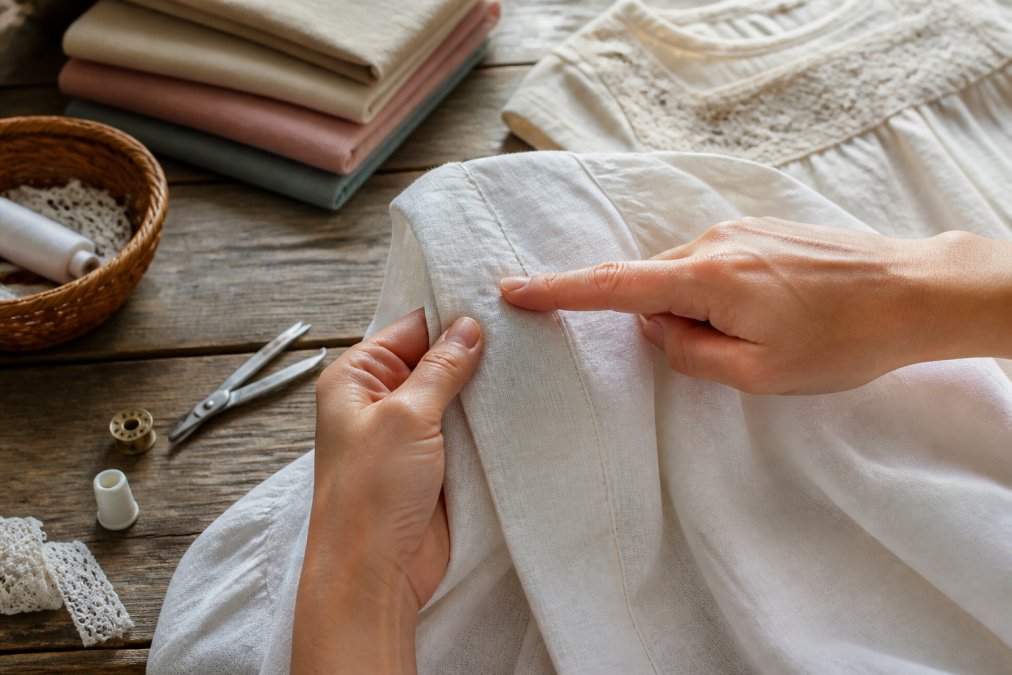
In atelier pieces, seams are typically sewn with 18-20 stitches per inch, tight enough that the thread is barely visible. Mass produced garments often use 12-14 stitches per inch, which is faster but creates visible gaps where seams can fray or separate.

Run your finger along an inside seam. On a quality piece, you'll feel a smooth, consistent line. On a rushed piece, you'll feel irregular tension, loose threads, or skipped stitches. Atelier tailoring uses thread that matches the fabric colour and weight; mass production often uses generic thread that's visible and doesn't move with the fabric.
Fabric weight tells you how much material was used. Hold the garment up to light. Atelier pieces use substantial fabric with slight opacity. Mass produced pieces often use thinner fabric to reduce costs. Thinner fabric wears faster, pills more easily, and loses its shape after a few washes.
Check the seam allowance (the fabric between the stitching line and the edge). Atelier pieces typically have a generous allowance, often around 4 to 5 centimetres, allowing future alterations and suggesting longevity. Mass produced pieces often have a minimal allowance of 1.5 centimetres or less, limiting adjustments and indicating the garment wasn't designed for durability.
Finishing Details and Interior Craftsmanship
The inside of a garment reveals how much care went into construction. In atelier pieces, hems are finished by hand with tiny, invisible stitches. Seams are often bound with bias tape or French seams (where raw edges are enclosed inside the seam itself). Buttonholes are hand-worked and reinforced. Linings are cut and sewn separately, not glued on.
Mass produced pieces cut corners on invisible work. Hems are often machine-stitched with visible topstitching. Seams are left raw and rely on fabric finishing sprays to prevent fraying. Buttonholes are cut without reinforcement. Linings are sometimes glued rather than sewn, which means they'll separate after a few washes.
Look inside at how facings (the fabric that finishes necklines and armholes) are attached. In quality construction, facings are sewn flat and pressed smooth. In rushed production, you'll see puckering or loose edges. Check whether the garment has a full lining or a partial one. Full linings provide structure and durability; partial linings reduce costs but create visible seams and offer less protection.
Artisan Skills and Bespoke Tailoring in Atelier Production
Atelier production depends entirely on skilled hands and years of training. A master tailor understands fabric behaviour, body mechanics, and how to adapt construction based on the specific material and wearer.
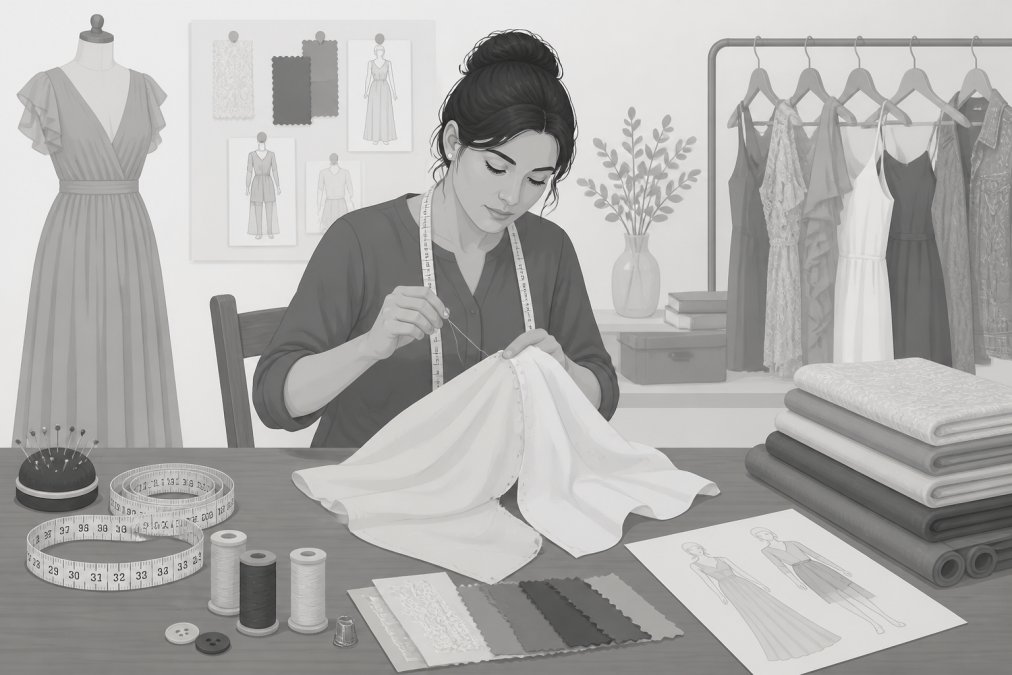
Bespoke tailoring starts with 15-20 individual measurements, not just bust, waist, and hip. The tailor measures across the back, from shoulder to wrist, from waist to knee, and assesses posture and how you carry yourself. The pattern is drafted specifically for you. If you have narrow shoulders, the armhole is positioned differently. If you have a longer torso, the dart placement changes.
Construction typically involves multiple fittings. You'll try on the garment after the shell is constructed, again after the lining is partially attached, and once more after final finishing. Each fitting allows the tailor to adjust fit, length, and details before they're permanently set.
A single bespoke jacket takes 30-50 hours of labour. A bespoke dress takes 40-80 hours. This time is spent on details that simply can't happen on an assembly line: hand-pad stitching in lapels, subtle shaping that follows your body's contours, and finishing work that's invisible but essential to how the garment moves. A master tailor's name is attached to every piece, creating accountability that pressures them to use quality materials and execute flawlessly.

Speed and Volume: The Mass Production Reality
Mass production is engineered around one goal: maximising output while minimising cost per unit. A factory producing 5,000 units per week operates on a different timeline than an atelier producing 20 pieces.
Factory workers follow standardised procedures. Each person performs one task repeatedly, creating speed but eliminating the holistic understanding of garment construction that an atelier craftsperson develops. The pattern for a mass produced garment is designed to be cut and sewn as quickly as possible. Seams are straight rather than curved. Hems are machine-stitched with visible topstitching rather than hand-finished. Buttons are glued on rather than sewn through multiple passes.
Quality control in mass production happens through sampling and statistical analysis. A factory producing 10,000 pieces per day can't inspect every garment. Instead, they inspect random samples and assume the rest meet the same standard. This is economically rational but means defective pieces do ship.
Volume creates genuine economies of scale that benefit consumers. A factory producing 100,000 metres of fabric per month can negotiate better prices than an atelier buying 500 metres. But this only works if you accept standardised sizing, limited colour options, and designs that appeal to the broadest possible market. A complete garment can move from cutting to finished product in a single day, making it possible to respond to trends quickly and keep inventory costs low.
Cost Per Wear Calculation: Understanding True Value
Price is what you pay. Value is what you get. A cost per wear calculation divides the price of a garment by the number of times you wear it. If you buy a dress for A$200 and wear it 50 times, your cost per wear is A$4. If you buy a dress for A$50 and wear it 10 times, your cost per wear is A$5.
An atelier piece that costs three times more than a mass produced alternative isn't necessarily worse value if you wear it three times more often. A bespoke jacket that costs A$800 but gets worn 200 times over five years costs A$4 per wear. A mass produced jacket that costs A$150 but gets worn 30 times over two years costs A$5 per wear.
Several factors influence how many times you'll actually wear something: Fit, a garment that fits perfectly gets worn more often. Atelier pieces are fitted to your body specifically. Quality of materials, garments made from durable, high-quality fabrics maintain their appearance longer. Emotional connection, you wear things you love more often. Bespoke pieces feel personal. Versatility, a well-designed piece that works with multiple outfits gets worn more often. Maintenance requirements, a garment that requires professional dry-cleaning after every wear gets worn less often than one you can hand-wash.
When you calculate actual cost per wear honestly, atelier pieces often win. But only if you actually wear them.
Ethical Fashion Standards and Supply Chain Transparency
Atelier production typically offers better transparency. You often know exactly who made your garment, their workshop location, and their production methods. Mass production obscures this information. A garment manufactured in a factory involves dozens of suppliers and subcontractors, making it difficult to trace the complete supply chain.
Labour practices vary widely in both atelier and mass production. Some ateliers pay fair wages and provide good working conditions; some exploit workers. The same is true in factories. The difference is that ethical practices in ateliers are often verifiable because the scale is small enough to inspect.
Environmental impact is complex. Atelier production uses less fabric overall because pieces are cut specifically to minimise waste. Mass production generates more textile waste but spreads the environmental cost of manufacturing across more garments. According to [the Australian Competition and Consumer Commission's guidance on sustainable fashion claims | accc.gov.au], brands making environmental or ethical claims must be able to substantiate them.
You can't determine ethical production simply by choosing atelier over mass produced. You need to research specific brands, ask questions about labour practices, and look for verifiable certifications. MISTY'S prioritises transparency in sourcing and production, providing customers with clear information about garment origins and construction methods.
Garment Longevity and Care: Why Atelier Pieces Last Longer
A garment's lifespan is determined by materials, construction, and how you care for it. Atelier pieces typically last longer, but only if you actually care for them properly.
Durability starts with fabric selection. Atelier tailors choose fabrics based on how they'll perform over time. A silk charmeuse chosen for a dress will maintain its drape and sheen for decades if cared for properly. A polyester blend chosen for cost will lose sheen and develop a worn appearance much faster.
Construction durability is visible in seam strength. A seam sewn with 18 stitches per inch and reinforced at stress points will hold together through hundreds of wears. A seam sewn with 12 stitches per inch will eventually separate or fray. A hem that's hand-finished with tiny stitches distributes stress evenly and won't unravel if a thread breaks. A machine-stitched hem can unravel if the topstitching thread breaks. Bound seams that enclose raw edges will never fray. Raw seams will eventually fray as the finish washes away.
Proper care extends garment life significantly. Hand-washing instead of machine-washing reduces stress on seams. Air-drying instead of machine-drying prevents shrinkage and heat damage. Storing garments properly prevents creasing and mildew. The maintenance cost of atelier pieces is higher, but this is part of the investment for something meant to last years or decades.
| Aspect | Atelier Grade | Mass Produced |
|---|---|---|
| Seam density | 18-20 stitches per inch | 12-14 stitches per inch |
| Seam allowance | Generous (e.g., 4-5 cm) | Minimal (e.g., 1.5 cm or less) |
| Finishing | Hand-finished, bound seams | Machine-stitched, raw seams |
| Customisation | Bespoke fit to individual | Standard sizing |
| Production time | 30-80 hours per garment | 15-30 minutes per garment |
| Quality control | Individual inspection | Statistical sampling |
| Lifespan | 10-20+ years with care | 1-3 years typical |
| Cost per wear (long-term) | A$2-5 | A$5-10 |
| Care requirements | Specialised (dry-cleaning, hand-washing) | Basic (machine-washable) |
| Environmental impact | Lower fabric waste, higher labour | Higher fabric waste, lower labour |
Understanding atelier grade versus mass produced fashion isn't about snobbery. It's about making conscious choices about what you buy and why. Some occasions justify investing in atelier pieces. Other situations are perfectly suited to well-made mass produced clothing.
The real skill is learning to evaluate construction quality regardless of price point. A well-made mass produced piece beats a poorly-made atelier piece. But a genuinely well-made atelier piece, one that fits you perfectly, uses quality materials, and is constructed with care, will serve you far longer and provide better value over time.
MISTY'S curates pieces that bridge this divide. Our collection emphasises atelier-grade craftsmanship and construction quality, with worldwide shipping and an easy returns policy that removes the risk from ordering online. Understanding the difference between atelier and mass produced construction helps you choose pieces you'll actually wear and treasure.
Frequently Asked Questions
What does 'atelier' mean in fashion?
An atelier is a small, independent workshop or studio where skilled artisans create clothing, often by hand or with minimal machinery. Atelier-grade fashion emphasises custom-made or limited-production pieces with meticulous craftsmanship, bespoke tailoring, and individual design identity. Unlike mass-produced alternatives, atelier pieces prioritise quality over quantity and often involve direct collaboration between maker and wearer.
How does the construction quality of atelier garments differ from mass-produced items?
Atelier garments feature reinforced seams with multiple stitching passes, hand-finished hems, and premium fabrics selected for durability. Mass-produced clothing often uses single-stitch construction, minimal interior finishing, and lower-weight fabrics to reduce costs. Atelier pieces include structured linings, bound seams, and attention to detail in pockets and closures. These differences directly affect how long a garment lasts and how it maintains its shape through wear and washing.
How can cost per wear calculation help me choose between atelier and mass-produced fashion?
Cost per wear divides the garment's price by the number of times you'll wear it. A A$300 atelier dress worn 100 times costs A$3 per wear, whilst a A$80 mass-produced dress worn 20 times costs A$4 per wear. Atelier pieces typically have longer garment longevity, meaning you wear them more often over several years, lowering the true cost per use. This analysis reveals that premium pieces often deliver better value than cheaper alternatives when you factor in durability and versatility.
What ethical fashion standards apply to garment production?
Ethical fashion standards focus on fair labour practices, sustainable textile production, and supply chain transparency. Atelier workshops typically offer better labour conditions and fair wages due to smaller scale and direct oversight. Mass production often involves complex supply chains across multiple countries, making transparency harder. Look for certifications and clear information about where and how garments are made. Many consumers now expect brands to disclose production locations and labour practices.
Why do atelier garments last longer than mass-produced clothing?
Atelier garments use superior construction techniques: reinforced seams, quality interfacing, and durable fabrics chosen for longevity rather than cost reduction. Artisan makers select materials that improve with wear, like natural fibres and premium synthetics. Mass-produced items often use lightweight fabrics and minimal stitching to meet price points, causing seams to fail and fabrics to pill or fade quickly. Proper care extends atelier garment life significantly, making them a sustainable choice despite higher upfront cost.
This article was written using GrandRanker