

Table of Contents
- Why Delicate Lace Requires Special Care
- Hand Washing vs Dry Cleaning Lace: Which Method Protects Your Gown
- Step-by-Step Hand Washing Process for Lace Evening Gowns
- Removing Stains Without Damaging Delicate Fabrics
- Drying Methods for Lace Evening Gowns
- Storing Evening Dresses Long Term to Prevent Damage
- Handling Delicate Details: Zippers, Hooks, and Embellishments
- Conclusion
Last Updated: August 27, 2026
Why Delicate Lace Requires Special Care
Delicate lace evening gowns demand fundamentally different care than everyday clothing. The intricate weaving creates countless tiny loops and threads that snag easily, tear under tension, and absorb moisture unevenly. Pulling, wringing, or tumbling a lace gown compromises the structural integrity of the entire garment.

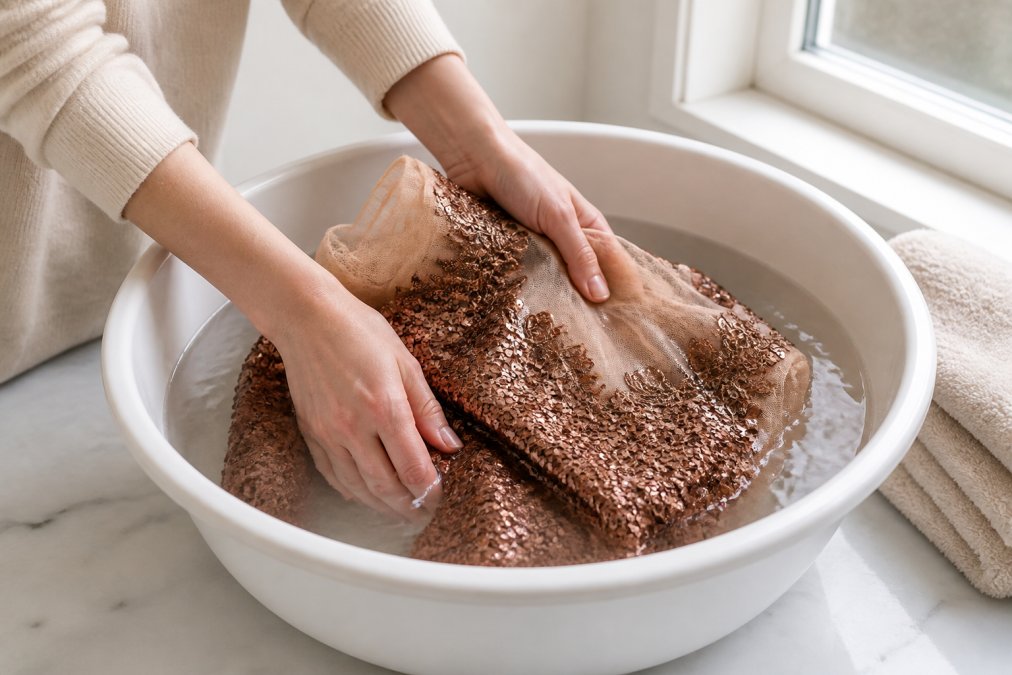
Lace relies on precise spacing between threads. Natural fibres like silk and cotton absorb water and swell, changing the geometry of each loop. Synthetic fibres are prone to snagging. Both need protection from agitation, heat, and harsh chemicals. Most home care fails because people assume delicate-looking lace needs aggressive cleaning. The opposite is true: gentle, patient care preserves both appearance and longevity.
Hand Washing vs Dry Cleaning Lace: Which Method Protects Your Gown
Hand washing works well for lace evening gowns with minor surface dust, light perspiration stains, or no visible stains. It gives you complete control over water temperature, detergent strength, and agitation. For gowns with delicate embellishments or beads, hand washing is often safer than commercial dry cleaning chemicals.

Dry cleaning uses solvents that dissolve oil-based stains more effectively than water and evaporate quickly without residue. Professional dry cleaners have experience with embellished garments, but their chemicals can affect certain dyes or synthetic fibres, and mechanical action carries risks.
Water-based stains (perspiration, wine, food) respond better to hand washing. Oil-based stains (makeup, grease) need dry cleaning solvents. For most lace evening gowns worn once or twice, hand washing is sufficient and safer. Reserve professional dry cleaning for stubborn stains or garments with extensive embellishments.
Step-by-Step Hand Washing Process for Lace Evening Gowns
Preparing Your Gown and Workspace
Fill a basin with lukewarm water around 30 degrees Celsius. Test the temperature with your inner wrist; it should feel gently warm, not hot. Hot water opens up lace fibres, increasing the risk of dye bleeding and fibre damage.
Clear your workspace of anything sharp or rough. Zips, jewellery, and rough countertops can snag lace. Lay out a clean, soft towel where you'll place the gown after washing. Ensure your hands are clean and free of lotion.
Inspect the gown carefully before washing. Note any existing stains, loose beads, or weak seams. If you spot loose embellishments, don't wash the gown; take it to a professional instead.
Washing with the Best Detergent for Delicate Lace
The best detergent for delicate lace is pH-neutral and free of optical brighteners, enzymes, and bleach. Look for detergents specifically formulated for delicate or wool garments.
Add roughly one-quarter of the detergent you'd use for a regular load. Stir gently to distribute evenly. The water should feel slightly slippery but not soapy.
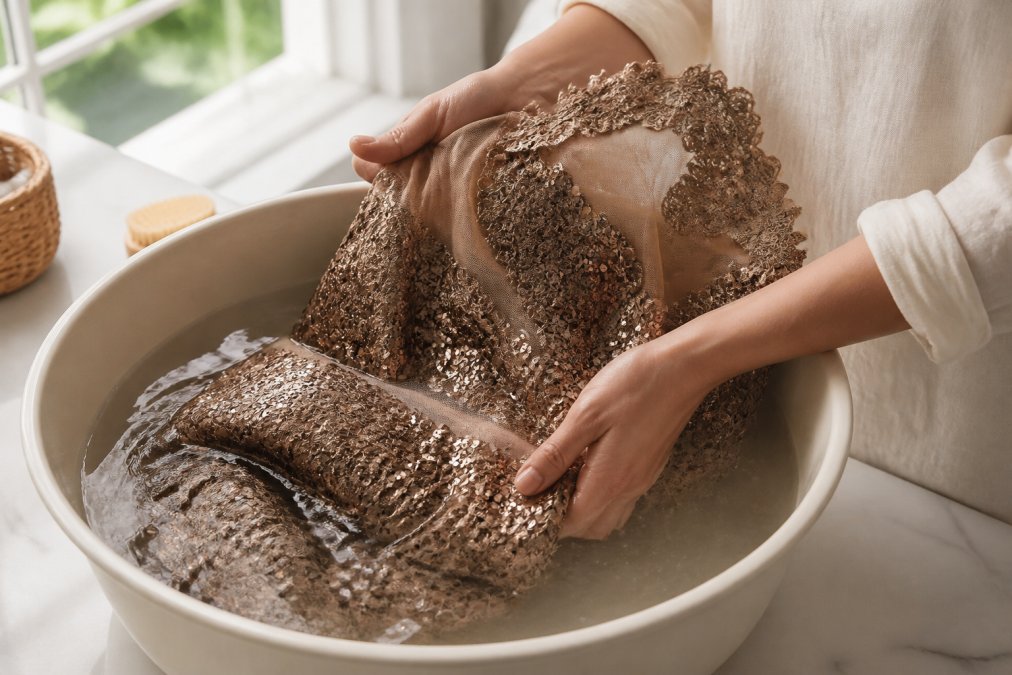
Submerge the gown gently, supporting its full weight as it enters the water. Let it soak for 10-15 minutes. After soaking, gently agitate by moving it slowly through the water using smooth, continuous motion without sharp changes in direction. Pay extra attention to underarms, the back of the neck, and the inside of the bodice.
For stubborn stains, gently press the fabric against itself in the soapy water rather than rubbing.
Rinsing and Avoiding Wringing
Drain the soapy water carefully, supporting the full weight of the gown. Never let it hang unsupported while wet.
Refill the basin with fresh lukewarm water and gently move the gown through it. Repeat at least three times, or until the water runs clear and you no longer feel slickness from detergent residue.
Never wring, twist, or squeeze your lace evening gown. Wringing concentrates stress into a small area, tearing fibres and damaging the fabric structure permanently.
Instead, lift the gown from the final rinse water and support it fully in your hands. Let excess water drip back into the basin for a minute. Then gently press the fabric against itself to encourage water to release without applying twisting force.
Removing Stains Without Damaging Delicate Fabrics
Testing Stain Removal Solutions First
Before applying any treatment to a visible area, test it on a hidden section: the inside of a seam, the back of the hem, or the underside of the train. Apply your test solution and let it sit for the same amount of time you plan to use on the actual stain. Rinse thoroughly. Wait 24 hours and inspect for any colour change, weakening of fabric, or discolouration. Only if the test shows no damage should you proceed to treat the visible stain.
For water-based stains (perspiration, food, wine), use distilled water with a tiny drop of pH-neutral detergent. Distilled water is important because tap water contains minerals that can leave marks on delicate lace.
For protein-based stains (blood, egg), use cold distilled water only, with no detergent initially. Heat sets protein stains permanently.
For oil-based stains (makeup, grease), water won't work effectively. Professional dry cleaning is the safer choice. If you attempt home treatment, use a tiny amount of clear dish soap mixed with distilled water.
Spot Cleaning Techniques for Common Stains
Apply your treatment solution using a clean white cloth. Blot rather than rub. Press the cloth against the stain, hold for a few seconds, then lift. Repeat, moving to a clean section of cloth each time.
Work from the outside edge of the stain toward the centre to prevent spreading. After blotting with your treatment solution, use a separate cloth dampened with distilled water to blot away residue. Repeat until the cloth comes away clean.
Allow the treated area to air dry completely before assessing whether the stain has lifted. Wet fabric looks different than dry fabric.
For stubborn stains that don't respond to home treatment, stop. Professional dry cleaners have stronger solvents and experience with resistant stains.
Drying Methods for Lace Evening Gowns
Never use a tumble dryer or any heat source. Heat damages delicate synthetic fibres and can set stains that weren't fully removed.
The safest drying method is to lay the gown flat on a clean, dry towel in a cool, dark room with good air circulation. Arrange the gown so it lies naturally without bunching or folding. For gowns with a long train or skirt, spread the fabric out rather than piling it on top of itself.
For gowns with a fitted bodice, you can hang them on a padded hanger in a well-ventilated room only after the majority of moisture has been removed by laying flat first. Never hang a soaking-wet gown.
Avoid direct sunlight while drying. A cool, dark room with a gentle breeze is ideal. If your home lacks good natural air circulation, use a fan on low speed nearby to encourage air movement.
Drying time varies depending on fabric weight and humidity. A lightweight lace gown might dry in 12-24 hours. Heavier fabrics can take 2-3 days.
Storing Evening Dresses Long Term to Prevent Damage
How you store your lace evening gown between wears determines whether it stays pristine or develops permanent damage. Storage mistakes account for more gown damage than actual wearing.

Using Garment Bags and Acid-Free Tissue Paper
Store your lace evening gown in a breathable garment bag, not a plastic one. Plastic traps moisture and creates an environment where mildew and mould develop. Breathable fabric bags allow air circulation while protecting the gown from dust and direct light.
Inside the garment bag, use acid-free tissue paper to support folds and prevent creasing. Acid-free paper is crucial because regular paper contains acids that yellow and weaken delicate fabrics. Stuff the bodice loosely with crumpled tissue paper to maintain its shape. For the skirt, fold gently and layer tissue paper between each fold.
Never use plastic bags, newspaper, or regular tissue paper.
Store the garment bag in a cool, dark, dry location, ideally maintaining temperature between 15 and 21 degrees Celsius and humidity between 30 and 50 percent Library of Congress preservation guidelines. A bedroom closet or spare wardrobe in a climate-controlled room is usually ideal.
Avoid storing your gown in direct sunlight or near heat sources. UV light fades dyes and weakens fibres.
Protecting Embellishments and Beads
If your lace evening gown features beads, sequins, or crystals, store it so embellishments aren't pressing against anything. If you hang the gown, ensure the hanger is padded and positioned so the weight of beads doesn't pull on attachment points. If you lay it flat, position embellished areas face-up so they're not compressed.
For heavily embellished gowns, wrap the embellished sections separately in tissue paper before placing the gown in the garment bag.
Check your stored gown every few months for signs of moisture, discolouration, or pest damage. Address any issues immediately.
Handling Delicate Details: Zippers, Hooks, and Embellishments
Zippers should be checked before washing. If a zip is stuck, apply a tiny amount of graphite lubricant along the zip teeth and work it gently back and forth. Never use oil-based lubricants. After washing, ensure the zip is completely dry before storing.
Hooks and eyes should be inspected for loose threads or bent wire. If a hook is bent, a professional can replace it more safely. For loose threads, secure them with a tiny stitch using matching thread, then trim excess carefully.
Embellishments like beads and sequins are attached with thread that weakens over time. Before washing, inspect all embellishments and secure any that feel loose. After washing and drying, inspect again. Address issues immediately to prevent small problems from becoming major damage.
Caring for your lace evening gown at home is entirely possible when you understand how delicate lace behaves under stress, moisture, and temperature change. Gentle hand washing, careful drying, and thoughtful storage preserve your gown for years of wear. For gowns from MISTY'S, our atelier-grade lace fabrics are designed to withstand proper home care while maintaining their beauty and structural integrity. These care practices protect your investment and ensure your gown looks as stunning on the tenth wearing as it did on the first.
| Care Step | Method | Frequency | Key Consideration |
|---|---|---|---|
| Regular cleaning | Hand wash with pH-neutral detergent | After each wear if visibly soiled | Use lukewarm water and gentle blotting |
| Stain removal | Test on hidden area first, then spot clean | As needed | Never rub; always blot |
| Drying | Lay flat on clean towel | After every wash | Allow 24-72 hours depending on fabric weight |
| Storage | Breathable garment bag with acid-free tissue | Between wears | Keep in cool, dark, dry location |
| Embellishment check | Visual inspection | Monthly during storage | Secure loose beads immediately |
Frequently Asked Questions
Q: Can a delicate lace evening gown be safely hand-washed at home?
A: Yes, hand washing is often safer than dry cleaning for delicate lace evening gowns. Use lukewarm water, pH-neutral detergent, and gentle blotting motions rather than wringing. Always test your detergent on a hidden seam first. For gowns with extensive beading or embroidery, spot cleaning may be preferable to full submersion.
Q: What is the best detergent for delicate lace?
A: Choose a pH-neutral detergent specifically formulated for delicate fabrics or wool. Avoid bleach, fabric softeners, and enzyme-based cleaners, which can weaken lace fibres and damage embellishments. Always dilute thoroughly in lukewarm water, concentrated detergent can leave residue and cause yellowing. Test any new detergent on an inconspicuous area of the gown before full washing.
Q: How should I store a lace evening gown to prevent yellowing?
A: Store your gown in a cool, dark place away from direct sunlight, which causes yellowing and fibre degradation. Use acid-free tissue paper to stuff sleeves and bodice to maintain shape, and hang or lay flat in a breathable garment bag, never plastic, which traps moisture. Keep the storage area at moderate humidity to prevent mildew. Avoid basements or attics where temperature fluctuations and moisture are common. Check stored gowns every few months for signs of damage.
Q: What is the best way to remove stains from delicate lace without causing damage?
A: Blot fresh stains immediately with a clean, damp cloth using distilled water. For set-in stains, test your cleaning solution on a hidden seam first. Mix a small amount of pH-neutral detergent with lukewarm distilled water and gently blot the stain, never rub or scrub. Work from the outside of the stain inward to prevent spreading. Rinse thoroughly with distilled water and lay flat to dry. For wine, grease, or protein-based stains, seek professional cleaning advice to avoid permanent damage.
This article was written using GrandRanker