

Table of Contents
- Understanding Petite Proportions and Formal Wear
- Best Formal Dress Silhouettes for Short Women
- Flattering Necklines for Petite Frames
- The Power of Vertical Lines and Elongating Details
- Petite Evening Gown Alterations and Tailoring
- Choosing Fabrics and Proportional Balance
- Shoe Pairing and Heel Height Ratios
- Sustainable and Rental Options for Petite Formal Wear
- Frequently Asked Questions
Last Updated: September 28, 2026
Understanding Petite Proportions and Formal Wear
Choosing formal dresses petite frames requires requires a completely different approach than dressing taller figures. The challenge isn't finding a dress that fits, it's finding one that creates visual balance and elongates your silhouette rather than overwhelming it. Understanding how proportion, placement, and line weight interact with a shorter frame is key to finding a formal dress that works.
When you're petite, every design choice matters more. A neckline that sits too low swallows your frame. A waistband placed even an inch too high or too low throws off your entire proportional balance. Fabric weight that works beautifully on a taller woman can drown someone under 5'4". This is why shopping off-the-rack is often frustrating, standard sizing assumes a taller baseline, leaving petite wearers with hems that drag, armholes that gap, and silhouettes that don't sit where they should.
The good news: understanding the rules of petite proportion means you can shop with confidence. You'll know exactly what to look for, what to avoid, and how to make alterations work in your favour. This guide covers everything you need to know about formal dresses petite frames that make you feel sophisticated and properly proportioned.
Best Formal Dress Silhouettes for Short Women
The right silhouette is your foundation. Not all shapes work equally well on petite frames, and knowing which ones create elongating lines versus which ones visually shorten you is essential.
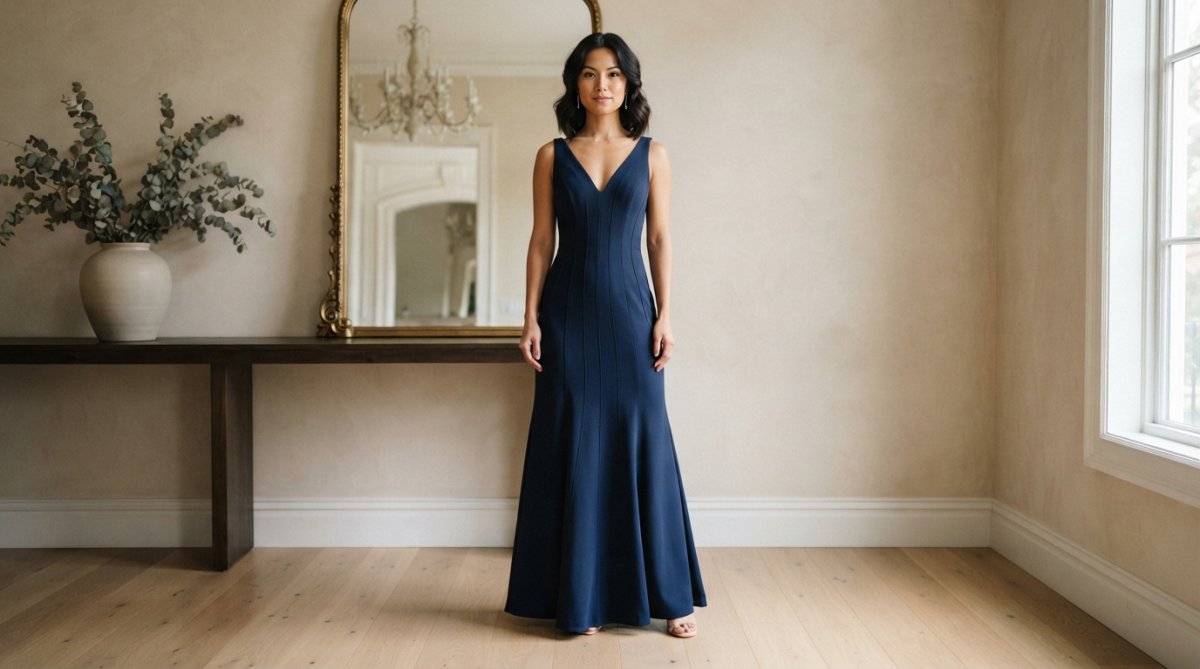
A-Line and Column Dresses
A-line and column silhouettes are your strongest allies. An A-line dress skims your body from the bust and gradually widens toward the hem, creating an uninterrupted vertical line that visually lengthens your frame. The key is ensuring the waist sits at your natural waistline, not below it, which shortens your torso. Column dresses work similarly by maintaining clean, straight lines from shoulder to hem without excess fabric. Both styles avoid the visual weight of gathered or pleated skirts that can overwhelm petite proportions.
The MISTY'S Amara Back Lace-Up Mid-Length A-Line Dress features a structured mid-waist rise that creates proper proportional balance, and the fluid A-line skirt moves gracefully without adding bulk. The adjustable lace-up back allows you to customise the fit to your exact frame, ensuring the silhouette sits where it should rather than gapping or bunching. The structured mid-waist rise creates proper proportional balance, and the fluid A-line skirt moves gracefully without adding bulk. The adjustable lace-up back allows you to customize the fit to your exact frame, ensuring the silhouette sits where it should rather than gapping or bunching.

When shopping for A-line or column dresses, look for minimal embellishment on the skirt. Beading, sequins, or heavy appliqués add visual weight that can overwhelm a shorter frame. Clean, simplified fabrics let your silhouette do the work.
Trumpet and Sheath Styles
Trumpet dresses (fitted through the hips and flared at the hem) and sheath dresses (fitted throughout) can work beautifully on petite frames when executed correctly. The key is avoiding excess fabric at the hip. A trumpet that flares too dramatically from the knee down will visually shorten your legs. Instead, look for a trumpet that begins its flare closer to the ankle, maintaining more of a column shape through the hip and thigh.
Sheath dresses require precise tailoring on petite frames. They work best when the dress hits just above or at the knee, creating an uninterrupted line. Floor-length sheaths on petite wearers often require significant hemming, which can be expensive. A midi-length sheath avoids this problem while maintaining elegance and sophistication.
Both styles demand excellent fit through the bodice. Any excess fabric will create bulk rather than elongating lines. This is where tailoring becomes non-negotiable.
Flattering Necklines for Petite Frames
Your neckline shapes how balanced your upper body appears relative to your frame. A neckline that's too low or too wide will visually widen your shoulders and shorten your neck. A neckline that's too high will make your head appear smaller relative to your body.
For petite frames, aim for necklines that sit higher on the collarbone and create vertical lines. A deep V-neckline draws the eye upward and creates an elongating effect, but the V must start at your collarbone, not lower. A sweetheart neckline (curved and modest) works well if it sits at your natural collarbone height. Avoid wide, boat-style necklines that extend beyond your shoulder width, as these visually broaden your frame without adding height.
Asymmetrical necklines can be flattering because they create visual movement and interest without bulk. A one-shoulder design, for example, creates a diagonal line that can elongate your silhouette. The key is ensuring the neckline itself doesn't overwhelm your frame, a delicate one-shoulder is more flattering than a heavily embellished version.
Halter necklines should be approached carefully. They can work on petite frames if the neckline sits high and the back opening isn't too dramatic. A halter that plunges too far down the back can create visual imbalance.
The Power of Vertical Lines and Elongating Details
Vertical lines are your secret weapon for creating visual height. Any design element that draws the eye upward, seaming, colour blocking, or linear details, elongates your silhouette. Horizontal lines do the opposite, visually widening and shortening.
Look for dresses with vertical seaming through the bodice and skirt. These seams create uninterrupted lines that guide the eye from shoulder to hem. Colour blocking with vertical panels (darker on the sides, lighter down the centre, for example) creates the same effect. Even subtle details like a vertical line of beading or a thin stripe can elongate your frame.
Summer Fashion Set For Sassy Girls →
Monochromatic dressing, wearing one continuous colour from neck to hem, is one of the most powerful tools for petite wearers. It eliminates visual breaks that shorten your silhouette. A floor-length gown in a single colour creates an unbroken line of visual height. If you prefer colour, choose a dress in a single jewel tone rather than mixing multiple hues.
Avoid horizontal stripes, wide waistbands, colour blocking that runs across the body, and any design that visually divides your frame into sections. These elements interrupt the vertical line and make you appear shorter.
Petite Evening Gown Alterations and Tailoring
Alterations aren't optional for petite formal wear, they're essential. Even dresses marketed as petite sizes often need adjustments to fit your proportions perfectly.
Hemline Adjustments for Formal Events
The most obvious alteration is hemming, but the length you choose matters enormously. A floor-length gown that drags on the ground visually shortens you by adding weight at your feet. The ideal length for formal wear on a petite frame is either at the top of your foot (so there's just a whisper of fabric touching the ground) or hitting just above the ankle, creating a clean line without excess length.
For high-low hemlines, the asymmetrical cut can work beautifully on petite frames because it eliminates the visual weight of a full floor-length hem.
Budget-Friendly DIY Tailoring Hacks
Not every alteration requires a professional tailor. Fabric tape and temporary hem adhesive can adjust a hem for one-time wear without permanent stitching. This works best for dresses in heavier fabrics where the tape won't show. Test the adhesive on an inconspicuous area first.
Choosing Fabrics and Proportional Balance
Fabric weight and drape dramatically affect how a dress looks on a petite frame. Heavy, stiff fabrics add visual bulk. Lightweight, fluid fabrics allow your silhouette to show without excess material overwhelming your frame.
Shoe Pairing and Heel Height Ratios
Your shoes matter more than you might think. On a petite frame, the wrong shoe choice can visually shorten your legs or throw off your proportions.
Sustainable and Rental Options for Petite Formal Wear
Buying a new formal dress for every event isn't sustainable or budget-friendly. Rental and secondhand options are increasingly accessible for petite wearers.
| Silhouette | Best For Petite Frames | Key Feature | Avoid |
|---|---|---|---|
| A-Line | Most petite wearers | Uninterrupted vertical line | Gathered or pleated skirts |
| Column | Simplified elegance | Clean, straight lines | Excess embellishment |
| Trumpet | Defined hips | Flare starting near ankle | Dramatic flare from knee |
| Sheath | Sleek sophistication | Precise tailoring required | Floor-length without alteration |
Frequently Asked Questions
What is the best dress style for a petite frame?
A-line and column dresses work best for petite frames because they create an uninterrupted vertical line from shoulder to hem. These silhouettes elongate your proportions without overwhelming your frame. Sheath dresses with structured fabrics and trumpet styles also flatter shorter women by hugging the body and creating visual height. Avoid overly voluminous skirts, dramatic ruffles, and heavy layering, which can make you appear shorter. The key is choosing styles that emphasise vertical lines and maintain proportional balance.
What necklines are most flattering for petite women?
V-necklines elongate the neck and draw the eye upward, creating the illusion of height. Deep V-necklines are particularly effective for formal wear because they extend the vertical line of your silhouette. Avoid high crew necks and chokers, which can shorten the appearance of your neck and torso. Asymmetrical necklines and off-shoulder styles can also work well if they maintain clean lines and don't add bulk at the shoulders. Look for neckline depth that's proportional to your frame.
Should petite women wear floor-length gowns?
Yes, petite women can wear floor-length gowns, but tailoring is essential. A floor-length hem that pools on the ground will overwhelm your frame and make you appear shorter. Have the dress hemmed to graze the top of your shoe or just touch the floor without dragging. High-low hemlines and midi lengths are excellent alternatives that maintain elegance while keeping proportions balanced. If you choose a floor-length gown, ensure proper alterations and consider a structured fabric that drapes cleanly rather than creating excess volume.
How can I make a formal dress look better on a petite frame?
Focus on three key strategies: choose elongating silhouettes like A-line or column dresses, add vertical visual elements through seaming or monochromatic colour palettes, and invest in proper tailoring. Pair your dress with heels that complement your proportions (typically 5-8 centimetres height), and avoid oversized jewellery or accessories that can dwarf your frame. Structured fabrics that maintain clean lines work better than loose, flowing materials.
Fashion Institute guidelines on proportion and silhouette for different body types
Textile and Fabric Association standards for formal evening wear construction
Consumer guide to sustainable fashion and dress rental practices