

Table of Contents
- Why Formal Dress Sizing Varies Between Luxury Labels
- How to Measure Yourself for Formal Dresses
- Fabric Composition and Fit: Stretch, Drape and Structural Integrity
- The Alteration Potential Index: What You Can Fix After It Arrives
- Luxury Fashion Return Policies Explained
- How to Reduce Clothing Return Rates Before You Check Out
- Which Formal Dress Brands Get Sizing Right
- Frequently Asked Questions
Last Updated: September 19, 2026
Why Formal Dress Sizing Varies Between Luxury Labels
Formal dress sizing is not standardised across luxury labels, which is the single biggest reason online evening wear gets returned.
Vanity sizing is the main culprit.
How to Measure Yourself for Formal Dresses
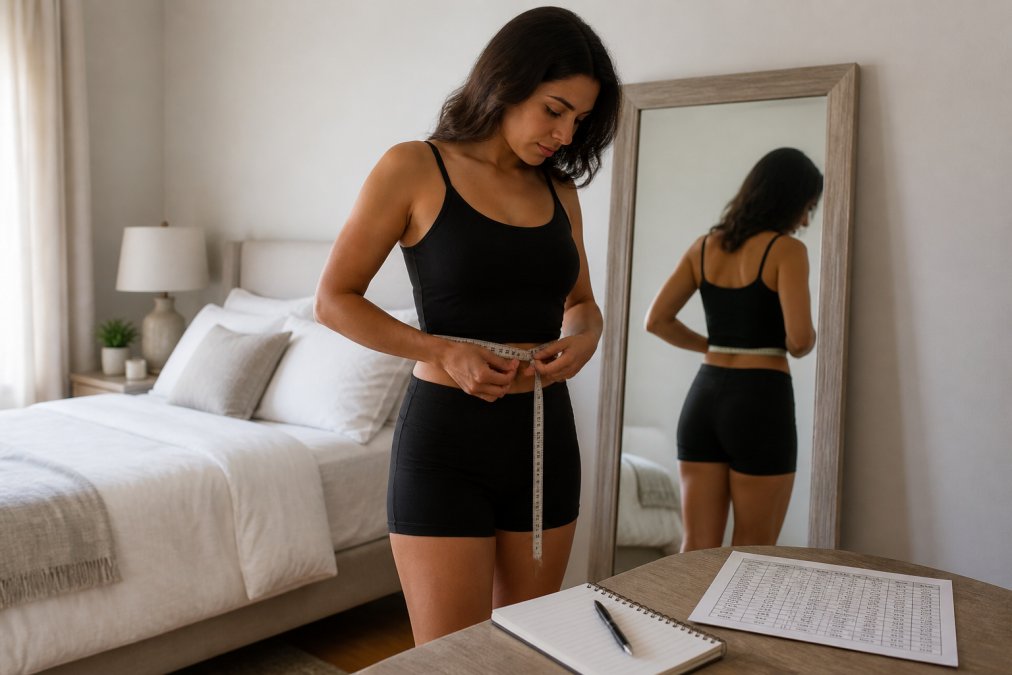
Learning how to measure yourself for formal dresses takes about ten minutes and a soft measuring tape. Do it over light clothing, keep the tape snug but not tight, and write every number down.
The Three Measurements That Decide Your Size
Bust, waist and hip drive almost every formal dress size chart. Measure your bust at the fullest point, your waist at the narrowest point above the navel, and your hips at the widest point. If you fall between two sizes, size up. Boutique occasion wear often runs smaller than standard retail sizing, so the larger number is usually the safer call.
Reading a Size Chart Like a Pattern Maker
Most shoppers read a size chart top to bottom and pick the row matching their usual label. Pattern makers read it differently: they check which measurement the garment is graded on. A structured bodice is built around the bust; a bias-cut skirt is built around the hip. Match the chart to the garment's construction, not your habit.
Fabric Composition and Fit: Stretch, Drape and Structural Integrity
Fabric composition decides how forgiving a dress actually is. A polyester gown with no stretch holds its shape but will not flex around your body. Silk chiffon drapes softly and skims rather than grips. Satin has a lustrous finish and little give.
The Alteration Potential Index: What You Can Fix After It Arrives
The Alteration Potential Index is a simple way to judge whether a dress can be rescued if the fit is slightly off. Score each garment from 1 to 5 on three factors: seam allowance, hem length, and strap or waist adjustability.
| Factor | High Potential (Fix Easily) | Low Potential (Hard to Fix) |
|---|---|---|
| Seam allowance | Generous side seams | Overlocked, no excess fabric |
| Hem length | Floor-length, easy to shorten | Midi with a finished edge |
| Waist and straps | Adjustable or easily taken in | Structured, boned bodice |
Luxury Fashion Return Policies Explained
Luxury fashion return policies explained in plain terms come down to three things: the window, who pays return shipping, and what counts as "unworn." Most houses allow returns within a set period, but tags must stay attached and the garment must be unworn and unaltered. Once you've had a dress hemmed, it is yours.
How to Reduce Clothing Return Rates Before You Check Out
Reducing clothing return rates starts before you add anything to a cart. The goal is to make one accurate decision instead of ordering three sizes and returning two, and the single biggest lever is understanding how the specific fabric in a dress will behave against your measurements.
The Fabric Stretch-and-Recovery Check
Most return-rate advice stops at "check the size chart." That misses the real driver. Two dresses in the same labelled size can fit completely differently depending on the fibre's stretch and recovery profile.
- Silk crepe has almost no mechanical stretch. It drapes close to the body and will not forgive a half-inch error at the waist. Recovery is excellent, so it holds its shape all evening.
- Silk chiffon is woven loosely and skims rather than grips. It is the most forgiving luxury formal fabric for a borderline size, but it offers no structure, so it will not create shape where the pattern does not.
- Stretch crepe (often a silk-elastane blend) typically contains around 5-10% elastane. It stretches with movement and recovers well, which makes it the most reliable choice for a fitted bodice when you are between sizes.
- Brocade and duchesse satin are structurally rigid. They have near-zero stretch and near-zero recovery slack, so the garment measurement must match your body measurement almost exactly. There is no margin for error.
- Tulle is stiff and holds volume, but the waistband is usually the only point of give. A tulle skirt graded on the hip will not flex at the waist.
A Pre-Checkout Sequence That Actually Works
Run this in order before you buy any formal dress online:
- Take fresh bust, waist and hip measurements. Do not trust a label you wore five years ago; bodies change and so do brand grading systems.
- Identify the fabric first, then the size. Read the composition note before the size chart. A rigid brocade in your usual size will fit tighter than a stretch crepe in the same label.
- Match the chart to the garment's construction, not your habit. A structured bodice is graded on the bust; a bias-cut skirt is graded on the hip. Check which measurement the pattern maker actually used.
- Convert your measurements using a standard reference. If the brand publishes EU or UK sizing, convert to centimetres or inches before comparing. A EU 38 is not the same as a UK 10, and neither maps cleanly to an AU 10.
- Size up when between sizes in structured fabrics. In stretch crepe or chiffon, you can often stay true to size. In brocade, satin or boned bodices, take the larger measurement.
- Check the return window and who pays return shipping. A generous window only helps if the cost of sending it back does not erase the benefit.
- Read reviews that mention fit, not just style. Look for reviewers who state their height, usual size and the size they ordered. A review that says "true to size" without those details is not useful data.
Why This Matters More for Formal Wear Than Everyday Clothing
A casual dress that fits slightly off can be worn with a belt or layered. A formal dress cannot. The silhouette is the point, and the fabric is chosen to hold that silhouette. That is why return rates for occasion wear run higher than for everyday apparel, and why the fabric-first approach above saves more returns than any generic sizing tip.
Which Formal Dress Brands Get Sizing Right
The brands that get formal dress sizing right are not necessarily the most famous ones. They are the ones that publish detailed garment measurements, state their fabric composition clearly, and tell you plainly when their sizing differs from standard retail. Transparency beats a flattering label every time.
A Framework for Judging Any Brand's Sizing Consistency
1. Does the brand publish garment measurements, not just body measurements? A body measurement chart tells you what size you are. A garment measurement chart tells you what the dress actually measures. The best labels publish both, including bust, waist, hip and length in centimetres. If a brand only lists S/M/L with no numbers, treat it as high-risk for online purchase.
How to Apply the Framework in Practice
When you are comparing two dresses from different labels, score each on the four points above. A dress that scores well on all four is a low-return-risk purchase. A dress that scores well on none is a gamble, no matter how good the photographs look.
The Standardised Measurement Conversion Reference
| Regional Size | Bust (cm) | Waist (cm) | Hip (cm) |
|---|---|---|---|
| AU 8 / UK 8 / EU 36 | 84-86 | 66-68 | 90-92 |
| AU 10 / UK 10 / EU 38 | 88-90 | 70-72 | 94-96 |
| AU 12 / UK 12 / EU 40 | 93-95 | 75-77 | 99-101 |
| AU 14 / UK 14 / EU 42 | 98-100 | 80-82 | 104-106 |
| AU 16 / UK 16 / EU 44 | 103-105 | 85-87 | 109-111 |
If you want a dress you can trust to fit, start with a brand that tells you the truth about its sizing, and use the four-point framework above to verify that claim before you check out.
Frequently Asked Questions
Why do luxury dress sizes vary so much between designers?
Each label builds its own fit profile from its block patterns, then grades that block up and down the size range. Two brands can both call a dress a size 10 while cutting the bust 4cm apart. Fabric composition matters too: structured polyester holds its shape, while silk chiffon drapes closer to the body. Always check the size chart against your own measurements rather than trusting the number on the tag.
What should I look for in a brand's size guide to avoid returns?
Look for a measurement chart that lists bust, waist and hip in centimetres, not just XS to XL letters. Check whether the guide states how the garment fits compared with standard retail sizing, since many boutique labels cut 1 to 2 sizes smaller. A good guide also names the fabric and explains seam allowance, which tells you how much room a tailor has to adjust the dress later.
How can I reduce clothing return rates when shopping for formal dresses online?
Measure your bust, waist and hips over light clothing, then compare those numbers with the brand's chart before ordering. If you fall between two sizes, size up: taking a dress in is cheaper and faster than letting one out. Check the return window and whether return shipping is covered, so a swap does not eat your budget. Ordering one size in two silhouettes also cuts guesswork.
Formal dress sizing will never be fully standardised across luxury labels, but you can outsmart the inconsistency with accurate measurements, a fabric check, and a brand that publishes honest fit notes. MISTY'S offers atelier-grade occasion wear with worldwide shipping and an easy returns policy, so you can order with confidence. Explore the collection and find your next formal dress.