

Table of Contents
- Understanding Black Tie Dress Code Fundamentals
- What Women Wear to a Black Tie Gala
- Men's Tuxedo Etiquette for Formal Events
- Black Tie vs Black Tie Optional: What's the Difference
- Black Tie Dress Code for Ladies Australia: Regional Considerations
- Hiring Formal Wear for Galas: A Budget-Conscious Alternative
- Gender-Neutral and Non-Binary Formal Options
- Common Black Tie Mistakes and How to Avoid Them
What to Wear to a Black Tie Gala: The Complete Guide
Last Updated: August 3, 2026
Choosing what to wear to a black tie gala can feel daunting, but the dress code itself is beautifully straightforward once you understand the rules. Black tie represents the pinnacle of formal evening wear, a time-honoured standard that demands elegance, sophistication, and precision. At MISTY'S, we've learned that confidence comes from knowing exactly what works. Below, we'll show you exactly how to navigate black tie dressing for any body, budget, and personal style, so you can walk into your next gala feeling absolutely assured.
Understanding Black Tie Dress Code Fundamentals
Black tie is not a suggestion, it's a specific set of rules designed to create visual harmony and formality across a room. The core principle is this: everyone should look equally polished, equally sophisticated, and equally prepared.
The dress code emerged in the 19th century as a way to distinguish formal evening events from daytime occasions. Black tie requires floor-length gowns for women and dinner suits with bow ties for men. The colours are traditionally black, navy, or deep jewel tones, though modern interpretations have expanded to include metallics, blush, and burgundy. What matters most is that your chosen outfit demonstrates intentionality.
Research from The Emily Post Institute's etiquette guidelines confirms that dress codes exist to show respect for the event and the people attending. When everyone follows the same standards, the focus shifts from individual outfit anxiety to the actual celebration.
What Women Wear to a Black Tie Gala
A black tie gala calls for floor-length evening wear that commands attention through elegance. The foundation of your look is a floor-length gown in a formal fabric: satin, silk, chiffon, or lace are all appropriate choices. The gown should fit your body perfectly, whether that means a fitted bodice with a flowing skirt, a sleek column silhouette, or a dramatic mermaid cut.
Colour choices matter, though not as strictly as the name "black tie" might suggest. Classic options include black, midnight blue, deep emerald, sapphire, burgundy, and navy. Modern galas increasingly embrace metallics like gold, silver, and bronze, as well as jewel-tone purples and rich burgundies. Pastels and bright colours are generally considered too casual for true black tie.
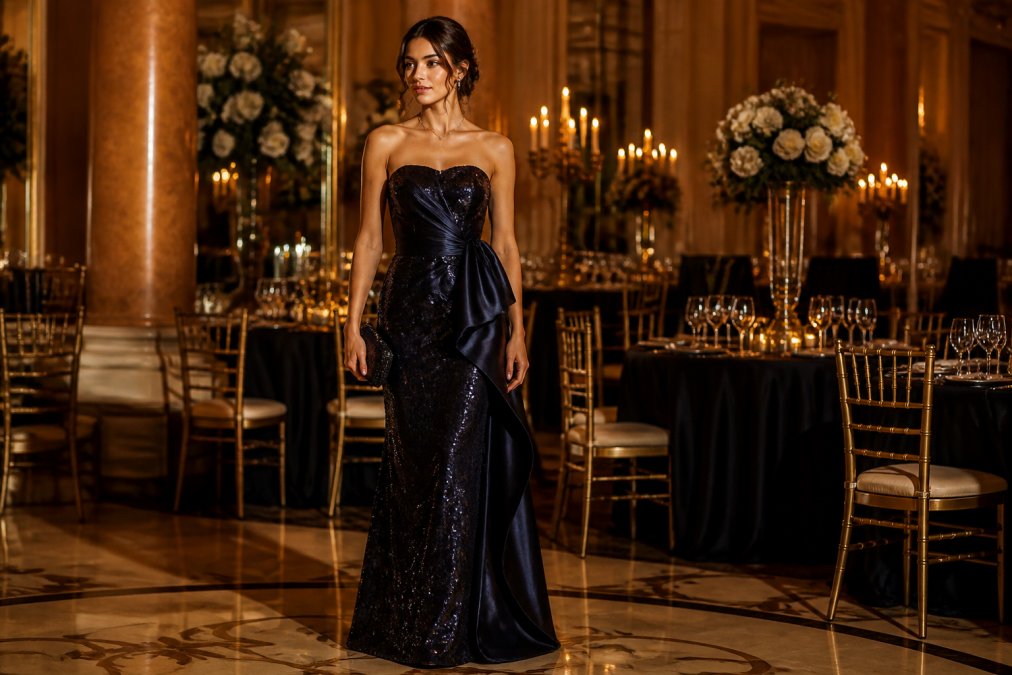
The fabric you choose affects how your gown moves and photographs. Satin and silk create a luxurious sheen and drape beautifully. Chiffon offers movement and ethereal elegance. Lace adds texture and sophistication. Sequined fabrics make a bold statement and catch light, perfect if you want to stand out. The American Fashion Designers Association notes that fabric choice is one of the primary signals of formal occasion dressing.
Embellishments like beading, sequins, embroidery, and appliqués are not just acceptable at black tie events, they're often expected. A completely plain gown can read as understated, but adding detail through beadwork, a dramatic cape, or a high slit elevates the look and shows you've invested in your appearance for the occasion.
MISTY'S offers several stunning options for black tie galas. The [Sequin Cape Evening Gown](https://shopwithmistys.com/products/womens-stand-alone-stand-sequins-and-large-posing-temperament-sexy-long-skirt-tail-banquet-evening-dress) features a dramatic sequined overlay and princess skirt, perfect for making an entrance. For a more modern approach, the Manhattan One-Shoulder Metallic Split Maxi Gown delivers structural elegance with its bronzed finish and asymmetrical cut. The Seraphina Off-the-Shoulder Sequined Mermaid Evening Gown combines timeless mermaid silhouette with contemporary sequined detailing.


Accessories for black tie galas must be equally formal. An evening clutch in metallic, satin, or structured leather is essential. Patent leather shoes in black, metallic, or matching your gown colour are standard. Jewellery should be refined and understated. Diamond studs, pearl necklaces, or a delicate bracelet are far more appropriate than chunky statement jewellery. Keep your jewellery to two pieces maximum: either earrings and a bracelet, or a necklace and earrings, but not all three.
Men's Tuxedo Etiquette for Formal Events
The foundation of men's black tie dressing is the dinner suit, commonly called a tuxedo. This is not a regular business suit. A proper tuxedo features satin lapels (either peaked or notched), satin side stripes on the trousers, and typically a waistcoat or cummerbund. The jacket should be black or midnight blue, and the trousers must match perfectly.
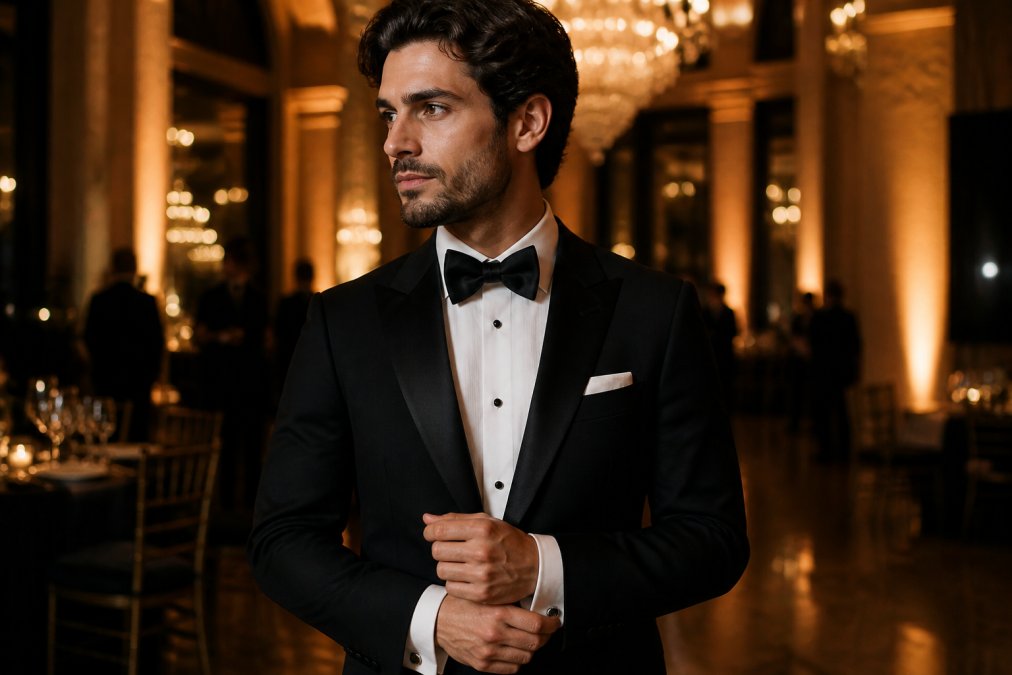
The formal shirt worn under a tuxedo is distinctly different from a regular dress shirt. It features a stiff front, typically white, with either a wing collar or a regular collar designed for bow tie wear. Studs replace regular buttons on the front placket, and cufflinks are worn on the cuffs. Both should be simple and refined: silver, gold, or pearl are all appropriate.
The bow tie is non-negotiable for black tie. It should be black, made from silk or a silk-like material, and tied by hand if possible. Pre-tied bow ties are acceptable if you're genuinely unable to tie one, but a properly tied bow tie signals confidence and attention to detail.
A waistcoat or cummerbund covers the waistband of the trousers and the gap between the shirt and jacket. Waistcoats are increasingly favoured over cummerbunds because they look more polished. A black waistcoat with satin lapels matches the jacket's formality. If you choose a cummerbund, it should be black and worn with the pleats facing upward.
Shoes for black tie must be patent leather or highly polished black leather. Oxfords or formal dress shoes are appropriate; avoid loafers, slip-ons, or anything with a casual aesthetic. Your shoes should be impeccably clean and polished. Socks should be black and long enough that no leg shows when you sit.
Black Tie vs Black Tie Optional: What's the Difference
Understanding the distinction between black tie and black tie optional is crucial because it changes what you should wear. Black tie is mandatory formal attire. Black tie optional means you may wear black tie, but cocktail attire is also acceptable.
Black tie optional is increasingly common at galas, formal weddings, and upscale events because it acknowledges that not everyone owns or can easily access black tie clothing. When an invitation reads "Black Tie Optional," you have genuine flexibility. You can wear a floor-length gown in a formal fabric, or you can wear an elegant cocktail dress that hits just below the knee. You can wear a full tuxedo, or you can wear a business suit with a tie.
The key is understanding the spirit of the occasion. If the event is a major gala or formal fundraiser, dressing in full black tie shows respect and elegance. If you choose cocktail attire instead, ensure it's at the upper end of formal. When an invitation states simply "Black Tie" with no mention of optional, do not interpret that as flexibility. Wear proper black tie attire.
Black Tie Dress Code for Ladies Australia: Regional Considerations
Australia's climate and cultural context create unique considerations for black tie dressing. Australian galas often take place during warmer months, spring and summer, which means heavy fabrics and full sleeves may be uncomfortable. However, black tie etiquette doesn't change based on temperature. The solution is choosing fabrics and styles that work within the black tie framework while acknowledging Australian heat.
Lightweight silks, chiffons, and lace are perfect for Australian black tie events. These fabrics are formal and elegant while remaining breathable. A sleeveless or thin-strapped gown is entirely appropriate for black tie, as is a gown with delicate cap sleeves. The key is that your dress remains floor-length and in a formal fabric.
Many Australian galas are held outdoors or in venues with limited air conditioning. Choose gowns in pale jewel tones or metallics if you're concerned about heat. A lightweight wrap or shawl in silk or chiffon can be worn over your shoulders for the ceremony and removed during dancing.
Cultural and religious modesty considerations are equally important in Australia's diverse society. Black tie dressing can absolutely incorporate modest coverage while remaining formal. A floor-length gown with long sleeves, a high neckline, or a cape overlay is completely appropriate for black tie. The formality comes from the overall silhouette, fabric quality, and fit, not from how much skin is exposed.
Hiring Formal Wear for Galas: A Budget-Conscious Alternative
Not everyone owns black tie attire, and purchasing a floor-length gown or tuxedo solely for one event is not financially practical. Hiring formal wear is a legitimate, respected option that allows you to access high-quality pieces without the expense of ownership.
Formal wear rental services in Australia offer extensive selections of gowns, tuxedos, and accessories. Rental costs generally range from $80 to $250 for a gown and $100 to $200 for a tuxedo, making it a fraction of the purchase price.
MISTY'S offers an alternative approach through its worldwide shipping and easy returns policy. Rather than renting, you can purchase a formal gown from MISTY'S, wear it to your gala, and if it doesn't fit perfectly or isn't quite what you envisioned, return it within the specified timeframe. The [Lyra One-Shoulder Cutout High-Split Cocktail Maxi Dress](https://shopwithmistys.com/products/womens-one-shoulder-high-split-cutout-sleeveless-elegant-sexy-cocktail-maxi-dress) at $200 offers high-quality atelier-grade construction at a price point that's competitive with formal wear rental.
Gender-Neutral and Non-Binary Formal Options
Black tie dress codes have traditionally been binary, gowns for women, tuxedos for men. Modern formal events increasingly recognise that gender identity doesn't determine what formal wear looks like. If you identify as non-binary or prefer to express yourself outside traditional gender categories, black tie can absolutely accommodate your authentic self.
For those assigned female at birth who prefer masculine or androgynous formal wear, a properly tailored tuxedo is entirely appropriate for black tie. For those assigned male at birth who prefer feminine or anrogynous formal wear, a floor-length gown in a formal fabric is equally valid. The formality comes from the fabric, length, and overall presentation, not from your gender identity.
Non-binary formal wear might combine elements: tailored trousers with a sequined top, a floor-length skirt with a structured jacket, or a gown with masculine tailoring. The key is that your outfit signals the formality of the occasion through fabric quality, length, and intentional styling. MISTY'S atelier-grade pieces are designed to be worn by anyone who feels confident in them.
Common Black Tie Mistakes and How to Avoid Them
Even with the best intentions, black tie dressing has common pitfalls. Understanding these mistakes helps you avoid them and ensures you look polished and appropriate.
Mistake 1: Choosing a cocktail dress instead of a gown. A knee-length dress, no matter how elegant, reads as cocktail attire, not black tie. If the invitation says black tie (not optional), wear a floor-length gown.
Mistake 2: Wearing jewellery that competes with your gown. If your gown is heavily sequined or beaded, keep jewellery minimal. If your gown is simple, you have more freedom with jewellery. The goal is balance.
Mistake 3: Wearing the wrong shoes. Strappy sandals, ballet flats, or casual heels don't belong at black tie events. Patent leather formal shoes, elegant stilettos, or refined heels in metallic or matching colours are appropriate.
Mistake 4: Neglecting grooming. Black tie demands impeccable grooming: hair styled, makeup polished, nails manicured. This is respect for the formality of the occasion.
Mistake 5: Choosing comfort over fit. A gown that's too loose or too tight will make you feel self-conscious all evening. Invest in tailoring to ensure your gown fits perfectly.
Mistake 6: Arriving underdressed because you misread the invitation. Read your invitation carefully. If it says "Black Tie," not "Black Tie Optional," dress accordingly.
Mistake 7: Wearing a gown that's too trendy. Black tie is inherently timeless. Avoid gowns with very current trends that might look dated in photos. Classic silhouettes in quality fabrics are always the right choice.
Dressing for a black tie gala is ultimately about showing respect through intentionality and elegance. When you understand the fundamentals, floor-length formal wear, refined accessories, and impeccable grooming, the anxiety disappears and confidence takes its place. MISTY'S collection of atelier-grade evening gowns is designed specifically for moments like these, with worldwide shipping and an easy returns policy so you can find the perfect piece without risk. Choose a gown that makes you feel genuinely beautiful, follow the black tie guidelines, and walk into your gala knowing you've got this.
Frequently Asked Questions
What is the dress code for a black tie gala?
Black tie requires floor-length gowns for women and dinner suits or tuxedos for men. Women should wear elegant evening wear in sophisticated fabrics like silk, chiffon, or satin, paired with formal accessories and stiletto heels. Men must wear a formal shirt with bow tie, cufflinks, and patent leather shoes. Avoid casual fabrics, short hemlines, or overly trendy pieces. The goal is timeless sophistication and sartorial elegance.
What should women avoid wearing to a black tie event?
Skip short dresses, casual fabrics like cotton or denim, and overly casual footwear such as flat sandals or trainers. Avoid excessive casual jewellery, small clutches that look like everyday bags, and clothing with visible wrinkles or poor tailoring. Don't wear daytime makeup or hairstyles. Also avoid costume-like pieces or anything that feels costume-like. The focus should be on refined elegance rather than statement pieces that distract from the formal atmosphere.
What is the difference between black tie and black tie optional?
Black tie is mandatory formal attire with strict requirements: floor-length gowns and dinner suits. Black tie optional allows more flexibility. Women can wear a cocktail dress that reaches the knee or longer, whilst men may wear a dark suit with a regular tie instead of a tuxedo. However, wearing full black tie to a black tie optional event is always appropriate and won't appear overdressed. Choose based on the venue's formality and your comfort level.
Can I hire formal wear instead of buying a gown for a black tie gala?
Yes, hiring formal wear is a practical, budget-conscious option. Many Australian formalwear rental services offer floor-length gowns and tuxedos at a fraction of purchase price. Rental is ideal if you attend galas infrequently or want to try different styles without commitment. Check rental policies on cleaning, damage, and return timelines. For sustainability-conscious choices, hiring reduces waste and allows you to wear new styles each event. Ensure you hire well in advance to guarantee your size and preferred style.
This article was written using GrandRanker