

Table of Contents
- What Makes a Cocktail Dress Different From Other Evening Wear
- Cocktail Dress vs Formal Dress: Understanding the Difference
- Cocktail Attire Dress Code Guide: What to Wear and What to Avoid
- How to Style a Cocktail Dress for Any Occasion
- Building a Capsule Wardrobe Around Cocktail Dresses
- Common Mistakes to Avoid When Wearing a Cocktail Dress
- Frequently Asked Questions
Last Updated: September 12, 2026
What Makes a Cocktail Dress Different From Other Evening Wear
A cocktail dress is a semi-formal garment typically falling between the knee and mid-calf, designed for events with a dress code that sits below black-tie but above smart casual (vogue.com). The cocktail dress earns its place in your wardrobe because it solves a specific problem: it looks polished enough for an evening event without demanding the floor-length formality of a gown. This guide from MISTY'S breaks down why cocktail dresses are essential, how to choose one that works across multiple occasions, and how to build a small collection that covers almost every invitation you'll receive.

The distinction comes down to three design elements that work together.
Key Characteristics: Hemline, Fabric, and Silhouette
The hemline defines the category. A cocktail dress finishes anywhere from just above the knee to below the calf, with midi lengths being the most versatile choice. Floor-length gowns belong to formal attire; shorter hemlines read as party or daywear.
Fabric quality separates a dress that photographs well from one that looks tired after an hour. Structured fabrics hold their shape and skim the body rather than clinging. Look for weight in the cloth, a clean drape, and finishing that survives a full evening.
Silhouette determines how the dress moves with you. A-line, sheath, and fit-and-flare cuts remain the most forgiving across different body types. The neckline and any embellishments should draw the eye where you want it, not fight for attention.
Cocktail Dress vs Formal Dress: Understanding the Difference
The clearest way to separate the two is by dress code. A cocktail dress suits semi-formal and cocktail events. A formal dress, usually floor-length, suits black-tie and formal occasions. Choosing the wrong one is the fastest way to feel out of place at an event.
| Feature | Cocktail Dress | Formal Dress |
|---|---|---|
| Hemline | Knee to mid-calf | Floor-length |
| Dress code | Cocktail, semi-formal | Formal, black-tie |
| Fabric | Structured, mid-weight | Heavier, often draped |
| Typical events | Receptions, galas, weddings | Balls, ceremonies, black-tie |
When a Cocktail Dress Works for a Formal Event
A cocktail dress can work at a formal event when the invitation allows it or when the venue leans less traditional (brides.com). Many evening weddings and corporate galas accept a well-tailored cocktail dress, particularly when it's paired with elevated accessories and formal footwear. When in doubt, check the invitation wording and the venue before deciding.
Cocktail Attire Dress Code Guide: What to Wear and What to Avoid
Cocktail attire means a semi-formal dress that sits between daywear and full evening wear. The safe formula is a knee-to-midi length dress in a quality fabric, finished with a clutch, considered jewellery, and formal footwear.
What to avoid:
- Floor-length gowns, which read as over-dressed for cocktail events
- Casual fabrics like jersey or cotton that lose structure
- Flat shoes or day bags that pull the look down
- Over-accessorising, which competes with the dress
Reading the Invitation: Semi-Formal vs Cocktail vs Formal
Invitation wording is your best guide. Semi-formal and cocktail are close cousins, both pointing to a polished dress that isn't a gown (emilypost.com). Formal means floor-length. If the wording is vague, a midi cocktail dress is the safest middle ground, because it can be dressed up or down with accessories.
How to Style a Cocktail Dress for Any Occasion
Styling a cocktail dress comes down to accessories and footwear. The dress sets the tone; everything else adjusts it up or down for the event.
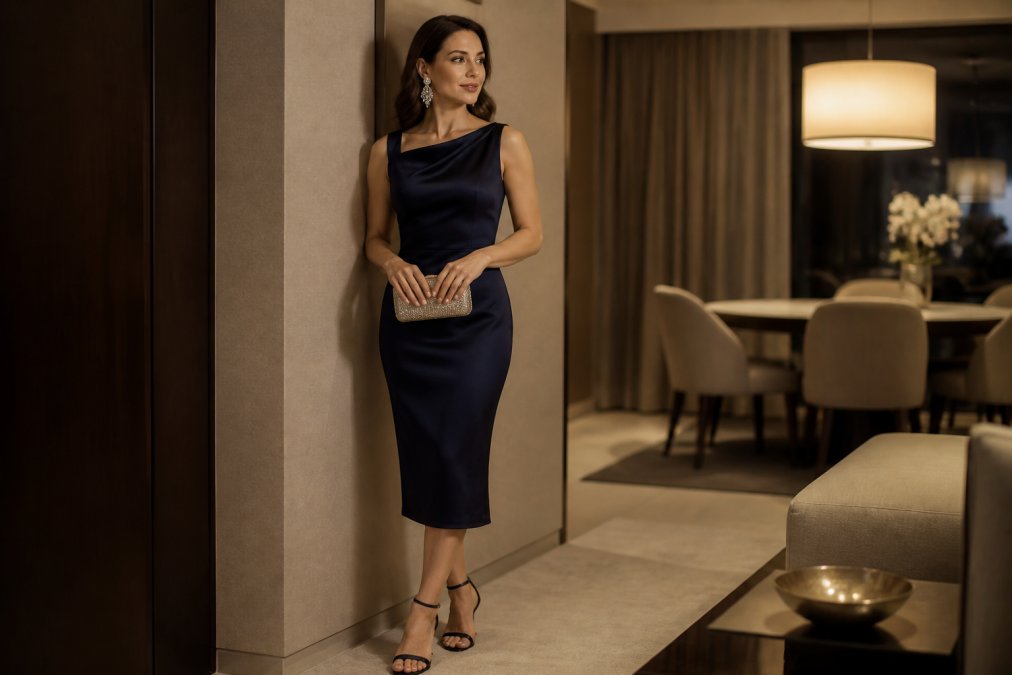
Accessorising: Clutches, Statement Jewellery, and Formal Footwear
A clutch keeps the silhouette clean and signals evening wear. Statement jewellery works best when you pick one focal point, either the neckline or the ears, not both. Formal footwear, from a sleek heel to an elegant pointed flat, finishes the look and keeps it event-appropriate.
Day-to-Night and Seasonal Styling Tips
A cocktail dress can move from day to night with a few swaps. Add a tailored blazer and simpler shoes for daytime, then switch to a clutch and statement earrings for the evening. In cooler months, layer with a structured coat or wrap. In warmer months, choose lighter fabrics and let the dress stand alone.
Building a Capsule Wardrobe Around Cocktail Dresses
Most guides tell you to buy a cocktail dress for the next event. A more useful approach is to treat cocktail dresses as a small, deliberate capsule that covers years of invitations rather than one season. The goal is not fewer dresses for the sake of it, it is a set where every piece earns its place by working across multiple events, seasons, and dress codes.
The Three-Dress Framework
A workable capsule usually runs to three dresses, each doing a different job:
- The neutral workhorse. A midi in black, navy, or a deep neutral that suits weddings, corporate receptions, and milestone birthdays. This is the dress you reach for when the invitation is vague.
- The statement piece. One dress with a strong silhouette, colour, or detail for galas, milestone celebrations, and events where you want to be remembered. A one-shoulder cutout or high-split maxi does this job.
- The seasonal or texture option. A satin, velvet, or heavier-weight dress that reads dressier for cooler months and black-tie-adjacent events, and can be swapped for a lighter fabric version in summer.
Three dresses, restyled with different accessories, footwear, and outerwear, cover the overwhelming majority of cocktail, semi-formal, and smart-casual evening invitations.

Cost-Per-Wear: The Number That Actually Matters
A dress is only expensive if you wear it once. Divide the price by the number of times you realistically expect to wear it and the maths changes quickly. A mid-weight neutral midi worn to six events a year for three years is a far better investment than three trend pieces worn once each, even if the neutral dress costs more up front. This is the practical case for buying quality over quantity, and it is also the more sustainable choice: fewer, better-made garments stay in rotation longer and generate less textile waste.
When assessing a dress for capsule potential, ask three questions before buying:
- Can I name at least three events in the next twelve months I would wear this to?
- Does it work with accessories I already own, or does it demand a new clutch, shoes, and jewellery?
- Will the fabric and cut still look current in three years, or is it tied to a trend that will date?
If the answer to any of these is no, the dress is an event purchase, not a capsule piece.
Rotating One Dress Across Seasons
The same dress can shift across seasons with layering and fabric swaps. In cooler months, a structured coat, a wrap, opaque tights, and closed-toe heels push a midi toward formal. In warmer months, the same dress works with bare legs, a lighter clutch, and open footwear. A neutral base makes this rotation easier because it does not fight the seasonal additions.
Where to Start
For a capsule built around versatility, the Lyra One-Shoulder Cutout High-Split Cocktail Maxi Dress works as the statement piece, while the Capri Off-the-Shoulder Bow Monochrome Cocktail Dress covers classic evening events. A satin option such as the Ladies Evening Dress Sexy Tube Top Satin adds a dressier finish for galas. Choosing two neutrals and one statement piece is a more reliable starting point than buying three dresses in the same register.

Common Mistakes to Avoid When Wearing a Cocktail Dress
The most common mistake is treating every cocktail dress as interchangeable. Length, fabric, and accessories all signal formality, and getting one wrong throws off the whole look. A floor-length gown at a cocktail event reads as over-dressed; a casual jersey dress at a gala reads as under-dressed.
The second mistake is over-accessorising. When the dress already has embellishments, a bold neckline, or a striking colour, let it lead. Add one focal accessory and keep the rest understated.
The third is ignoring the invitation. Dress codes exist for a reason, and the wording tells you exactly what's expected. Read it before you shop, not after.
At MISTY'S, the collection is built around atelier-grade craftsmanship and pieces designed to work across multiple occasions, with worldwide shipping and an easy returns process to take the risk out of ordering online.
Frequently Asked Questions
Is cocktail attire the same as formal?
No. Cocktail attire sits between semi-formal and formal, with hemlines typically falling from just above the knee to midi length. Formal attire calls for floor-length gowns in richer fabrics. A cocktail dress can work for a formal wedding if the invitation says 'cocktail' or 'black tie optional', but for strict black tie, choose a floor-length gown instead.
What should you avoid wearing to a cocktail event?
Skip denim, casual sundresses, flip-flops, and anything overly revealing for a professional setting. Avoid trainers and oversized totes; a clutch or small structured bag suits the dress code better. If the event is after 6pm, opt for darker colours or richer fabrics rather than beachy prints. When in doubt, a well-tailored midi dress in a solid colour is always appropriate.
Is it okay to wear a cocktail dress to a formal wedding?
It depends on the invitation wording. If it says 'cocktail attire', a midi or knee-length dress is perfect. For 'black tie' or 'formal', a floor-length gown is expected. A cocktail dress in a luxe fabric like satin or with elegant embellishments can bridge the gap for 'black tie optional', but keep accessories polished and understated.
How do you style a cocktail dress for different seasons?
In cooler months, add a tailored blazer or faux-fur stole, opaque tights, and closed-toe heels. For summer, choose lighter fabrics like chiffon or crepe and pair with strappy sandals and a clutch. A satin midi dress works year-round: add a pashmina in winter or go bare-shouldered in warmer weather. Layering with a co-ord jacket can also transition the look from day to night.
Choosing the right cocktail dress comes down to understanding the dress code, prioritising fabric and fit, and building a small collection that works across events. MISTY'S offers atelier-grade cocktail and evening wear with worldwide shipping and an easy returns policy, so you can order with confidence and restyle each piece for years of events. Continue shopping with MISTY'S and find the cocktail dress that earns its place in your wardrobe.