

Table of Contents
- Cocktail vs Formal Attire: The Quick Comparison
- What Counts as Cocktail Attire
- What Counts as Formal Attire
- The Cocktail Dress Code for Women, Decoded
- Formal Wedding Guest Attire Without the Guesswork
- Semi-Formal vs Cocktail Attire vs Formal: Where the Lines Blur
- Shoes, Bags and Finishing Touches That Signal Formality
- Budget Styling, Seasonal Fabrics and Gender-Neutral Options
- Frequently Asked Questions
Last Updated: September 11, 2026
Cocktail vs Formal Attire: The Quick Comparison
The difference in cocktail vs formal attire comes down to one thing: how much floor you're allowed to cover. Cocktail calls for a knee-length to midi dress or a sharp tailored suit; formal means a floor-length gown or a tuxedo. This guide from MISTY'S breaks down exactly where the line sits.
Cocktail is polished but flexible: hemlines land between the knee and the ankle, fabrics can carry shine or print, and a structured blazer is fine. Formal is stricter: floor-length gowns, dark suits or tuxedos, and embellishment that reads as evening wear rather than party wear.
Get it right and you blend in; get it wrong and you're either overdressed at a relaxed reception or underdressed at a black-tie gala. Below, we walk through both codes, plus the semi-formal middle ground.
| Feature | Cocktail Attire | Formal Attire |
|---|---|---|
| Hemline | Knee to midi length | Floor-length gown |
| Women's options | Cocktail dress, tailored separates | Evening gown, formal maxi |
| Men's options | Dark suit, no tie required | Tuxedo or dark suit and tie |
| Fabrics | Satin, crepe, velvet, sequin accents | Silk, heavy satin, structured weaves |
| Accessories | Statement jewellery, clutch | Fine jewellery, evening clutch |
| Typical venues | Cocktail bars, receptions, restaurants | Ballrooms, galas, formal weddings |
What Counts as Cocktail Attire
Cocktail attire is a semi-formal dress code between smart casual and formal, worn to evening receptions, weddings and parties that start after 5pm (merriam-webster.com). It asks for a polished outfit that feels celebratory without tipping into full evening wear.
For women, that means a cocktail dress hitting at or just below the knee, or a midi stopping above the ankle. Tailored separates work too: a silk camisole with a structured blazer and dress trousers reads as cocktail when the fabrics are elevated.
For men, a dark suit in navy, charcoal or black is standard. A tie is optional at most cocktail events, and a crisp shirt with no tie can look sharper than a stiff necktie.
Hemlines, Fabrics and Embellishment
Hemline is the fastest way to tell cocktail from formal: knee-to-ankle is cocktail, floor-sweeping is formal.
Fabric matters just as much. Cocktail welcomes satin, crepe, velvet and sequin accents, plus richer colours and bolder prints. Formal narrows the palette: solid tones, heavier weaves and embellishment that catches light without shouting.
What Counts as Formal Attire
Formal attire is the tier above cocktail, reserved for weddings, galas, award ceremonies and black-tie events. It requires floor-length gowns for women and tuxedos or dark suits with ties for men.
The defining features are length, structure and restraint. Formal evening wear uses floor-length silhouettes, richer textiles and a narrower palette. A formal gown should skim or structure the body rather than cling.
For men, formal means a tuxedo with satin lapels, or a dark suit with a tie if the invitation says "formal" rather than "black tie." Shirt, cufflinks and dress shoes must match the formality level.
Black Tie, Black Tie Optional and White Tie
These three terms sit inside the formal category, each raising the bar. Black tie means a tuxedo for men and a floor-length gown or elegant cocktail dress for women (brides.com). Black tie optional means a tuxedo is welcome but a dark suit and tie is acceptable, and women can choose a formal gown or a dressy cocktail dress. White tie is the most formal tier: tailcoats, white bow ties and full-length ball gowns, reserved for state occasions and the most traditional events (britannica.com). If you're unsure which applies, the invitation wording is your answer.
The Cocktail Dress Code for Women, Decoded
The cocktail dress code for women is more flexible than it looks: one polished dress or tailored separates set, hitting the right hemline. Start with length: a knee-length or midi dress covers almost every cocktail invitation, while a floor-length gown is too much and a mini is too little. If you're between two lengths, choose the longer one. Then think fabric and silhouette: a fitted crepe sheath, a satin wrap dress or a structured velvet midi all work, and sequins and embellishment are welcome at cocktail level.
Formal Wedding Guest Attire Without the Guesswork
Formal wedding guest attire means following the dress code printed on the invitation, not the one you'd prefer. If it says formal or black tie, you're wearing a floor-length gown or a tuxedo-level suit. The mistake most guests make is treating "formal" as a suggestion: a formal wedding means the couple chose a venue and tone that expects evening wear, and turning up in a cocktail dress or open-collar shirt stands out for the wrong reason. For women, a floor-length gown in a solid or subtly embellished tone is safest; avoid white, ivory and anything that photographs like bridal. For men, a dark suit with a tie, or a tuxedo if the invitation says black tie, is standard.
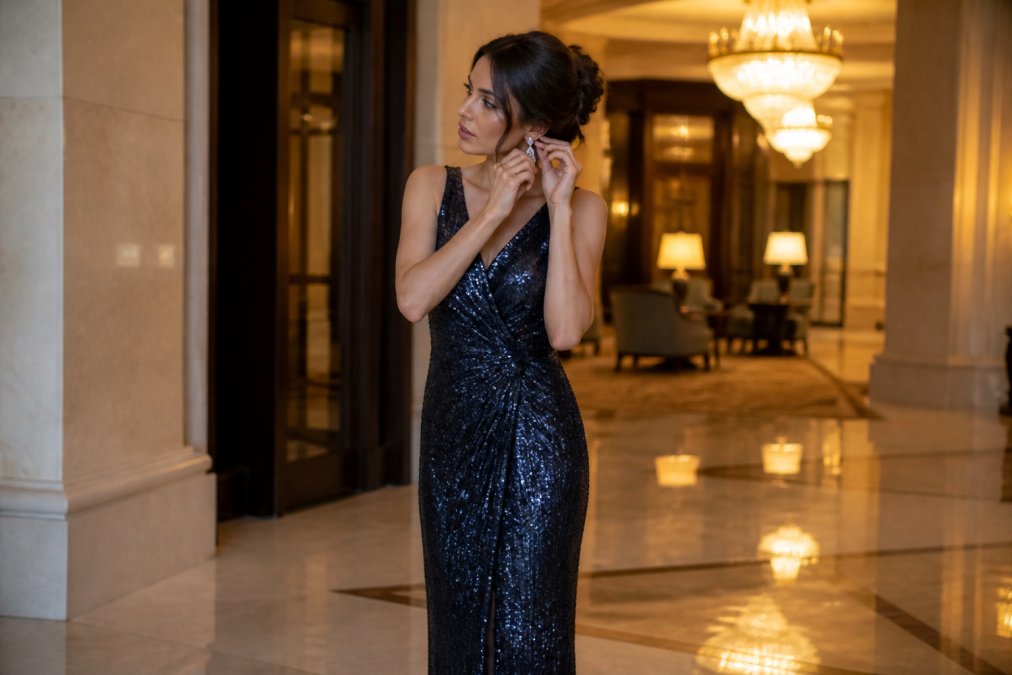
If you're shopping for a formal wedding and want something that reads as evening wear without feeling costume-like, MISTY'S carries floor-length gowns cut for real bodies, including the Vesper Sequin Open-Back Maxi Gown in midnight black. The high neckline balances the open back, and the inelastic weave holds its column shape through a long reception.

Semi-Formal vs Cocktail Attire vs Formal: Where the Lines Blur
Semi-formal vs cocktail attire is where most people get confused, because the two codes overlap heavily. Semi-formal sits below cocktail, and cocktail sits below formal. The gap between semi-formal and cocktail is smaller than the gap between cocktail and formal, which is why a smart-restaurant outfit can often be pushed into cocktail territory with a change of shoes and jewellery, but a cocktail outfit rarely stretches to formal without a change of garment.
"Semi-formal" is also used inconsistently: some invitations mean smart casual, others a notch below cocktail. When in doubt, treat semi-formal as the more relaxed reading and cocktail as the more polished one, then let the venue and start time settle it.
The Hemline and Fabric Mechanics That Separate the Three Codes
Hemline is the fastest visual test, but fabric weight and structure do just as much work:
- Semi-formal: hemline from above the knee to midi; softer fabrics such as cotton blends, light crepe, jersey and linen; minimal structure; flats, block heels or loafers acceptable.
- Cocktail: hemline from knee to midi (roughly 5-10 cm above the ankle at the longest); richer fabrics such as satin, crepe, velvet and sequin accents; some structure through a blazer, sheath cut or defined waist; heels or dressy flats.
- Formal: floor-length or full-length gown; heavier weaves such as silk, heavy satin and structured crepe; internal structure (boning, lining, defined column); heels and fine jewellery.
People over-index on colour and under-index on fabric. A black cotton midi dress is semi-formal no matter how dark; a black satin midi with a defined waist is cocktail. Fabric and cut carry the formality, not the shade.
Time of Day, Venue and Invitation Wording
Three cues resolve almost every borderline case:
- Start time. Events before 5pm lean semi-formal or cocktail; events after 6pm lean cocktail or formal. An evening start is the strongest signal to err dressier.
- Venue. A restaurant, wine bar or private home points to semi-formal or cocktail. A ballroom, hotel function room, gallery or heritage estate points to cocktail or formal. Outdoor daylight venues usually cap formality at cocktail unless the invitation says otherwise.
- Invitation wording. If it names a code, follow it literally. If it names two ("cocktail or semi-formal"), choose the dressier. If it names none, match the venue and start time.
The practical test is simple: if you'd wear it to a nice dinner, it's semi-formal; to an evening reception or wedding, cocktail; only to a gala or black-tie wedding, formal.
| Dress Code | Hemline | Fabric and Structure | Formality Level | Best For |
|---|---|---|---|---|
| Semi-formal | Above knee to midi | Light crepe, jersey, cotton blends; minimal structure | Relaxed evening | Dinners, smart parties, daytime celebrations |
| Cocktail | Knee to midi | Satin, crepe, velvet, sequin accents; some structure | Polished evening | Receptions, weddings, evening parties |
| Formal | Floor-length | Silk, heavy satin, structured weaves; internal structure | Strict evening | Galas, black-tie weddings, award ceremonies |
A Note on Regional and Cultural Variation
Most guides treat these codes as fixed, but boundaries shift with context. In many Australian wedding contexts, "cocktail" is used more loosely than in the UK or US, and a midi dress with heels is almost always accepted even when the invitation leans formal. Some cultural and religious celebrations layer additional expectations, modesty requirements, colour restrictions or ceremonial dress, on top of the standard code. If unsure, ask the couple or a member of the wedding party directly.
Shoes, Bags and Finishing Touches That Signal Formality
Accessories shift an outfit up or down a formality level, and they're the detail most people underthink. The right clutch and heels can push a midi dress toward formal; the wrong ones can drag a gown down to cocktail. For cocktail, a structured satin or leather clutch works with strappy heels or a walkable block heel, and statement jewellery is welcome. For formal, scale back the jewellery and go finer: a sleek clutch, delicate drop earrings and a classic stiletto or pointed pump signal evening wear. Skip anything chunky or casual, including totes, trainers and ankle boots.
Budget Styling, Seasonal Fabrics and Gender-Neutral Options
You don't need a new gown for every event, or a fortune to dress correctly. Buy pieces that flex across formality levels and seasons, then change the accessories rather than the garment.
Budget-Friendly Styling: Cost Per Wear, Not Price Tag
The most useful budgeting question isn't "how much does this cost?" but "how many events will I wear it to?" A $200 midi dress worn to four cocktail events costs $50 per wear; a $600 gown worn once costs $600 per wear. That maths should drive every purchase.
Three patterns that consistently work:
- One strong base, many accessories. A neutral midi (black, navy, deep green, burgundy) dresses up with heels and fine jewellery for cocktail, or softens with a wrap and flats for semi-formal. A solid floor-length gown works for multiple formal events if you change the jewellery and clutch.
- Buy for the dressiest event you attend most often. If most invitations are cocktail, invest there first. A single formal gown can be borrowed, rented or bought second-hand for the occasional gala.
- Rent or borrow for one-off formal events. Hiring a gown for a single black-tie wedding is often cheaper than buying, and removes the pressure to find something you'll wear again.
Accessories are the cheapest way to shift formality. A satin clutch, fine drop earrings and a metallic or satin heel push a midi dress toward formal; the same dress with a tote, chunky jewellery and ankle boots reads semi-formal.
Seasonal Fabrics: What to Wear When
Fabric choice is the most underrated seasonal decision, affecting both comfort and how the outfit reads.
- Cooler months: velvet, heavy satin, structured crepe and wool blends. These hold their shape, photograph well under warm indoor lighting and read as evening wear.
- Warmer months: lighter crepe, silk, chiffon and breathable blends. Sequins work in any season because they read as evening wear, but a fully sequinned gown in humid heat can be uncomfortable, consider a sequin accent instead.
- Year-round: solid-colour crepe and silk are the most versatile bases, layering under a wrap in winter and breathing in summer.
For outdoor events, add a wrap or jacket matching the outfit's formality. A neutral pashmina or structured jacket keeps a formal gown reading as formal when the temperature drops.
Gender-Neutral and Gender-Fluid Attire
This is the area most guides ignore, and the rules are simpler than they look: the dress codes are about formality, not about who's wearing what.
- A tailored suit in a dark tone (navy, charcoal, black) works for any guest, regardless of gender, at cocktail and formal events. At cocktail, skip the tie or choose a softer shirt; at formal, add a tie and dress shoes.
- A structured jumpsuit in a rich fabric can pass at cocktail and, with fine jewellery, a sleek clutch and heels or formal flats, at a formal event too. Look for a defined waist, wide leg and weighted fabric, jersey reads casual, crepe or satin reads evening.
- Separates are the most flexible option: a silk camisole or shirt with tailored trousers and a structured blazer styles up or down by changing shoes and jewellery.
- Avoid anything casual regardless of gender: denim, trainers, open-toe sandals at formal events, and unstructured knitwear.
The practical rule is the same for everyone: match the hemline or silhouette to the formality level, choose a fabric with weight and structure, and let accessories carry the final signal.
For cocktail events where you want a statement piece that works across seasons, the Lyra One-Shoulder Cutout High-Split Cocktail Maxi Dress at $200 is a strong option. The asymmetric neckline and high split read as evening wear, and the lightweight weave travels well.

For a formal event on a tighter budget, the Valentina One-Shoulder Sequined High-Slit Mermaid Gown at $150 delivers full-length sequin impact without the gown price tag.

Frequently Asked Questions
Is cocktail attire the same as formal?
No. Cocktail attire sits one step below formal. A cocktail dress typically falls between knee and midi length, in a fabric with some movement such as satin or crepe, and can carry sequins or a bold colour. Formal attire calls for a floor-length gown or a structured column dress in richer fabrics, often with more restrained embellishment. If an invitation says cocktail, a short dress is correct; if it says formal, a long gown is the safer choice.
Is it okay to wear a cocktail dress to a formal wedding?
It depends on how the couple has worded the invitation. If it says formal or black tie optional, a knee-length cocktail dress in a dressy fabric can work, especially for a daytime ceremony. For a black tie or evening formal wedding, a floor-length gown is the safer read. When the wording is ambiguous, choose the longer option. You can always add a statement earring or a satin clutch to lift a simpler dress.
What should you avoid wearing to a cocktail event?
Skip anything that reads as everyday or beachwear: denim, shorts, casual sandals, plain cotton sundresses and athleisure. Very long, heavily beaded ball gowns also look out of place at a cocktail event because the dress code is deliberately lighter. Stay away from white or ivory at weddings unless the couple has asked for it, and keep hemlines at or below the knee so the outfit stays polished rather than club-ready.
How do you style an outfit for a cocktail dress code?
Start with a dress that hits between the knee and midi length in a fabric with a bit of sheen, such as satin or sequin. Add strappy heels, a structured clutch and one focal piece of jewellery, either a drop earring or a delicate cuff, not both. Keep makeup and hair polished but not heavy. A dress like the Lyra One-Shoulder Cutout High-Split Cocktail Maxi Dress, at $200, shows how a longer hemline can still read as cocktail when the cut and fabric are right.
What is the difference between semi-formal and cocktail attire?
Semi-formal is more relaxed than cocktail. Semi-formal allows a knee-length dress, a tailored jumpsuit, or smart separates with a blazer and heels. Cocktail is dressier: think a structured midi or knee-length dress in satin, sequin or crepe, with heels and a clutch. Both sit below formal, but cocktail asks for more polish and a more evening-focused fabric. If you are unsure, adding a heel and a clutch moves a semi-formal outfit closer to cocktail.