

Table of Contents
- Why Sustainable Luxury Evening Wear Matters in 2026
- How to Identify High-Quality Stitching in Evening Wear
- Eco-Friendly Formal Wear Fabrics: What to Look For
- Sustainable Evening Gowns Australia: A 2026 Selection
- Beyond the Label: Verifying Sustainability Claims and Certifications
- Caring for Your Gown: Repair, Maintenance and Rental vs Purchase
- Conclusion: Choosing Evening Wear That Lasts
- Frequently Asked Questions
Last Updated: September 18, 2026
Why Sustainable Luxury Evening Wear Matters in 2026
Sustainable luxury evening wear is formal attire made from responsibly sourced materials, produced ethically, and built to last beyond a single event. This MISTY'S guide covers how to spot genuine quality, which fabrics to look for, and which gowns deliver in 2026.
The Shift From Fast Fashion to Slow Fashion
Slow fashion flips the old model: instead of five cheap dresses a year, invest in one gown that lasts a decade.
How to Identify High-Quality Stitching in Evening Wear
High-quality stitching in evening wear means consistent, tight, even stitches with no loose threads, skipped sections, or puckering. Check the inside first, the finish you cannot see tells you more than the one you can.
Look for these markers:
- French seams on sheer or lightweight fabrics, which enclose raw edges
- Bound seams on structured gowns for a clean interior finish
- Even hem stitching with no wavy or pulled edges
- Reinforced stress points at the waist, straps, and zipper
- Lining attached by hand or with a clean machine finish, not glued
Seam Finishes, Lining and Structural Details to Check
Run your finger along the inside seam. It should feel smooth, not scratchy or bulky. A well-constructed bodice holds its shape without digging in.
Eco-Friendly Formal Wear Fabrics: What to Look For
Eco-friendly formal wear fabrics include organic textiles, recycled fibers, deadstock, and biodegradable options that cut environmental impact without sacrificing drape or finish. The best gowns balance material innovation with the luxury aesthetics buyers expect.
Here is how the main options compare:
| Fabric | Sustainability Profile | Best For | Watch For |
|---|---|---|---|
| Organic silk | Renewable, biodegradable | Fluid drapes, bias cuts | Certification claims |
| Recycled polyester | Diverts textile waste | Structured gowns, sequins | Blended with virgin fiber |
| Deadstock satin | Uses surplus stock | Limited-run pieces | Inconsistent supply |
| Tencel and lyocell | Closed-loop production | Lightweight columns | Lower sheen than silk |
| Vegan leather | Cruelty-free, no animal input | Accents and trims | Plastic-based coatings |
Sustainable Evening Gowns Australia: A 2026 Selection
MISTY'S builds its range around atelier-grade construction, worldwide shipping, and easy returns, so you can assess fit and finish without risk.
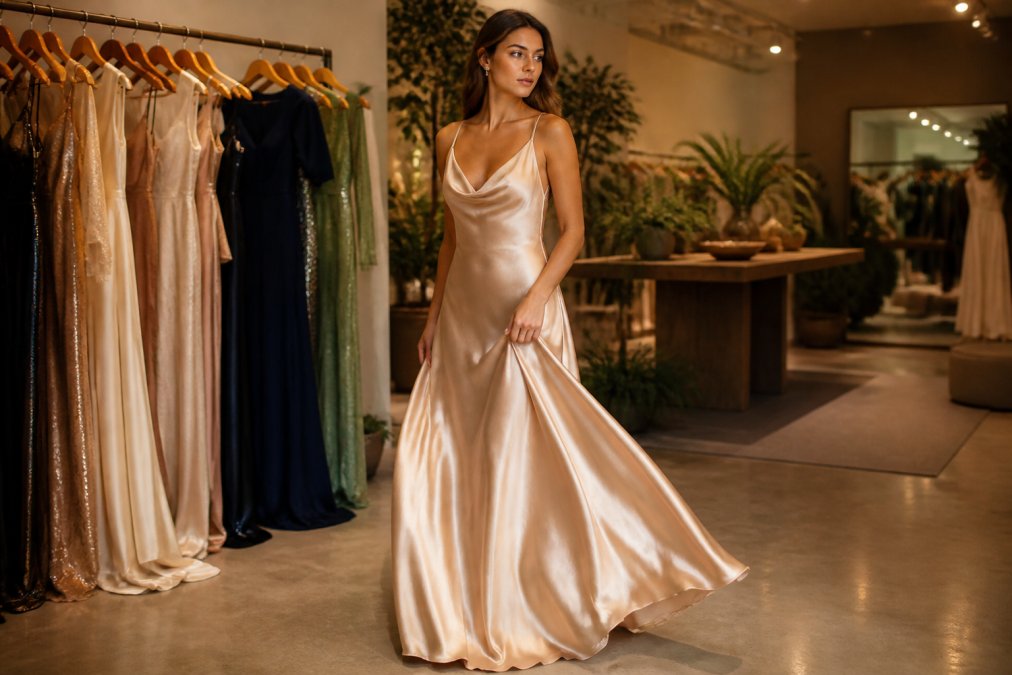
Sienna Fluid Satin Trailing Slip Gown
A bias-cut column in heavy-weight premium satin, priced at $180.00. The extended trailing hem grazes the floor, and the fabric weight keeps it laying flat and resists deep creasing through long seated dinners.
Best for black-tie galas and sophisticated city weddings.
Aria Bareback Column Maxi Dress in Liquid Silk
At $120.00, this is the most accessible piece in the range. Milk silk gives a cooling feel and liquid-metal drape, while ultra-thin straps frame the collarbone and the low-swept back makes an exit as memorable as an entrance.
Vesper Midnight Black Classic Mid-Waist Evening Gown
The $265.00 workhorse. A mid-waist rise and continuous black line create a statuesque profile. High-density polyester holds its tailored shape and stays wrinkle-resistant through hours of sitting and socialising.
Beyond the Label: Verifying Sustainability Claims and Certifications
Greenwashing is a risk in sustainable fashion: a brand can print "eco" on a tag without changing how the garment was made. Demand a named standard, a certificate number, and a traceable supply chain.
The Certifications Worth Asking For
A credible claim points to a specific scheme. These are the most commonly cited, and what each covers:
| Scheme | What it certifies | Where it applies |
|---|---|---|
| Global Organic Textile Standard (GOTS) | Organic fibre content and processing, including social criteria | Cotton, silk blends, and other organic fibres |
| OEKO-TEX Standard 100 | Tested for harmful substances at every stage | Finished fabrics and trims |
| Global Recycled Standard (GRS) | Recycled content and chain of custody | Recycled polyester, recycled silk blends |
| Responsible Wool Standard | Animal welfare and land management | Wool and wool-blend tailoring |
| Fairtrade Mark | Producer pricing and labour conditions | Cotton and artisan supply chains |
| B Corp certification | Whole-of-business social and environmental performance | The brand, not a single fabric |
How to Verify a Claim in Under Five Minutes
- Ask for the certificate number. Every legitimate scheme issues one. A brand that cannot produce it is making a marketing statement, not a sourcing one.
- Check the scope. A GOTS certificate for a cotton lining does not cover the polyester shell. Ask which component the certificate applies to.
- Look for the chain of custody. The strongest brands can name the mill, the spinner, and the finisher. If the answer stops at "our supplier," the trail is broken.
- Cross-check the brand's own claims. If a product page says "sustainable silk" but the care label lists polyester, the label wins.
What Australian Buyers Should Know About Labelling
The Australian Competition and Consumer Commission (ACCC) treats vague environmental claims as a potential breach of the Australian Consumer Law. Its guidance makes clear a business must substantiate any green claim, and that broad, unqualified terms are likely to mislead.
Sienna Fluid Satin Trailing Slip Gown →
The Questions That Separate Real From Rented
Ask these before you buy:
- Which certification covers this specific fabric, and what is the certificate number?
- Is the garment made from virgin fibre, recycled fibre, or deadstock?
- Where is the gown cut and sewn, and who owns that facility?
- Does the brand offer repairs or alterations after purchase?
- Can the piece be traced from fibre to finished gown?
Caring for Your Gown: Repair, Maintenance and Rental vs Purchase
The bigger lever is what happens after the gown arrives, how you clean, store, and repair it, and whether you needed to own it at all. This is where the real longevity case is made.
Fabric-Specific Care: What Actually Damages Evening Wear
Dry cleaning solvents are harsh on protein fibres and on beading, sequins, or glued structure. A few rules by fabric:
- Silk and silk blends: Spot-clean with a pH-neutral detergent and cool water. Never rub. Silk loses strength when wet, so blot and air-dry flat, away from direct sun.
- Satin (silk or deadstock): Steam rather than iron. Direct heat flattens the sheen and can leave a permanent shine mark. Hang in a steamy bathroom for light creases.
- Tencel and lyocell: Machine-washable on a delicate cycle in most cases, but the fibre pills if agitated with heavier items. Wash alone or in a mesh bag.
- Recycled polyester and structured gowns: Wipe the interior with a damp cloth after wear to remove deodorant residue, which is what actually degrades linings over time.
- Beaded or embellished pieces: Never submerge. Have them professionally cleaned only when visibly soiled, and tell the cleaner what the embellishment is attached with.
Repair Before Replace: The Economics
Typical repair costs sit well below a new piece:
- Re-stitching a strained seam or strap: modest, often under the cost of a single event's dry cleaning
- Replacing a broken zip: a fraction of the gown's price
- Taking in or letting out a waist or hem: standard alteration pricing, and it makes an existing gown fit better than a new one off the rack
- Replacing a lining: the most expensive common repair, but still usually cheaper than a replacement gown
If the repair costs less than a third of the replacement price, repair. For atelier-grade construction, the fabric and structure are worth preserving.
Rental vs Purchase: A Cost-Per-Wear Framework
Rental is the circularity story many brands tell, but it is not automatically greener or cheaper. It depends on how many times you will wear the piece and how far it travels.
When rental wins:
- A single black-tie event with a strict dress code you will never repeat
- A gown in a trend colour or silhouette you would not wear again
- A one-off occasion where the cost of ownership cannot be justified
When purchase wins:
- Three or more wears of the same piece
- A classic silhouette in a neutral colour that works across galas, weddings, and formal dinners
- A gown you can alter to fit you precisely, which rental pieces rarely allow
Alterations as a Sustainability Tool
A gown taken in at the waist, shortened at the hem, or re-fitted at the bust can serve you across a decade of body changes and trend cycles. This is where high-quality stitching pays off: a well-constructed seam can be unpicked and re-sewn multiple times, while a glued or overlocked finish cannot. When you assess a gown, you are judging not just how it looks on the night but how many times it can be remade to fit you.
Conclusion: Choosing Evening Wear That Lasts
The hardest part of buying formal wear is judging quality before it arrives. Photos flatter everything, and fabric can look different in person.
Frequently Asked Questions
What are the key sustainable fabric innovations for evening wear in 2026?
Look for biodegradable fabrics, recycled fibres, deadstock materials and organic textiles that reduce environmental impact without sacrificing drape or sheen. Many atelier-grade gowns now use high-density polyester with recycled content or milk silk blends that offer a luxurious feel and durability. Certifications like Global Recycled Standard or OEKO-TEX help verify claims. Prioritise fabrics that resist creasing and hold their shape, as this extends garment longevity and reduces the need for frequent replacement.
How does atelier-grade craftsmanship contribute to garment longevity?
Atelier-grade craftsmanship focuses on precise cutting, reinforced seams and quality linings that prevent fraying and shape loss. French seams or bound edges enclose raw fabric, reducing wear during movement. A well-structured bodice with secure stitching maintains its silhouette through repeated wears and cleaning. This attention to detail means the gown resists stretching, sagging and tearing, so it remains a lasting piece in your formal wardrobe rather than a single-season purchase.
What should I look for when verifying a luxury brand's sustainability claims?
Check for third-party certifications such as Fair Trade, GOTS for organic textiles, or Global Recycled Standard. Look for transparency in supply chain disclosures, including where fabrics are sourced and how workers are treated. Avoid vague terms like 'eco-friendly' without evidence. A brand that publishes specific material compositions and factory audits is more trustworthy. Also consider whether they offer repair services or take-back programs, which signal a genuine commitment to circularity.
How can high-quality stitching impact the lifecycle of evening gowns?
High-quality stitching prevents seams from splitting, hems from unraveling and zippers from detaching. It allows the gown to withstand multiple wears and professional cleanings without losing shape. Reinforced stress points, such as the bodice and straps, ensure the garment holds up during dancing and sitting. This durability means you can wear the gown for years, pass it on, or resell it, reducing textile waste and supporting a more circular fashion model.